



Quick Overview
- Bitcoin receives the largest allocation at 40%, valued for its market leadership and institutional adoption
- Ethereum captures 25% due to its ecosystem strength in DeFi, NFTs, and asset tokenization
- Solana claims 15% for its high-performance network and expanding developer ecosystem
- Chainlink secures 10% as essential oracle infrastructure supporting tokenization trends
- Near Protocol holds 5% for its AI integration and Layer 1 innovation
Distributing $1,000 strategically across five digital assets plus a stablecoin buffer creates a balanced approach to capturing upside while managing downside exposure.
Foundation Assets: Bitcoin and Ethereum
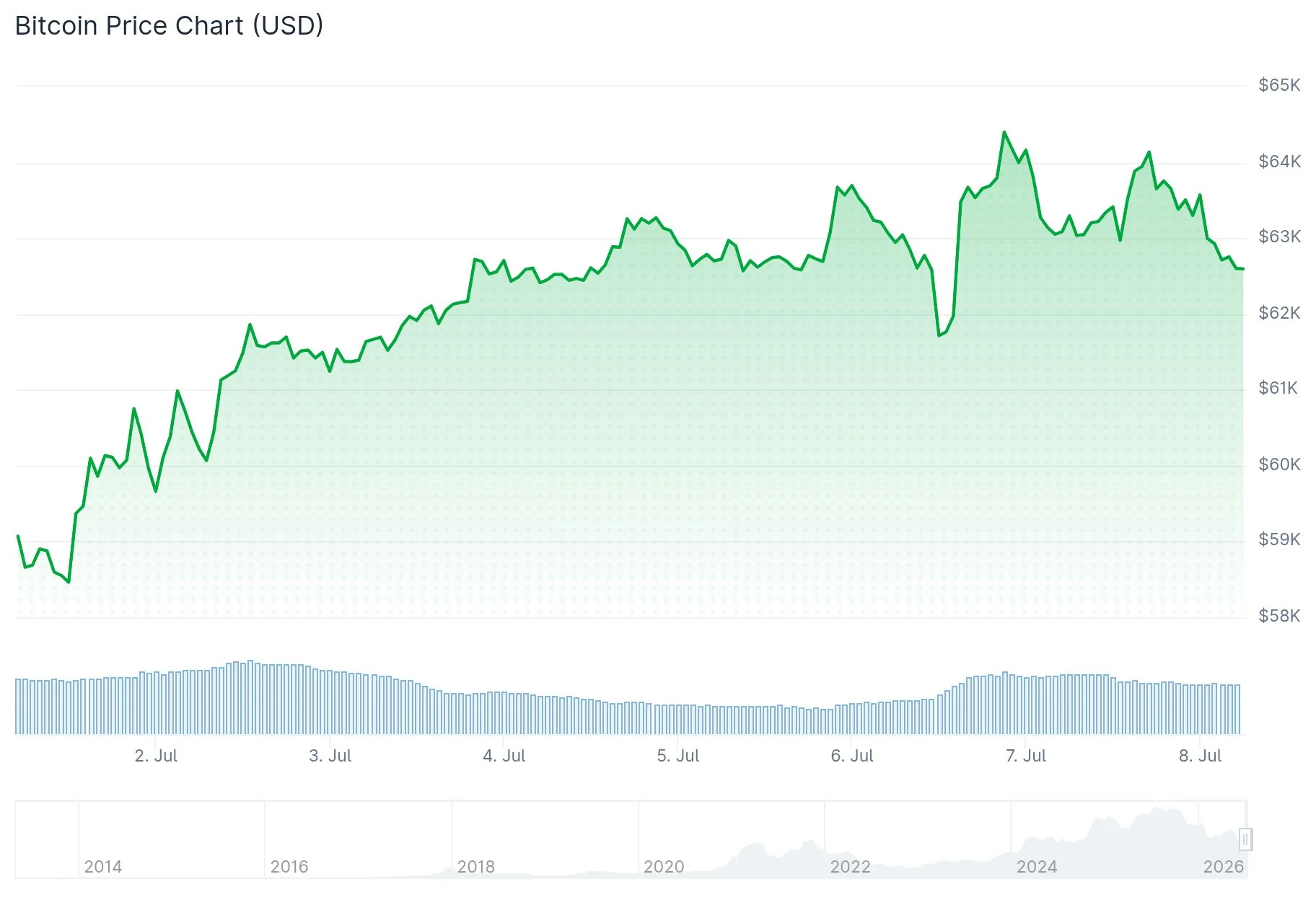
Bitcoin anchors this allocation with 40%, equal to $400. As the dominant cryptocurrency by market capitalization, it continues drawing institutional capital through ETF products and corporate balance sheet adoption. Its deep liquidity and proven resilience position it as the safest entry point in digital assets.
Ethereum claims the second position at 25%, representing $250. The network underpins the majority of decentralized finance activity and stablecoin circulation, while serving as the primary infrastructure for asset tokenization initiatives. Traditional financial institutions exploring blockchain technology predominantly build on Ethereum’s established framework.
Combined, these cornerstone assets represent 65% of the total allocation. This concentration acknowledges their comparatively lower volatility and established market positions.
Higher-Growth Allocations Complete the Mix
Solana receives 15%, equating to $150. The network challenges Ethereum on transaction throughput and cost efficiency, establishing significant presence across DeFi protocols, payment systems, and consumer-facing applications. While carrying elevated risk, it presents correspondingly higher growth potential with sustained adoption momentum.

Chainlink commands 10%, or $100. Its decentralized oracle infrastructure bridges blockchain networks with external data sources, creating essential functionality for DeFi protocols and enterprise implementations. Expanding tokenization of traditional assets should drive increasing demand for reliable data feeds.
Near Protocol completes the portfolio at 5%, totaling $50. Beyond its Layer 1 blockchain capabilities, the project emphasizes artificial intelligence infrastructure development. This represents the portfolio’s smallest and highest-risk position, providing exposure to the emerging AI-crypto convergence narrative.
Complete Allocation Breakdown
Bitcoin: 40% ($400)
Ethereum: 25% ($250)
Solana: 15% ($150)
Chainlink: 10% ($100)
Near Protocol: 5% ($50)
Stablecoins: 5% ($50)
Maintaining a Stablecoin Buffer
The remaining 5%, or $50, remains in stablecoins. This allocation serves an active purpose rather than sitting idle. Maintaining liquid reserves enables opportunistic buying during market corrections without liquidating existing positions.
Cryptocurrency markets experience severe and rapid price movements. A modest cash equivalent position provides tactical flexibility when attractive entry points emerge.
The Case for Multi-Asset Exposure
No individual cryptocurrency offers guaranteed outperformance. Distributing capital across five projects with distinct use cases and risk characteristics helps limit portfolio damage from any single asset’s underperformance.
Bitcoin and Ethereum establish the baseline. Solana, Chainlink, and Near provide upside optionality. The stablecoin allocation maintains readiness for opportunistic deployment.
This approach avoids unrealistic expectations of rapid wealth generation. Instead, it presents a methodical framework for someone with $1,000 seeking cryptocurrency exposure while avoiding concentrated position risk.
The allocation mirrors current market dynamics: institutional participation continues expanding, artificial intelligence increasingly intersects with blockchain technology, and infrastructure protocols gain importance in supporting blockchain functionality.
This distribution balances established market leaders with emerging projects positioned to benefit from broader technological trends affecting the cryptocurrency sector.
Get 3 Free Stock Ebooks
Discover top-performing stocks in AI, Crypto, and Technology with expert analysis.
- Top 10 AI Stocks - Leading AI companies
- Top 10 Crypto Stocks - Blockchain leaders
- Top 10 Tech Stocks - Tech giants



