


Key Takeaways
- Moderate projections place XRP between $5 and $8 by 2031 based on steady institutional growth
- Optimistic forecasts suggest XRP could climb to $15–$25 if it dominates global payment settlements
- Pessimistic scenarios show XRP potentially falling to $1–$2 amid increased competition or weak adoption
- New XRP ETF products may constrain circulating supply while boosting institutional accessibility
- When weighted by probability, analyst estimates converge around $7.90 for 2031
Few digital assets have generated as much ongoing debate as XRP. Unlike Bitcoin or Ethereum, Ripple’s cryptocurrency has deliberately targeted institutional finance and international payment systems.
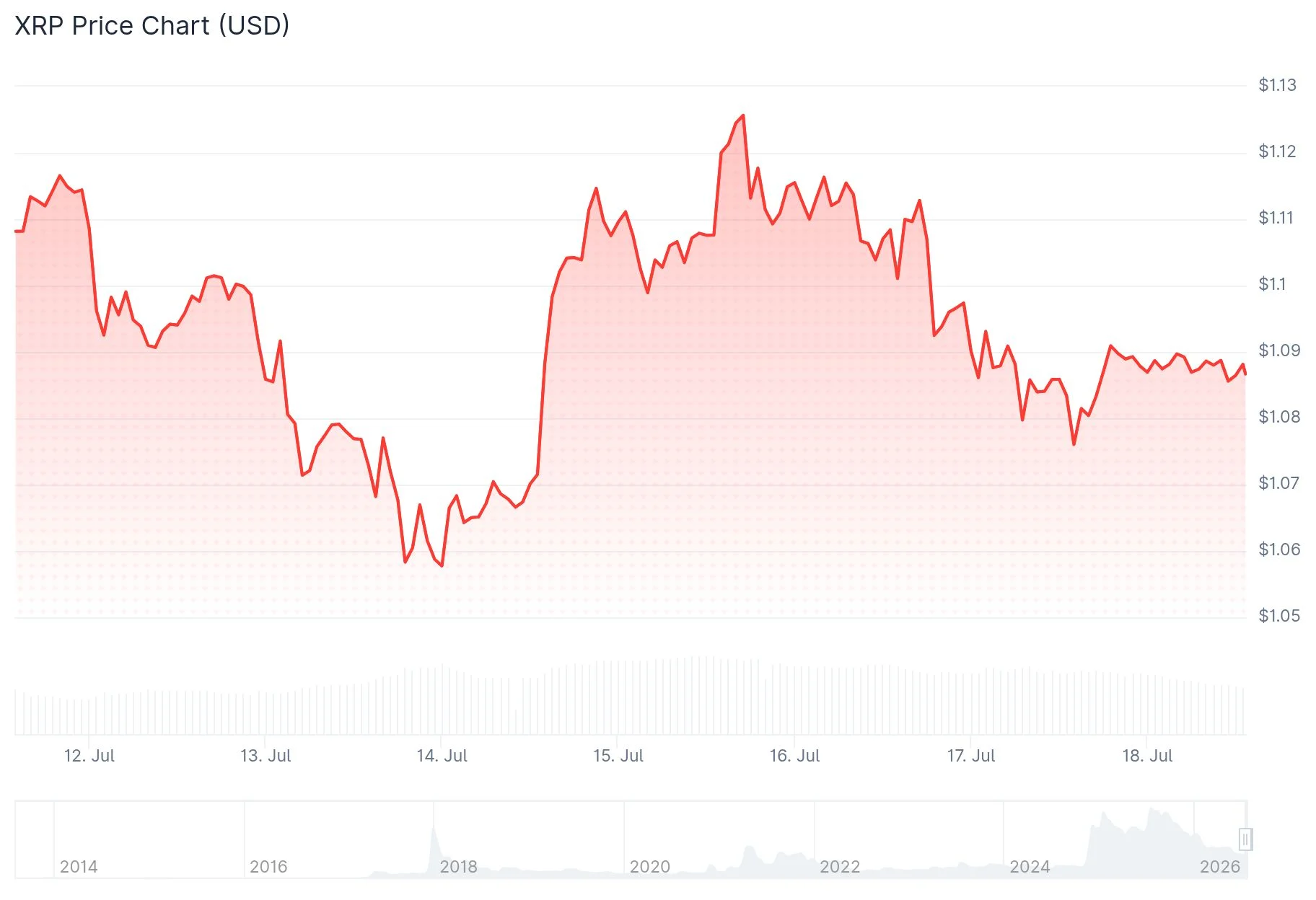
Following years of regulatory challenges, XRP has emerged into clearer waters. The introduction of spot ETFs, improving regulatory frameworks, and Ripple’s aggressive global partnerships have reignited market attention.
Investors are now asking: what’s the realistic ceiling for XRP over the next seven years?
Ripple has methodically constructed relationships with financial institutions and payment networks worldwide. Beyond payments, the XRP Ledger is expanding into tokenization of traditional assets, DeFi applications, and the RLUSD stablecoin framework.
Under standard expectations, XRP should trade in the $5 to $8 range by decade’s end. This implies a total market capitalization between approximately $325 billion and $520 billion.

Optimistic Outlook
The most favorable scenario envisions XRP establishing itself as the preferred infrastructure for institutional transactions and international money transfers.
Exchange-traded funds play a pivotal role in this vision. These regulated investment vehicles have dramatically lowered barriers to institutional participation. Sustained ETF capital inflows could reduce token availability while simultaneously expanding demand.
Should real-world asset tokenization mature into a sector worth trillions, and XRP Ledger secures substantial market share, the token could approach a trillion-dollar valuation. This trajectory would support prices ranging from $15 to $25.
While ambitious, this projection has gained credibility among committed long-term holders.
Pessimistic Scenario
The primary vulnerability for XRP lies in implementation gaps. Ripple’s payment infrastructure could expand successfully without generating proportional demand for the XRP token.
Competitive pressures continue mounting. Ethereum Layer 2 solutions, Solana, algorithmic stablecoins, and emerging central bank digital currencies all vie for the same institutional payment corridors.
In this less favorable environment, XRP might languish between $1 and $2 through the remainder of this decade.
XRP’s distinguishing characteristic remains its enterprise-first strategy. Rather than competing as a general blockchain platform, it’s positioning as foundational rails for institutional finance.
Balancing all three scenarios with appropriate probability weighting produces a central estimate of approximately $7.90 per XRP by 2031.
Get 3 Free Stock Ebooks
Discover top-performing stocks in AI, Crypto, and Technology with expert analysis.
- Top 10 AI Stocks - Leading AI companies
- Top 10 Crypto Stocks - Blockchain leaders
- Top 10 Tech Stocks - Tech giants



