


TLDR
- Bullion prices declined more than 1% to approximately $4,688–$4,703 per ounce on Thursday
- Escalating U.S.-Iran tensions over the Strait of Hormuz are propelling crude oil beyond $103 per barrel
- Surging crude prices are amplifying inflation concerns, weighing on non-interest-bearing assets like bullion
- An appreciating U.S. dollar is increasing gold’s cost for international purchasers
- Bullion has declined approximately 11% since hostilities commenced eight weeks prior
The precious metal experienced downward pressure on Thursday as an appreciating U.S. dollar combined with climbing crude oil values created headwinds for bullion. Spot pricing retreated approximately 1% to settle around the $4,700 per ounce level, with futures contracts similarly declining.
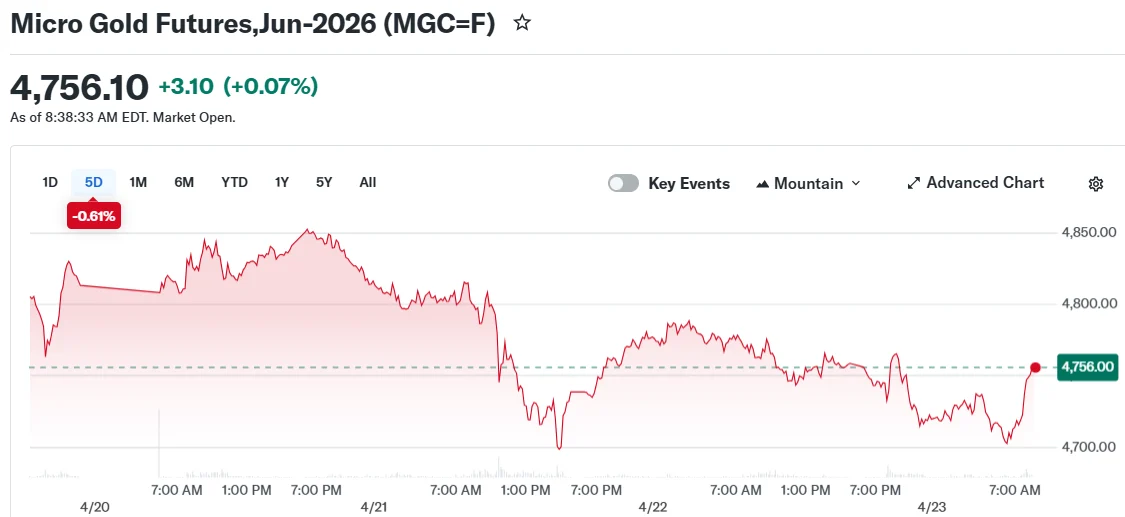
This decline unfolds against the backdrop of the ongoing U.S.-Iran confrontation, which has entered its eighth week and continues creating turbulence across energy markets. Crude oil prices climbed back above the $103 per barrel threshold this week, propelled by concerns regarding potential supply chain interruptions at the Strait of Hormuz.
This critical waterway, located along Iran’s southern coastline, serves as a transit point for approximately 20% of global oil shipments.
Tehran has persisted in its blockade of the strait, while Washington has maintained naval forces to intercept Iranian vessels. Iranian gunboats engaged commercial shipping this week, further escalating tensions in the region.
President Trump announced an extension to the ceasefire initially established on April 7, indicating it would remain effective indefinitely pending Tehran’s submission of a new peace framework. Iranian officials have indicated they have no immediate plans to engage in diplomatic negotiations.

Tehran has insisted that Washington must withdraw its naval blockade prior to any substantive discussions. The United States, conversely, has demanded complete reopening of the Strait of Hormuz. Neither party appears willing to compromise.
Why Rising Oil Hurts Gold
Elevated oil prices amplify inflation forecasts. When inflationary pressures mount, monetary authorities become more inclined to maintain elevated interest rates or implement additional increases.
Because gold generates no yield or dividend income, it typically underperforms during periods of high or rising interest rates. This mechanism has exerted continuous downward pressure on bullion since the conflict’s inception.
Gold has now shed roughly 11% of its value since hostilities began eight weeks ago.
The greenback also gained strength this week, positioning itself for its first weekly advance in a month. A robust dollar elevates gold’s price for purchasers utilizing alternative currencies, thereby dampening demand.
Jake Behan, Head of Capital Markets at Direxion, observed that certain traders are now redirecting attention from the geopolitical situation toward corporate earnings reports. He highlighted renewed enthusiasm for AI infrastructure investment as a catalyst for near-term risk appetite.
Other Precious Metals Also Fall
Silver experienced a substantial retreat, declining between 2.7% and 4.3% on Thursday to settle near the $74–$75 per ounce range. Platinum tumbled 3.5% to approximately $2,005 per ounce. Palladium similarly posted losses.
Rhona O’Connell, head of market analysis at StoneX, indicated the precious metals sector will “remain cautious and volatile.” She noted that institutional trading firms are hesitant to establish substantial positions given the unpredictable geopolitical landscape.
Iran’s ongoing blockade of the Strait of Hormuz coupled with the U.S. naval deployment in the region continue to serve as primary factors maintaining elevated energy market volatility and inflation risks as of April 23, 2026.
Get 3 Free Stock Ebooks
Discover top-performing stocks in AI, Crypto, and Technology with expert analysis.
- Top 10 AI Stocks - Leading AI companies
- Top 10 Crypto Stocks - Blockchain leaders
- Top 10 Tech Stocks - Tech giants



