



TLDR
- Gold contracts declined 0.7–0.9% on Tuesday following Iranian strikes on merchant ships near the strategic Strait of Hormuz
- Physical gold retreated to $4,121.25 per ounce; silver decreased 2.1% while platinum lost 1.2%
- The U.S. dollar gained strength amid inflation concerns linked to possible energy supply disruptions
- Investors anticipate Federal Reserve June meeting minutes for clues on monetary policy direction
- Federal Reserve Chairman Kevin Warsh has reinforced the central bank’s commitment to its 2% inflation objective
Precious metals experienced significant losses on Tuesday following news of Iranian military actions against two merchant vessels in proximity to the Strait of Hormuz, intensifying worries about potential energy supply constraints and inflationary pressures.
Physical gold decreased 1% to settle at $4,121.25 per ounce, while gold contracts dropped 0.9% to reach $4,132.15. During European market hours, New York gold futures had registered a 0.7% decline to $4,138.50 per troy ounce.
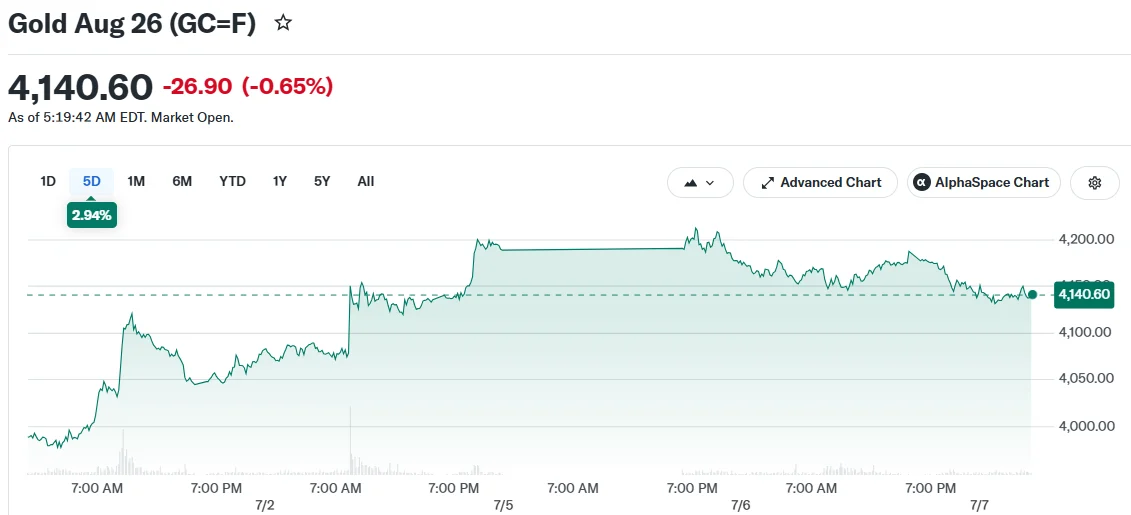
Other precious metals mirrored gold’s downward trajectory. Physical silver decreased 2.1% to $60.76 per ounce, while physical platinum declined 1.2% to $1,614.72 per ounce.
The military incident in the Hormuz region drove oil prices upward, amplifying concerns that energy-related inflation might persist at elevated levels. This development bolstered the dollar, which typically exerts downward pressure on commodity prices.
These movements erased substantial gains from the prior week, when weaker-than-anticipated U.S. employment figures had temporarily boosted gold while pushing the dollar down from its 13-month peak.

Federal Reserve Minutes Awaited
Market participants are eagerly anticipating the release of the Federal Reserve’s June policy meeting minutes, scheduled for publication this week. Traders are seeking more definitive indicators regarding the future trajectory of borrowing costs.
Federal Reserve Chairman Kevin Warsh has emphasized the central bank’s unwavering dedication to restoring inflation to its 2% annual benchmark. His statements have maintained market uncertainty regarding the potential for an additional rate increase before year-end.
Market strategists at Saxo Bank indicated that gold remains trapped in a narrow trading range. “Bullion remains rangebound as it attempts to shift from capitulation to consolidation,” they noted, emphasizing that near-term U.S. Treasury yields continue to suggest the possibility of rate hike risk.
Elevated interest rates diminish gold’s appeal since the metal generates no yield or dividend payments. As borrowing costs increase, capital typically flows toward fixed-income securities and other yield-producing investments.
Challenging Period for Gold
Gold reached all-time peaks in January but has faced headwinds since then. Concerns about monetary policy tightening have discouraged investors from maintaining positions in non-yielding assets, resulting in the erosion of most gains achieved in early 2026.
The precious metal has also experienced diminished safe-haven demand this year. Although gold traditionally appreciates during periods of market uncertainty, ongoing inflation anxieties and a resilient dollar have constrained any meaningful price recovery.
Saxo Bank strategists observed that a substantial shift in interest rate expectations would be necessary to underpin a more sustainable rally in gold valuations.
Given the impending Federal Reserve minutes release and ongoing uncertainty surrounding the Strait of Hormuz situation, market participants are expected to maintain cautious positioning until greater clarity emerges on both developments.
As of Tuesday’s close, physical gold traded at $4,121.92, registering a 1.04% decline for the session.
Get 3 Free Stock Ebooks
Discover top-performing stocks in AI, Crypto, and Technology with expert analysis.
- Top 10 AI Stocks - Leading AI companies
- Top 10 Crypto Stocks - Blockchain leaders
- Top 10 Tech Stocks - Tech giants



