


Key Takeaways
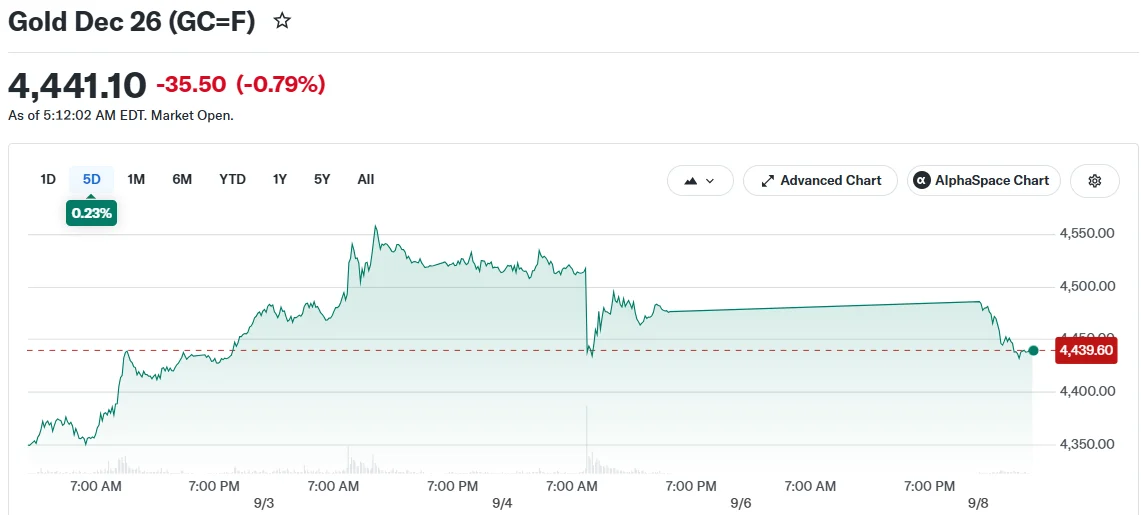
- Precious metal declined approximately 0.8% to $4,440 per troy ounce during early Tuesday trading in Europe
- Softness in the U.S. dollar index offered modest support, partially counterbalancing downward momentum
- Japanese yen strength contributed to dollar weakness, providing temporary relief for gold
- Traders see roughly 60% probability of Federal Reserve rate increase at upcoming meeting
- People’s Bank of China boosted gold acquisitions in August to highest monthly level since 2023
Precious metal prices retreated on Tuesday as market participants exercised caution before critical U.S. inflation figures scheduled for release this week. The yellow metal decreased roughly 0.8% to $4,440.10 per troy ounce in New York futures trading during Europe’s early session.
December gold futures contracts fell 0.7% to $4,447.11, while spot prices for the metal dropped 0.1% to $4,402.49. Silver experienced a modest uptick of 0.2% to $66.32 per ounce. Platinum advanced 0.3% to $1,828.78.
The U.S. Dollar Index experienced a slight decline to 98.90, providing modest tailwinds for gold. When the dollar weakens, it reduces the cost of gold for international buyers using alternative currencies, typically supporting price increases.
Japanese Currency Surge Weighs on Greenback
The Japanese currency maintained its robust rally versus the dollar on Tuesday. The yen moved closer to its year-to-date peak after building on momentum that began in the previous week.
Market participants have amplified expectations that Japan’s central bank will implement interest rate increases. This development pressured the dollar downward, temporarily boosting gold prices.

The precious metal has predominantly traded near the $4,400 threshold in recent trading days. After rebounding from a support level around $4,000 in July, prices have remained within a tight trading band.
Naeem Aslam from Zaye Capital Markets noted that gold’s stability above $4,400 demonstrates persistent safe-haven demand. He observed that traders are weighing robust U.S. economic indicators against continuing geopolitical tensions.
Energy Market Dynamics and Central Bank Policy Cap Upside
Gold’s potential for gains was constrained by escalating oil prices. Brent crude moved toward the $100 per barrel mark following fresh confrontations between the U.S. and Iran in the Strait of Hormuz region.
Elevated energy costs amplify inflation concerns, adding complexity to Federal Reserve policy deliberations. Current market pricing indicates approximately 60% odds of a rate increase at the upcoming Fed policy meeting next week.
This outlook strengthened after Friday’s employment report exceeded forecasts. The robust nonfarm payrolls data elevated rate hike probabilities and pressured gold lower.
Tony Sycamore, senior market analyst at IG, noted gold closed overnight trading near $4,406. He anticipates that climbing Treasury yields will generate additional resistance for gold when trading resumes.
The critical catalyst this week will be the release of U.S. consumer price index and producer price index data. These indicators could determine whether rate hike expectations persist or diminish before the Federal Reserve’s policy announcement.
Chinese monetary authorities maintained their gold accumulation strategy throughout August. The People’s Bank of China intensified purchases to the strongest monthly pace since 2023, despite elevated price levels. This sustained buying activity is viewed as establishing a support level for the metal.
Get 3 Free Stock Ebooks
Discover top-performing stocks in AI, Crypto, and Technology with expert analysis.
- Top 10 AI Stocks - Leading AI companies
- Top 10 Crypto Stocks - Blockchain leaders
- Top 10 Tech Stocks - Tech giants



