TLDR
- GE Vernova and Hitachi received Nuclear Regulatory Commission construction approval for their BWRX-300 reactor project in Tennessee.
- The regulatory process was completed in 14 months, beating the NRC’s projected timeline by four months.
- This marks just the second construction permit issued for a novel US reactor design in more than ten years.
- The Tennessee Valley Authority continues searching for a funding partner, potentially a data center operator.
- GEV shares finished trading at $962.49, posting a 1% daily gain and 6% monthly increase.
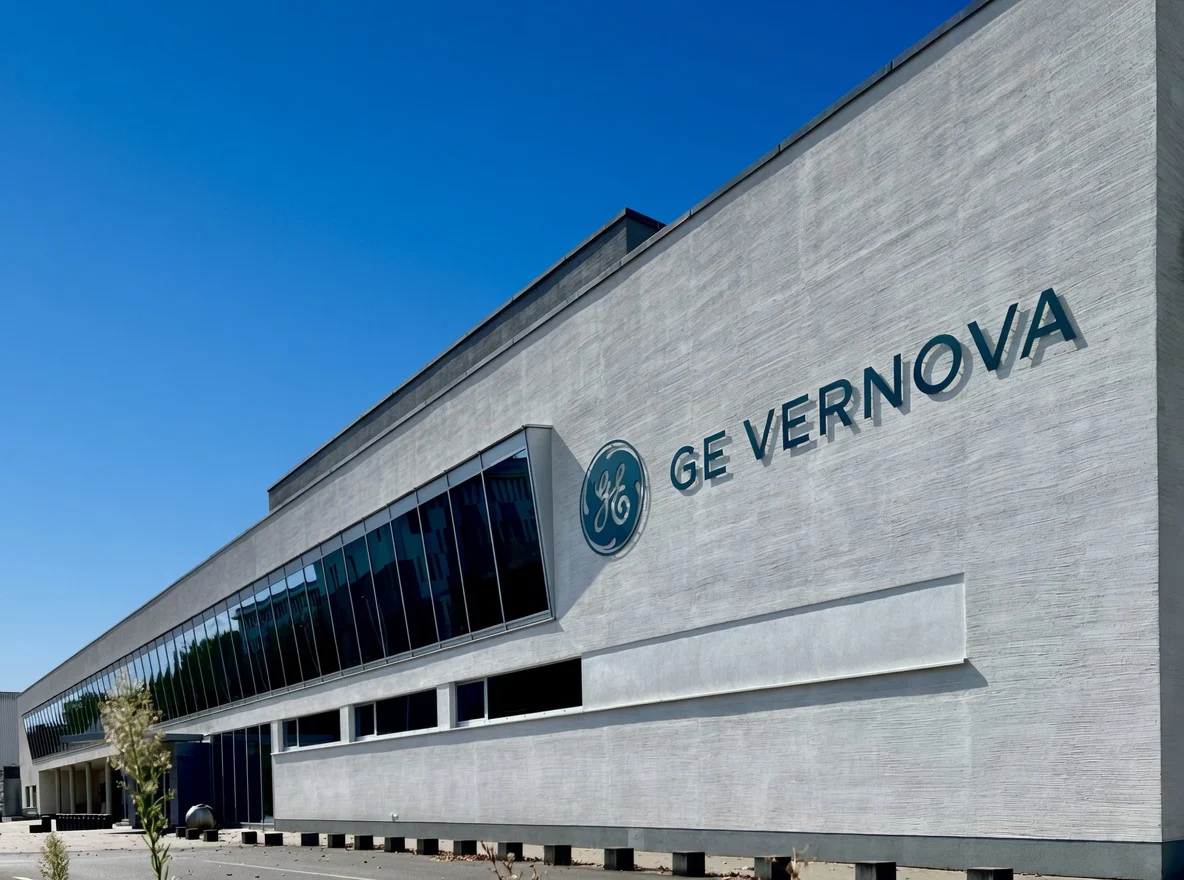
GE Vernova shares finished Tuesday’s session at $962.49, registering a 1% advance. The upward movement followed news that the Nuclear Regulatory Commission granted construction authorization for a new reactor developed alongside partner Hitachi.
The reactor model is designated BWRX-300. It represents a compact iteration of the boiling-water reactor technology GE has manufactured for many decades.
Construction will take place in Tennessee at the Clinch River location. The Tennessee Valley Authority, a federally-owned utility company, owns the site.
The approval process concluded in only 14 months. That timeline came in four months ahead of what the NRC itself had projected.

Both Congress and the Trump administration have been applying pressure on the NRC to accelerate reactor approval processes. This authorization demonstrates that such pressure is producing results.
This represents only the second construction authorization granted for a novel US reactor configuration in over a decade. TerraPower, a startup supported by Bill Gates constructing a facility in Wyoming, received the first.
A construction authorization doesn’t guarantee the reactor will actually be completed. However, it represents significant progress beyond announcements and toward tangible construction work.
Why the Smaller Design Matters
The BWRX-300 delivers 300 megawatts of output capacity. That level provides sufficient electricity for approximately 300,000 residential units.
Traditional reactor configurations frequently exceeded 1,000 megawatts. The reduced scale enables components to be manufactured off-site and installed more quickly, an advantage customers appreciate.
Ontario, Canada is currently constructing one unit, with intentions for as many as four total. Nuclear developer Blue Energy submitted an application to construct one in Texas earlier this month.
The Funding Question
The TVA must still identify a partner to share construction expenses. A utility representative indicated concerns about the financial commitment required for an innovative reactor design.
The potential partner might be a data center operator or another major commercial electricity consumer requiring reliable baseload power. No agreement has been finalized.
New nuclear facilities typically carry higher price tags than alternative power generation options. This cost factor explains why US utilities have been reluctant to pursue them.
The underlying assumption is that expenses will decline as additional units are constructed. Engineering teams can establish standardized procedures rather than addressing unique challenges with each project.
Canadian projections estimate the fourth BWRX-300 unit will cost 33% to 40% less than the initial installation. TVA spokesman Scott Allen Fiedler stated Tennessee can leverage this authorization as a framework for expedited approvals in the future.
Neither GE Vernova nor Hitachi derives the majority of revenue from nuclear energy. Both corporations depend on different business segments for their primary income.
For GE Vernova, nuclear energy maintains strategic importance. Currently, the company generates most profits from natural gas turbines supplying power to AI data centers.
Nuclear technology could provide the company with an additional growth avenue through the 2030s. This would remain valuable regardless of whether gas turbine demand continues its current trajectory.
Zacks presently assigns GEV a Hold rating, with a Zacks Rank of #3. Analysts project the company’s forthcoming earnings report will show $4.08 per share, representing a 149% year-over-year increase, on revenue of $12.07 billion.
Get 3 Free Stock Ebooks
Discover top-performing stocks in AI, Crypto, and Technology with expert analysis.
- Top 10 AI Stocks - Leading AI companies
- Top 10 Crypto Stocks - Blockchain leaders
- Top 10 Tech Stocks - Tech giants