


Key Takeaways
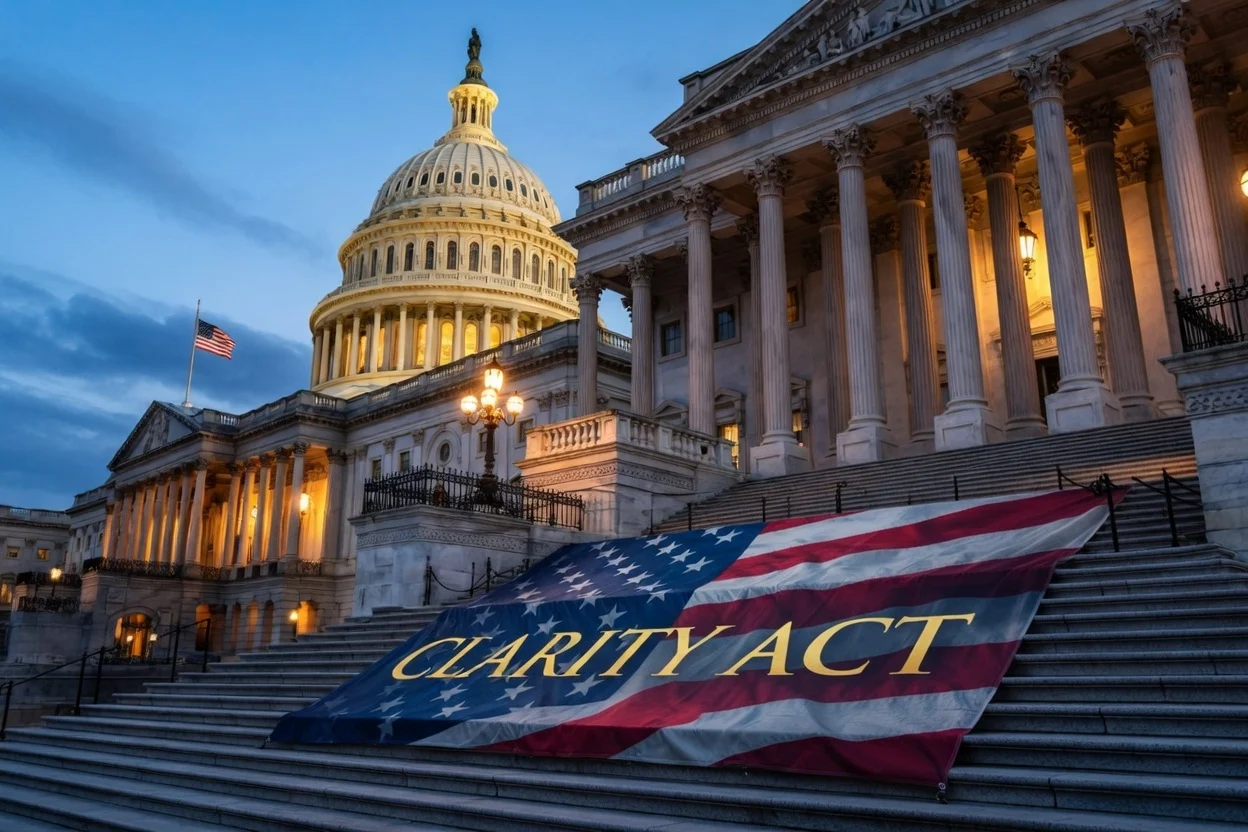
- Ex-Defense Secretary Mark Esper frames the CLARITY Act as critical national defense legislation rather than merely financial regulation
- Esper highlighted China’s development of alternative payment infrastructure designed to circumvent US dollar hegemony
- Senate floor action postponed until after summer break
- Majority Leader John Thune scheduled cloture filing for potential September 15 floor consideration
- Concerns over President Trump’s cryptocurrency holdings and potential conflicts of interest represent primary roadblocks
Mark Esper, who previously served as US Defense Secretary, voiced strong support for the CLARITY Act this past weekend, urging swift Senate action. In a Financial Times opinion piece, Esper contended that inadequate American digital asset frameworks provide strategic advantages to adversarial nations.
According to Esper, Beijing is actively constructing government-controlled payment networks intended to circumvent US financial monitoring capabilities and undermine dollar supremacy globally. He characterized this development as an immediate and escalating danger.
“I have long argued that China is the greatest strategic threat of our lifetime,” Esper stated. He currently serves on the Coinbase Global Advisory Council.
Esper specifically identified North Korea’s Lazarus Group as a critical concern. He argued the CLARITY Act would equip Treasury officials with enhanced capabilities to close cryptocurrency vulnerabilities exploited by North Korean operatives evading US sanctions.
The proposed legislation would expand Treasury’s special-measures powers under USA Patriot Act Section 311, which Esper characterized as “one of our sharpest weapons against rogue actors.”
September Timeline Replaces August Target
Notwithstanding Esper’s advocacy, Senate deliberation on the CLARITY Act won’t occur prior to the August congressional break. Majority Leader John Thune initiated cloture procedures Saturday, establishing a prospective September 15 floor vote.
The postponement followed indications throughout the week that procedural motions would probably not secure sufficient support. Congressional staff and sector insiders reported that numerous outstanding matters rendered even preliminary votes unfeasible.

The most significant obstacle involves ethical questions. President Trump’s cryptocurrency commercial interests have troubled Democrats for more than twelve months. His alleged $1.4 billion cryptocurrency profits were characterized by one insider as the “kill shot” undermining negotiations.
Additional unresolved matters persist. Law enforcement components, agricultural provisions, and mounting questions regarding stablecoin yield mechanisms and reward structures all require further deliberation.
Future Outlook
Senators Angela Alsobrook and Cynthia Lummis both affirmed continued dedication to advancing the legislation. Lummis pledged persistence, while Alsobrook emphasized the objective of achieving bipartisan consensus with proper safeguards.
Sector observers express mixed assessments. One individual tracking the legislation suggested persuading sufficient Democratic senators remains challenging, attributable both to ethics complications and November electoral considerations.
A Senate aide informed CoinDesk that securing Democratic support would require a “legitimate” compromise agreement.
Senator Thom Tillis warned Politico that “the odds drop precipitously” as election season and the extended recess draw near.
Two sources speaking with CoinDesk maintained the bill retains viable passage prospects, observing that the August timeframe represented industry aspirations rather than official deadlines. The coming five weeks of behind-the-scenes negotiations will prove decisive.
Get 3 Free Stock Ebooks
Discover top-performing stocks in AI, Crypto, and Technology with expert analysis.
- Top 10 AI Stocks - Leading AI companies
- Top 10 Crypto Stocks - Blockchain leaders
- Top 10 Tech Stocks - Tech giants



