


TLDR
- Senate Republicans released a new 616-page CLARITY Act draft with crypto ethics rules.
- The draft would ban presidents and other senior federal officials from issuing crypto assets for profit.
- Covered officials could sell crypto holdings, use blind trusts, or take both steps.
- The Department of Justice would enforce violations, with penalties up to $250,000 per day.
- Some Democrats oppose the draft and want state attorneys general included in enforcement.
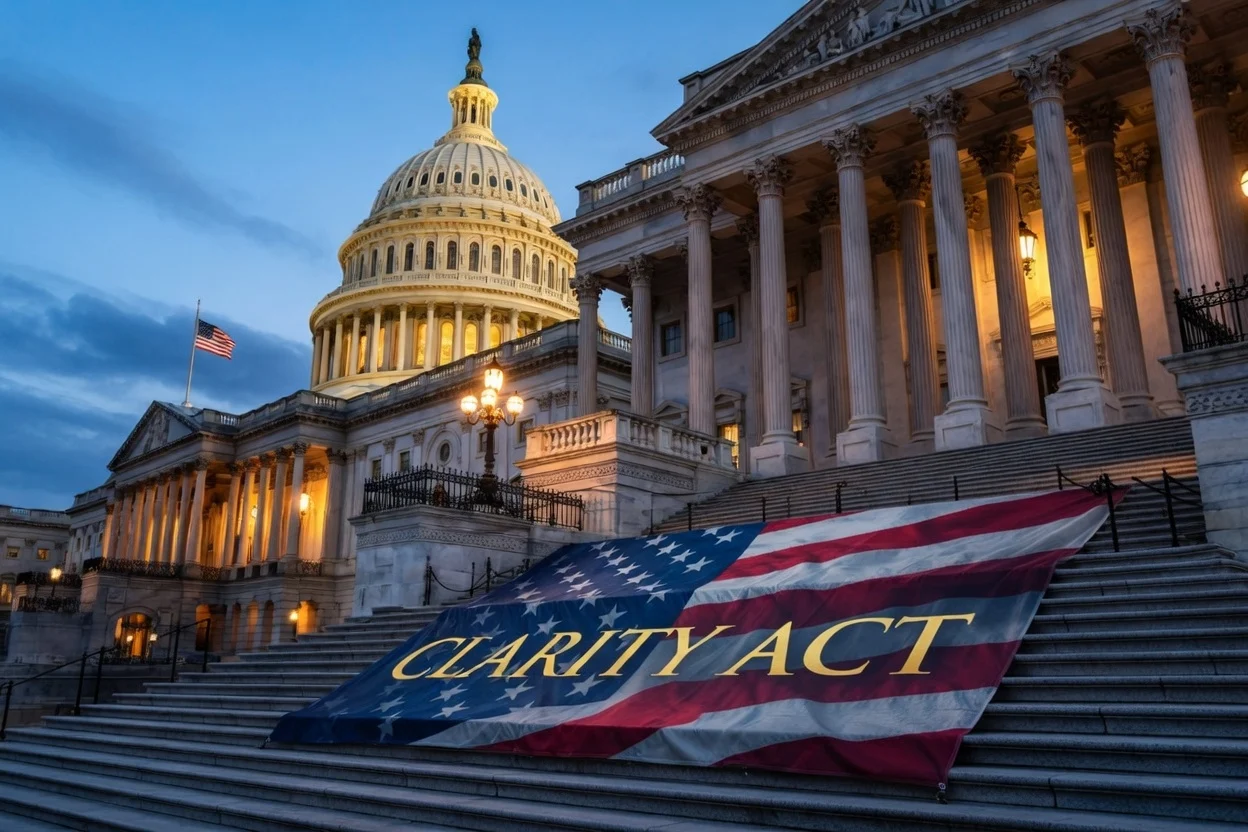
The Senate’s latest CLARITY Act draft is planning to restrict crypto activity by presidents and senior federal officials as lawmakers push toward a possible vote before the August recess.
Senate Draft Adds Crypto Ethics Rules
Senator Cynthia Lummis released a new 616-page draft of the Digital Asset Market CLARITY Act on Wednesday. The proposal adds an ethics framework backed by the White House and aimed at limiting digital asset activity by top government officials.
The draft would prohibit the president, vice president, members of Congress, federal judges, and other covered officials from issuing or sponsoring digital assets for compensation while in office. The restriction would also apply to spouses and would expire on January 20, 2029.
Lummis said,
“This is another step in my years-long journey to ensure the US leads the way on digital assets.” She added that “the coming weeks are likely the last real chance we will have for years to get this right.”
The measure would create a compliance path for officials who already hold direct crypto interests before taking office. They could sell those holdings, place them in qualified blind trusts, or use both options under government ethics rules.
DOJ Enforcement Draws Democratic Pushback
The updated draft would give the Department of Justice authority to enforce the ethics rules. The attorney general could bring civil actions against covered officials or digital asset intermediaries that knowingly violate the provisions.

The bill would also allow penalties of up to $250,000 per day for violations. State attorneys general and private individuals would not be allowed to bring enforcement actions under this section.
That structure has drawn opposition from some Democrats. Senators Angela Alsobrooks and Ruben Gallego, who supported an earlier version in committee, said they oppose the latest draft because the ethics language does not go far enough.
Alsobrooks criticized placing enforcement mainly with the Justice Department. She said, “A lawless Department of Justice cannot oversee this,” and added that state attorneys general should have a role as a backstop.
Gallego also rejected the proposal and said, “This is not a serious proposal.” He said a bipartisan group is preparing separate ethics language as negotiations continue.
Patrick Witt, a White House crypto adviser, defended the ethics framework and argued that current federal ethics laws are not enforced by state attorneys general. He also said efforts to punish past activity would raise constitutional concerns.
Vote Timeline Remains Tight
Senate Majority Leader John Thune said the bill could receive a vote within the next two weeks. Republican leaders are seeking action before lawmakers leave Washington for most of August.
The bill needs 60 votes to advance in the Senate, which makes Democratic support necessary. Pro-crypto Democrats have also raised concerns about illicit finance rules, conflicts of interest provisions, and other parts of the current draft.
Beyond the ethics debate, the CLARITY Act would create a broader market structure for digital assets. The proposal would define regulatory roles for crypto markets and preserve measures backed by the industry, including the Blockchain Regulatory Certainty Act.
The draft also includes language aimed at restricting digital assets from use in unlawful transactions. Banking groups have continued to oppose parts of the bill, including provisions tied to rewards that they view as similar to interest on bank deposits.
Lummis defended the agreement and said it would ban all federal officials, including the president, from issuing or sponsoring a digital asset for profit. She wrote,
“History will remember this as the moment a president chose a higher standard of ethics than the law required of him.”
Get 3 Free Stock Ebooks
Discover top-performing stocks in AI, Crypto, and Technology with expert analysis.
- Top 10 AI Stocks - Leading AI companies
- Top 10 Crypto Stocks - Blockchain leaders
- Top 10 Tech Stocks - Tech giants



