


Key Takeaways
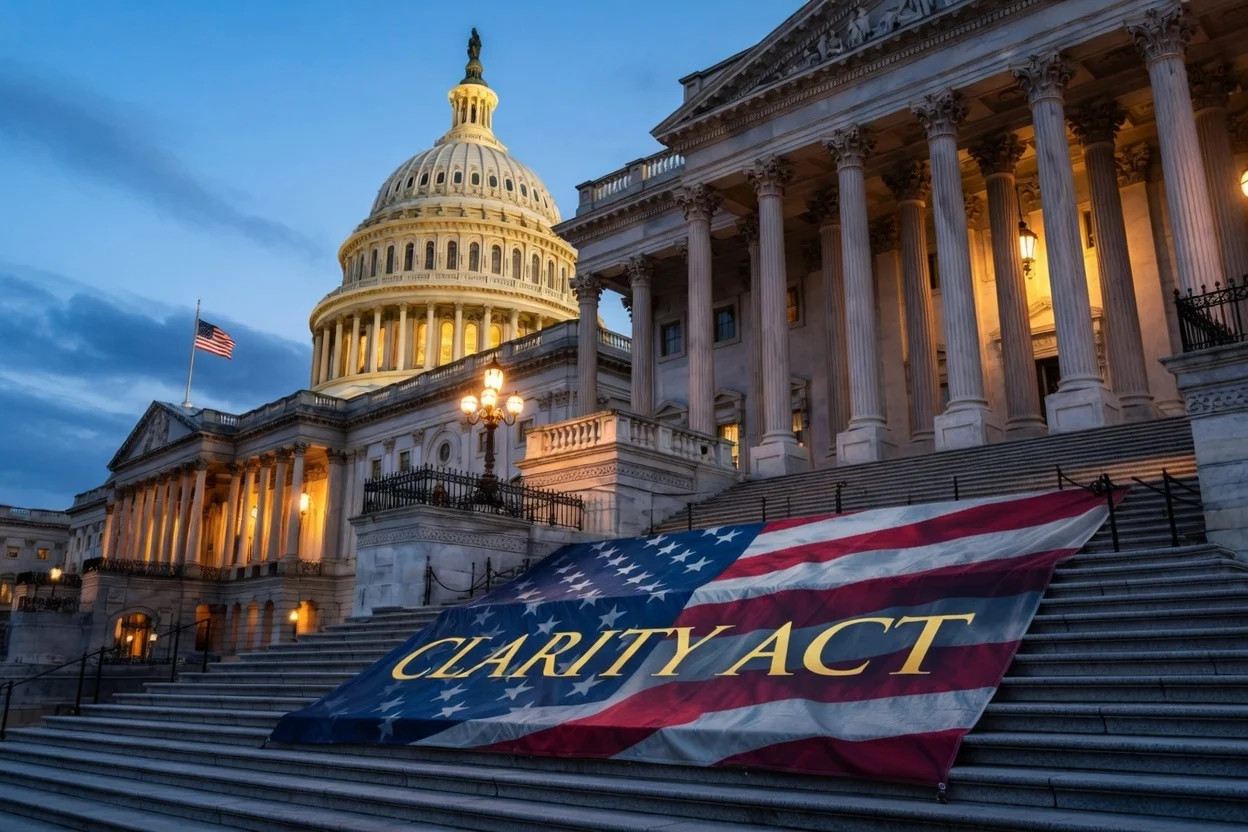
- Digital Chamber introduces online portal enabling citizens to communicate directly with elected representatives regarding the CLARITY Act.
- Proposed legislation seeks to establish comprehensive federal regulatory framework governing cryptocurrency markets.
- Senate Banking Committee approved the measure with bipartisan 15-9 support on May 14.
- House of Representatives passed its version with overwhelming 294-134 margin in July 2025.
- Unresolved provisions concerning anti-money laundering protocols, decentralized finance regulations, and conflict-of-interest guidelines continue to delay floor consideration.
Digital Chamber has unveiled a comprehensive grassroots initiative designed to mobilize Congressional support for the CLARITY Act, while cryptocurrency industry organizations escalate their lobbying activities to secure federal digital asset regulation before the 2026 midterm election season intensifies.
The advocacy organization published an online platform enabling constituents to reach their elected officials and express support for the pending legislation. The digital tool provides automated messaging capabilities, educational materials on policy implications, and a condensed summary outlining the bill’s approach to cryptocurrency market oversight.
Cody Carbone, CEO of the Digital Chamber, emphasized the importance of legislators receiving input from citizens, developers, and market participants who want regulatory certainty for digital asset transactions. The organization characterized this initiative as one component of a broader strategy to advance the legislation through both chambers during the current session.
Advocacy Organization Activates Constituent Engagement Strategy
The CLARITY Act, officially titled the Digital Asset Market Clarity Act, aims to establish federal regulatory standards for cryptocurrency trading platforms, token creators, financial intermediaries, and additional industry stakeholders. Proponents contend the legislation would clarify regulatory jurisdiction among government agencies and resolve ambiguity surrounding whether specific digital tokens should be classified under securities regulations or commodities frameworks.
Digital Chamber referenced findings from a May Security.Org poll of 992 American adults showing that over 70 million U.S. residents hold cryptocurrency assets. The organization maintains that market participants require safeguards and transparent operational guidelines established through federal legislation.
This mobilization effort coincides with parallel activities by multiple cryptocurrency policy organizations, including the Crypto Council for Innovation, the Blockchain Association, and Stand With Crypto, all working to engage Capitol Hill. These groups concentrate their advocacy on senators whose positions could determine whether the legislation achieves the vote threshold necessary for passage.

Legislative Pathway Hinges on Upper Chamber Approval
The Senate Banking Committee moved H.R. 3633 forward with cross-party support in a 15-9 decision on May 14. Democratic Senator Ruben Gallego aligned with all 13 Republican committee members in backing the proposal, bringing the legislation within reach of consideration by the full Senate.
Representatives in the lower chamber approved their iteration of the bill with a substantial 294-134 majority in July 2025. The Senate adaptation has encountered procedural obstacles as members negotiate provisions addressing stablecoin yield mechanisms, decentralized finance frameworks, financial crime prevention requirements, and transparency standards for government officials holding cryptocurrency positions.
Advancing the measure through the full Senate would necessitate 60 affirmative votes to overcome procedural hurdles. Carbone has indicated that conflict-of-interest provisions would likely require resolution before floor scheduling, as chamber leadership would seek assurance that the bill commands sufficient support for approval.
Senator Cynthia Lummis has projected that floor proceedings could occur by August. Industry observers monitor this timeline carefully given Congress’s demanding schedule before the summer adjournment and approaching campaign activities that could restrict opportunities for substantive lawmaking.
Digital Asset Regulation Emerges as Campaign Cycle Focus
Efforts to advance the CLARITY Act unfold as cryptocurrency regulation gains prominence in federal electoral contests. Political fundraising committees affiliated with the blockchain industry have endorsed candidates who demonstrate receptiveness to digital asset policy proposals.
Earlier this week, Rep. Christian Menefee, a contender backed by cryptocurrency super PACs, prevailed over veteran Congressman Al Green in a Democratic primary runoff election. This outcome intensified scrutiny of digital asset advocacy groups’ influence during the midterm electoral period.
Congressional resistance persists in the Senate. Senator Elizabeth Warren has challenged the bill, arguing it provides insufficient protections against financial crime and lacks adequate conflict-of-interest provisions. Warren has also expressed concern about policymakers and their relatives profiting from cryptocurrency investments while influencing regulatory decisions.
Industry representatives characterize the legislation as addressing what they describe as Operation Choke Point 2.0, referring to perceived unofficial regulatory pressure on financial institutions and cryptocurrency businesses. Advocates maintain that comprehensive market structure legislation would channel supervisory authority through transparent regulatory procedures.
The Digital Chamber’s newly launched platform aims to translate institutional backing into direct citizen communication with elected officials. This campaign represents a strategic component of broader initiatives to establish national cryptocurrency regulation before year’s end.
For digital asset enterprises, the CLARITY Act represents a primary legislative avenue toward federal market standards. For members of Congress, deliberations encompass investor protections, financial crime safeguards, regulatory jurisdiction, and the integration of digital assets within existing financial statutes.
Get 3 Free Stock Ebooks
Discover top-performing stocks in AI, Crypto, and Technology with expert analysis.
- Top 10 AI Stocks - Leading AI companies
- Top 10 Crypto Stocks - Blockchain leaders
- Top 10 Tech Stocks - Tech giants



