


TLDR
- Lawmakers have roughly four weeks to move the Clarity Act before the August recess begins.
- Updated Senate text could reveal which crypto provisions survived negotiations and which disputes remain unresolved.
- Support from Democrats remains essential because Senate passage requires sixty votes under expected procedural rules.
- Developer protections and ethics restrictions remain central issues in the final round of Senate talks.
- Competing floor priorities could reduce available debate time before lawmakers leave Washington for August recess.
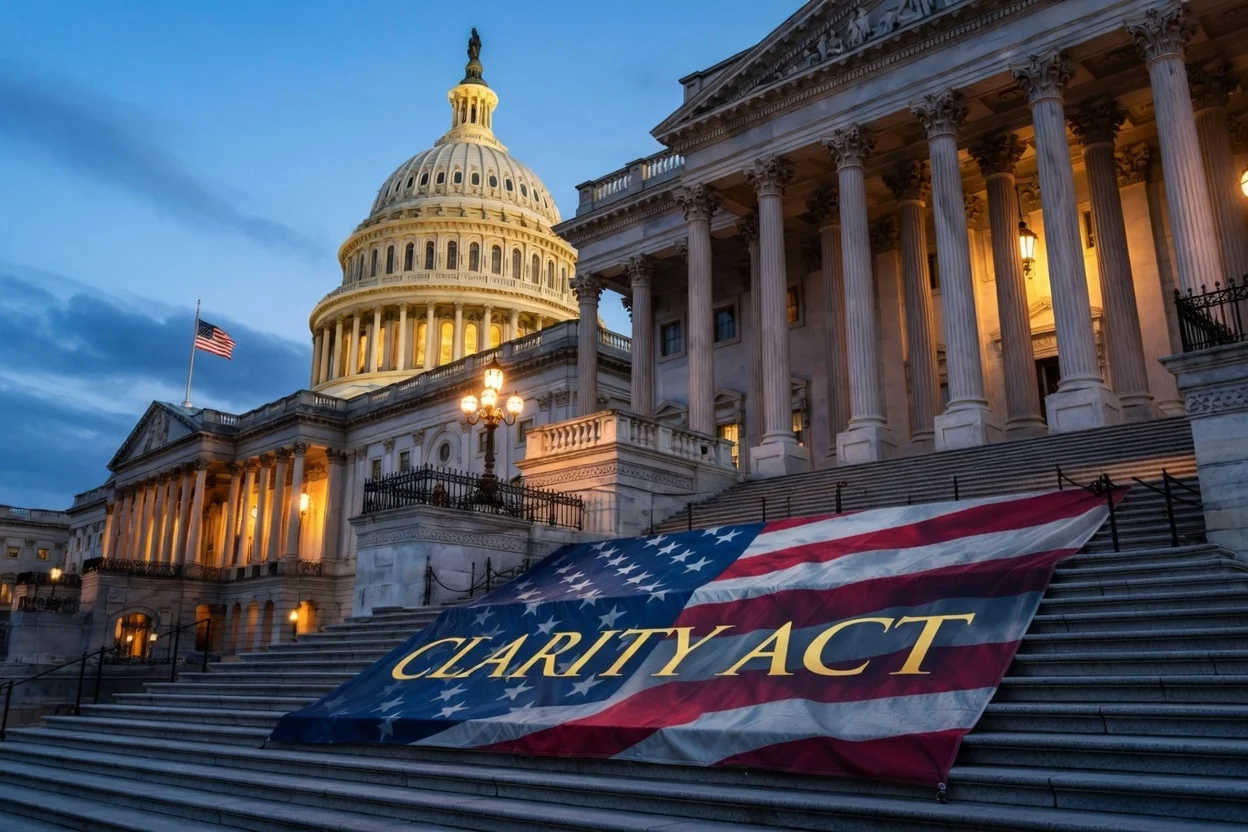
U.S. lawmakers have entered a four-week period that could determine whether the Clarity Act reaches the Senate floor before the August recess. The bill seeks to establish a federal market structure for digital assets, but its path remains dependent on negotiations, scheduling, and enough bipartisan support to advance. Policy groups now view the remaining July calendar as the most practical window for passage during the current Congress.
The Senate is expected to receive updated language combining work from the Banking and Agriculture committees, which have developed separate approaches to crypto oversight. Industry participants are waiting to see which provisions remain, where compromises were reached, and what questions still require agreement. The merged text may also indicate whether leaders believe the measure is ready for formal floor consideration.
Passage would require at least 60 votes to overcome likely procedural barriers, making Democratic backing necessary as the Republican margin narrows. Supporters say negotiations remain active and believe the remaining disputes can be resolved before lawmakers depart Washington. More cautious observers argue that each additional round of talks reduces the time available for debate, amendments, and a final vote.
Developer Protections and Ethics Rules Remain Unresolved
One unresolved issue concerns the Blockchain Regulatory Certainty Act, which would clarify that developers publishing non-custodial software are not automatically treated as money transmitters. The provision has drawn support from technology groups that want legal separation between software creation and customer asset control. Law enforcement concerns, however, could lead senators to revise the language before the final version is introduced.
Ethics rules are another central part of the negotiations, particularly proposed limits involving financial interests held by senior government officials. Democratic senators and some Republicans have sought stronger conflict-of-interest provisions tied to crypto businesses associated with President Donald Trump. According to the supplied report, negotiators had not reached a final arrangement with the White House before lawmakers returned.
Senate arithmetic has also become more difficult because the Republican conference has less room for absences or defections. The supplied material cites the reported death of Senator Lindsey Graham and the continued absence of Senator Mitch McConnell as factors affecting the vote count, although these current claims could not be independently verified here. Under those circumstances, bill managers would need to preserve Republican support while securing enough Democratic votes to reach the required threshold.

Competing Senate Priorities Narrow the Legislative Window
Floor time may become as important as policy agreement because the Senate is expected to consider the National Defense Authorization Act during the same period. That measure usually requires extensive debate and can occupy several legislative days, limiting opportunities for unrelated bills. Crypto policy advocates therefore face both a vote-counting challenge and a scheduling problem before the August recess.
Solana Policy Institute President Kristin Smith said she believed there was a credible route to enactment and pointed to developing text and continuing talks. Galaxy Digital research chief Alex Thorn offered a more guarded assessment, placing the chance of passage at 50% in June. Their differing views reflect uncertainty over whether negotiators can resolve policy disputes quickly enough to secure a floor vote.
The updated Senate text will provide the next measurable indication of the bill’s status and remaining political obstacles. Any delay would further compress the calendar for committee coordination, procedural votes, and floor debate. Without agreement before the recess, supporters may struggle to revive comprehensive market structure legislation later this year.
Get 3 Free Stock Ebooks
Discover top-performing stocks in AI, Crypto, and Technology with expert analysis.
- Top 10 AI Stocks - Leading AI companies
- Top 10 Crypto Stocks - Blockchain leaders
- Top 10 Tech Stocks - Tech giants



