



Key Takeaways
- Blue-chip equities surged more than 500 points (1%) Thursday, June 4, while technology-heavy indexes declined
- Broadcom stock plummeted over 14% following disappointing artificial intelligence chip guidance
- Semiconductor-focused ETFs tumbled 4.4%, creating widespread pressure across technology sectors
- Congressional representatives approved legislation to conclude military engagement with Iran
- SpaceX disclosed intentions for a historic $75 billion public offering through regulatory documents
Equity markets experienced a dramatic divergence Thursday, with established industrial stocks posting substantial gains while technology shares faced considerable selling pressure.
The Dow Jones Industrial Average advanced more than 500 points, representing approximately 1% growth. Meanwhile, the S&P 500 declined roughly 0.2–0.3%, and the Nasdaq surrendered over 1%.
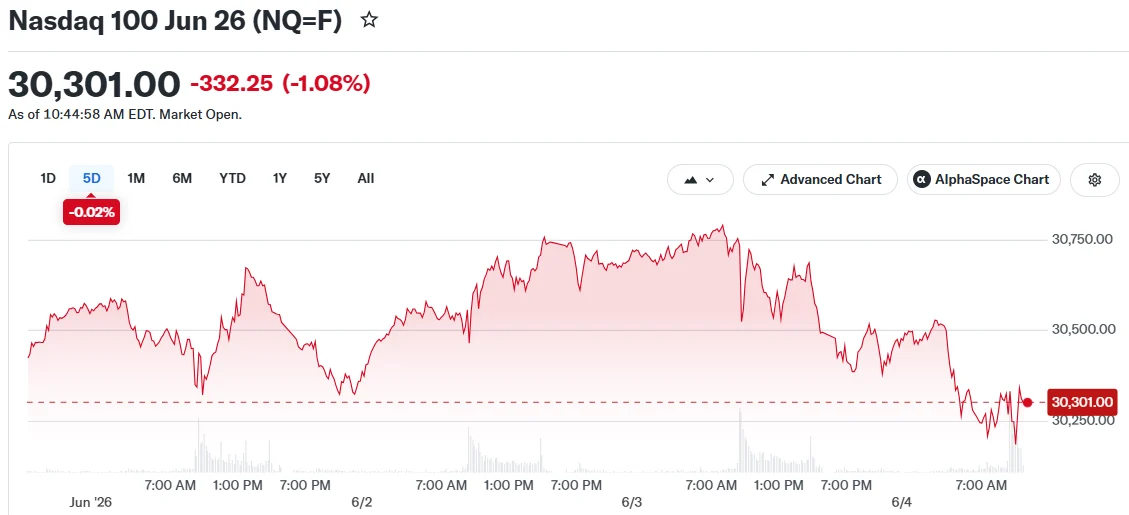
This divergence proved remarkable. The majority of individual stocks within both the Dow and S&P 500 actually posted gains. However, substantial declines across semiconductor equities proved powerful enough to weigh down overall index performance.
Disappointing Broadcom Forecast Sparks Semiconductor Decline
[[LINK_START_2]]Broadcom[[LINK_END_2]] stock tumbled more than 14% Thursday following the chipmaker’s artificial intelligence semiconductor revenue projection, which underwhelmed market participants.
While the company delivered quarterly results exceeding analyst estimates, the earnings beat and forward guidance failed to satisfy investors following the stock’s substantial appreciation over the previous twelve months.

“All it takes is one company to at least temporarily wreck the party,” said Bespoke Investment Group co-founder Paul Hickey. “Yesterday, the party pooper was Broadcom.”
The iShares Semiconductor ETF surrendered 4.4% during Thursday’s session. Additional chip manufacturers including Micron and Sandisk experienced similar downward pressure.
Nvidia, representing the sole semiconductor component within the Dow, demonstrated greater resilience, declining merely 0.3%.
The technology-concentrated Nasdaq had posted consecutive daily advances for approximately two weeks preceding Thursday’s reversal. Market strategists had cautioned that the advance was narrowing, with fewer individual stocks contributing to the rally—a configuration that can leave benchmarks vulnerable.
Geopolitical Developments, Employment Figures, and SpaceX Debut Capture Attention
Investors also digested emerging geopolitical developments. Wednesday witnessed the House of Representatives approving measures to terminate military operations with Iran. This legislative action followed significant escalation earlier in the week—representing the most severe tensions since an April ceasefire agreement.
Oil prices retreated Thursday as administration officials outlined potential ceasefire parameters. Currency and Treasury instruments similarly eased.
Preceding Friday’s May employment report, market participants evaluated two labor market indicators Thursday: weekly unemployment claims from the Bureau of Labor Statistics alongside termination data from Challenger, Gray & Christmas. Holiday-related factors contributed to elevated jobless claims.
Separately, SpaceX validated through Securities and Exchange Commission documentation its intention to pursue a $75 billion initial public offering—positioning it among the largest public debuts historically.
Quarterly reporting season progressed with anticipated results from Ciena Corporation, Lululemon Athletica, and DocuSign scheduled for Thursday.
Earlier during the week, Alphabet’s capital raising initiative strengthened projections that artificial intelligence investment would maintain momentum. Nevertheless, following an extended technology sector rally, Broadcom’s quarterly performance proved sufficient to unsettle market confidence.
Both the S&P 500 and Nasdaq were positioned for consecutive sessions of declines heading into afternoon trading.
Get 3 Free Stock Ebooks
Discover top-performing stocks in AI, Crypto, and Technology with expert analysis.
- Top 10 AI Stocks - Leading AI companies
- Top 10 Crypto Stocks - Blockchain leaders
- Top 10 Tech Stocks - Tech giants



