


Key Highlights
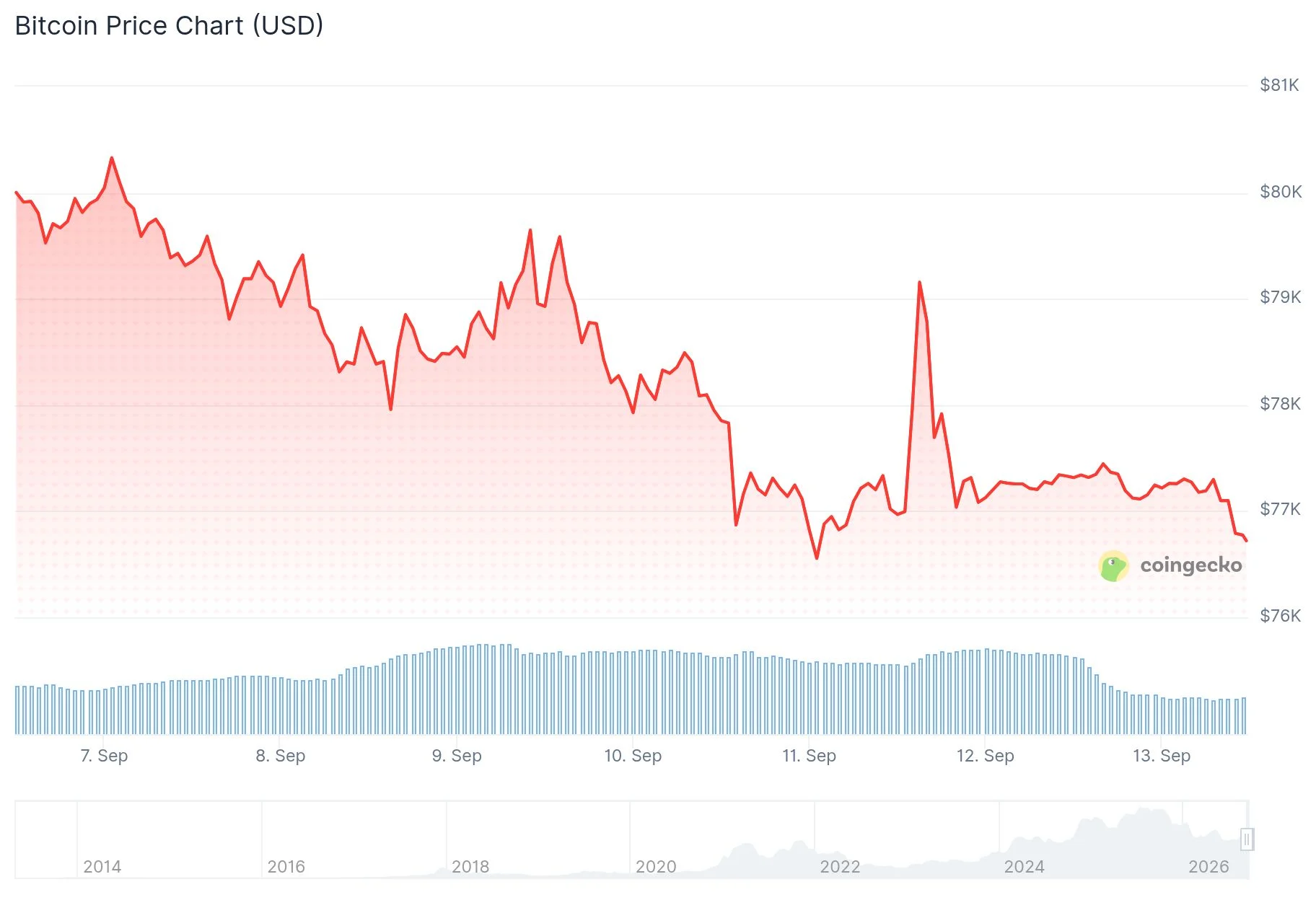
- BTC price declined under $77,000, hovering around $76,725 during Sunday sessions
- Market sentiment indicator temporarily reached 89, matching its March 2024 peak, before retreating
- Spot Bitcoin ETFs in the United States recorded $462.7 million in combined outflows during Sep. 8–11
- Bitcoin Suisse research indicates modest BTC exposure enhances conventional investment portfolio performance
- Annual U.S. inflation registered 3.4% for August, maintaining pressure on interest rate decisions
The Bitcoin price retreated beneath the $77,000 threshold on Sunday, settling near $76,725 — representing a 0.80% decrease. After closing Saturday’s trading around $77,300, the leading cryptocurrency continued its downward trajectory into Sunday morning.
Rising yields on government bonds combined with market expectations of sustained elevated interest rates have enhanced the appeal of dollar-based investments. This dynamic continues to weigh on Bitcoin alongside the wider digital asset ecosystem.
CryptoQuant’s analyst Darkfost observed that Bitcoin’s market sentiment indicator temporarily surged beyond 89 on a 100-point scale, reaching what he characterizes as “extreme greed” levels. This marks the strongest sentiment reading recorded since March 2024.
According to Darkfost, sentiment indicators have moderated from those elevated levels, despite Bitcoin maintaining stability at current price points. He emphasized that such extreme sentiment readings — whether bullish or bearish — frequently emerge near potential market inflection points, though he refrained from offering specific price forecasts.
Meanwhile, Alternative.me’s Fear & Greed Index registered 63 at press time, classified within the “greed” zone. This particular index incorporates price volatility, market volume, social sentiment, and search query patterns.

Bitcoin ETF Capital Flight Intensifies
During the trading period from Sep. 8 through Sep. 11, U.S. spot Bitcoin exchange-traded funds experienced combined net withdrawals totaling $462.7 million, based on Farside Investors data. Each trading day within that span registered negative flows.
Thursday delivered the week’s steepest single-session decline with $282.7 million in outflows. ARK 21Shares’ ARKB fund topped individual fund losses, shedding $234.2 million across the week, while BlackRock’s IBIT fund posted cumulative withdrawals of $52.5 million during the four-day period.
Market analyst Ted Pillows expressed concern regarding the weekly chart formation, stating that Bitcoin’s “$BTC weekly candle looks really bad” and warning that “if a weekly close happens like this, sellers will gain control.” His observation captures the cautious sentiment pervading trader circles approaching the weekly candle closure.
Strategic Bitcoin Allocation Analysis
Bitcoin Suisse released its Crypto Wealth Management Report 2026, making the case that Bitcoin integration enhances traditional investment portfolios. With artificial intelligence investments creating concentrated exposure among a handful of technology giants and U.S. federal obligations exceeding $40 trillion, the firm contends that bonds have lost their historical diversification benefits.
Their portfolio simulations demonstrated that reallocating 1% toward Bitcoin from bond holdings increases annualized returns from 6.2% to 7.2%. Expanding that allocation to 2.5% elevates returns to 8.6%.
Leading U.S. technology infrastructure providers are projected to allocate beyond $800 billion toward AI investments in 2026, escalating past $1 trillion throughout 2027.
Recent U.S. inflation metrics revealed consumer prices increased 3.4% year-over-year through August, unchanged from July’s figure. The Federal Reserve’s upcoming monetary policy deliberations are slated for September 15–16.
Throughout Sunday’s 24-hour trading window, Bitcoin fluctuated within a range extending from approximately $76,393 to $79,607, with current pricing positioned toward the range’s lower boundary.
Get 3 Free Stock Ebooks
Discover top-performing stocks in AI, Crypto, and Technology with expert analysis.
- Top 10 AI Stocks - Leading AI companies
- Top 10 Crypto Stocks - Blockchain leaders
- Top 10 Tech Stocks - Tech giants



