


Key Takeaways
- Bernstein has elevated ASML’s price target to €2,300 from €1,700, maintaining an “outperform” recommendation
- The bullish outlook stems from artificial intelligence-fueled expansion in cutting-edge logic and DRAM semiconductor manufacturing
- The firm projects ASML’s EUV revenue will expand at a 30% compound annual growth rate, reaching €42.7 billion by 2030
- Total revenue for ASML is anticipated to hit €80 billion by the end of the decade, surpassing consensus by 24%
- The investment firm simultaneously increased targets on TSMC, Intel, Micron, Samsung, and SK Hynix
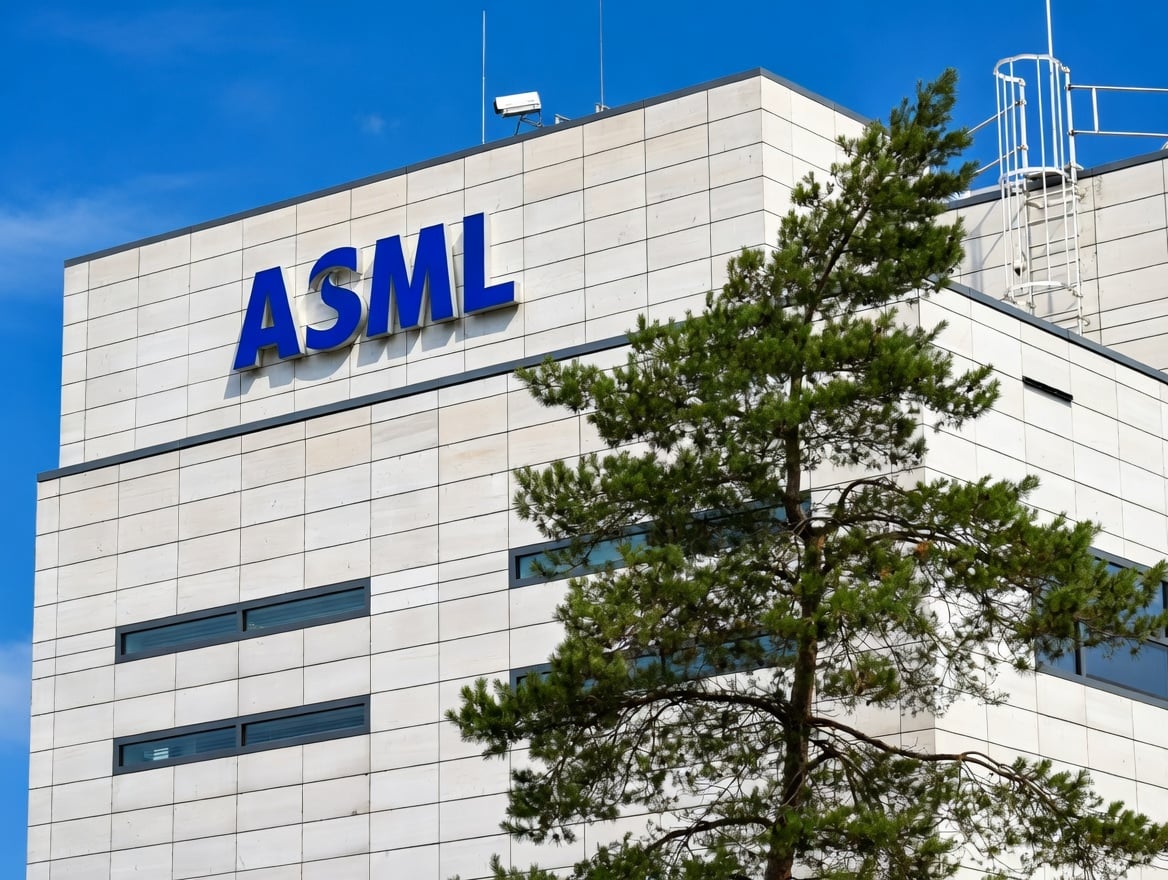
Investment firm Bernstein has significantly increased its price objective for ASML Holding to €2,300, marking a substantial increase from its previous €1,700 target, while maintaining its “outperform” stance on the semiconductor equipment manufacturer. This represents a notable 35% elevation in the price objective.
The revision arrives as the brokerage substantially increased its revenue projections for ASML, citing what it characterized as “unprecedented AI-driven expansion” across both cutting-edge logic and DRAM manufacturing capacity.
ASML stock has surged more than 100% throughout the previous 12-month period. Analyst David Dai from Bernstein has identified it as a premier selection within European semiconductor equities.
The investment firm elevated its target multiple to 40 times earnings from 35 times, characterizing this valuation as one standard deviation above historical averages.

Bernstein increased its 2027 shipment projection for extreme ultraviolet lithography systems, including High-NA equipment, to 91 units from 86. The 2028 forecast was revised upward to 113 units from 87.
Extreme Ultraviolet Revenue Projections See Substantial Increase
The investment firm now anticipates ASML’s EUV revenue will expand at a 30% compound annual rate, achieving €42.7 billion by 2030. This figure exceeds what the firm described as Wall Street estimates by more than 30%.
Deep ultraviolet revenue expectations also received upward adjustments, with Bernstein forecasting €20 billion by 2030, compared to €13 billion in 2026.
In total, Bernstein anticipates ASML will achieve €80 billion in revenue by 2030 — representing a 20% compound annual growth rate and exceeding current consensus forecasts of €64 billion by 24%.
Regarding profitability, Bernstein forecast 2028 earnings per share of €67, which the firm indicated is 35% above consensus expectations, and 2030 EPS of €97, reflecting a 31% compound annual growth rate.
The firm’s investment thesis is straightforward: while the stock price has doubled, earnings have expanded proportionally. This represents fundamental business growth rather than valuation multiple expansion driving the appreciation.
High-NA Technology Adoption Roadmap
Bernstein outlined its anticipated schedule for High-NA EUV adoption among semiconductor manufacturers. The firm expects memory chip producers to lead adoption, considering that DRAM dies are more compact and require only a single mask.
SK Hynix and Samsung are projected to implement High-NA in DRAM manufacturing in 2027. Intel is expected to follow with logic applications in 2028, Samsung in logic in 2029, and TSMC in 2030.
Bernstein emphasized that TSMC’s delayed adoption doesn’t indicate the technology is less compelling for the world’s dominant foundry. The firm attributed the extended timeline to TSMC’s “prudence and conservativeness” regarding new equipment adoption.
Lithography intensity — representing the portion of total manufacturing expenses allocated to lithography — is projected to climb from 24% in 2025 to 26% in 2028, primarily driven by DRAM production.
Bernstein simultaneously raised price objectives throughout the semiconductor sector: TSMC to $430 from $351, Intel to $100 from $65, Micron to $1,300 from $510, Samsung to 440,000 won from 225,000 won, and SK Hynix to 3,300,000 won from 1,150,000 won.
Potential risks identified by Bernstein include profit margins underperforming due to EUV commercialization expenses, inventory accumulation in China, weakness in the wafer fabrication equipment market, and additional export restrictions constraining sales to Chinese clients.
Get 3 Free Stock Ebooks
Discover top-performing stocks in AI, Crypto, and Technology with expert analysis.
- Top 10 AI Stocks - Leading AI companies
- Top 10 Crypto Stocks - Blockchain leaders
- Top 10 Tech Stocks - Tech giants



