



TLDR
- Brent crude retreated 0.7% to $101.61 per barrel while WTI declined 0.8% to $92.17 on Friday’s session.
- Thursday saw both benchmarks surge following a Wall Street Journal report detailing potential U.S. military reinforcement near Iranian waters.
- Pentagon officials are weighing deployment of an additional aircraft carrier strike group plus roughly 10,000 military personnel to the Persian Gulf region.
- Saudi Arabia brought its East-West Pipeline back online and restarted tanker operations at Yanbu port.
- Chinese refineries have halted all refined product exports except to Hong Kong and Macau through October, creating tighter diesel and aviation fuel markets.
Oil prices pulled back on Friday following Thursday’s dramatic surge as market participants assess competing forces: escalating U.S.-Iran military tensions versus improving crude flow from the Middle East.
December Brent Oil Futures declined 0.7% to settle at $101.61 per barrel. West Texas Intermediate crude contracts dropped 0.8% to close at $92.17 per barrel.
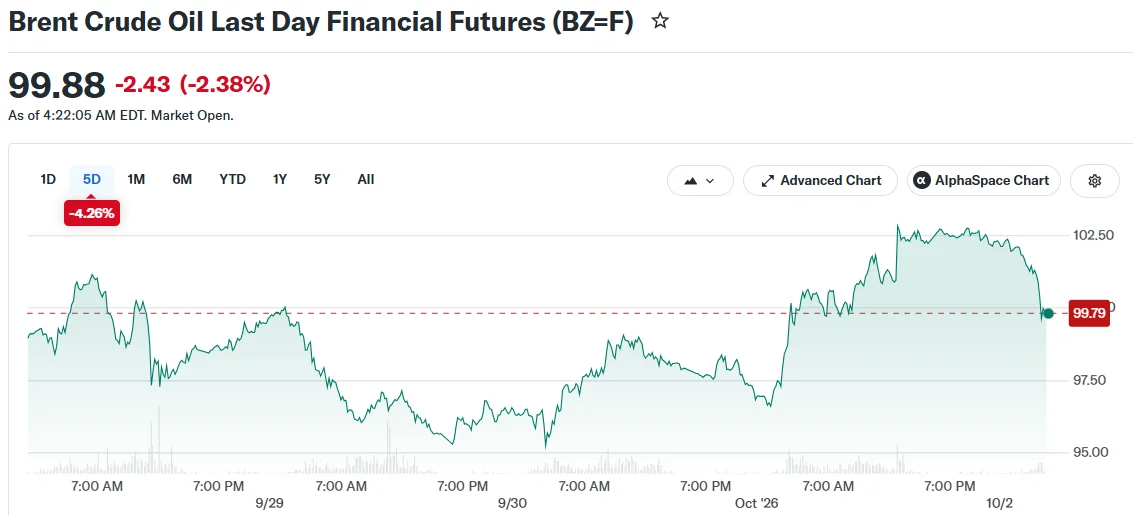
The previous trading session saw dramatic increases across both benchmarks. Brent surged more than $4 while WTI climbed over $2 in just one day.
Pentagon Plans Drive Thursday’s Rally
Thursday’s price spike came after the Wall Street Journal published details of possible U.S. military reinforcement plans. The report indicated Washington may dispatch an additional aircraft carrier battle group along with thousands of troops to the region.
The prospect of expanded military presence sparked fears that renewed confrontation with Iran might interrupt petroleum shipments from the area. Energy traders remain fixated on the Strait of Hormuz, which serves as a critical chokepoint for worldwide oil transport.

Pentagon sources confirmed deliberations about positioning another carrier accompanied by approximately 10,000 Navy and Marine Corps personnel in the Persian Gulf. Such a deployment would expand President Trump’s strategic options should he decide to intensify operations targeting Iran.
These military considerations emerged precisely when regional supply concerns had begun subsiding. Market observers noted earlier this week that crude shipments from Middle Eastern producers were approaching volumes seen before hostilities began.
Refined petroleum products, however, remain constrained compared to crude availability. Iran reportedly failed to load any crude tankers throughout September. This pattern indicates America’s naval blockade continues effectively restricting Iranian access to international energy commerce.
Infrastructure Recovery Meets Refining Constraints
Notwithstanding ongoing tensions, certain supply channels are showing recovery. Saudi Arabia has brought its East-West Pipeline infrastructure back into service. The kingdom simultaneously resumed loading operations at Yanbu terminal following previous interruptions.
A fresh complication emerged from China’s refining sector. Industry reports confirm that Chinese processors have stopped all refined product shipments outside Hong Kong and Macau for the month of October. This restriction is projected to reduce global availability of diesel, jet fuel and gasoline.
Diesel markets face particular stress from declining Russian shipments. Additional concerns center on potential limitations affecting U.S. fuel distribution.
Washington has reportedly approached European governments about potentially tapping strategic diesel stockpiles. Such releases would provide market relief while authorities track refinery production rates and storage levels.
Market specialists note that returning Middle Eastern crude volumes combined with tepid worldwide demand have capped price appreciation. Nevertheless, Brent has climbed 70% year-to-date as the U.S.-Iran standoff enters its eighth month.
Diplomatic channels have yielded minimal breakthrough. Market participants are simultaneously monitoring how elevated energy costs might influence inflation forecasts.
Persistent crude price increases could challenge monetary policy decisions at major central banks. The U.S. Federal Reserve faces particular complexity as it weighs economic growth considerations against inflationary pressures.
Both benchmarks closed Friday’s session beneath Thursday’s highs as traders await additional clarity regarding American military positioning in Gulf waters.
Get 3 Free Stock Ebooks
Discover top-performing stocks in AI, Crypto, and Technology with expert analysis.
- Top 10 AI Stocks - Leading AI companies
- Top 10 Crypto Stocks - Blockchain leaders
- Top 10 Tech Stocks - Tech giants



