



TLDR
- Major U.S. indexes rallied Thursday following the Federal Reserve’s rate increase announcement
- Dow Jones climbed 316 points, S&P 500 advanced 1.14%, Nasdaq surged 1.69%
- Technology sector spearheaded the rally, with Nvidia and Amazon posting gains exceeding 2%
- 10-year Treasury yields retreated below the 5% threshold while crude oil prices declined
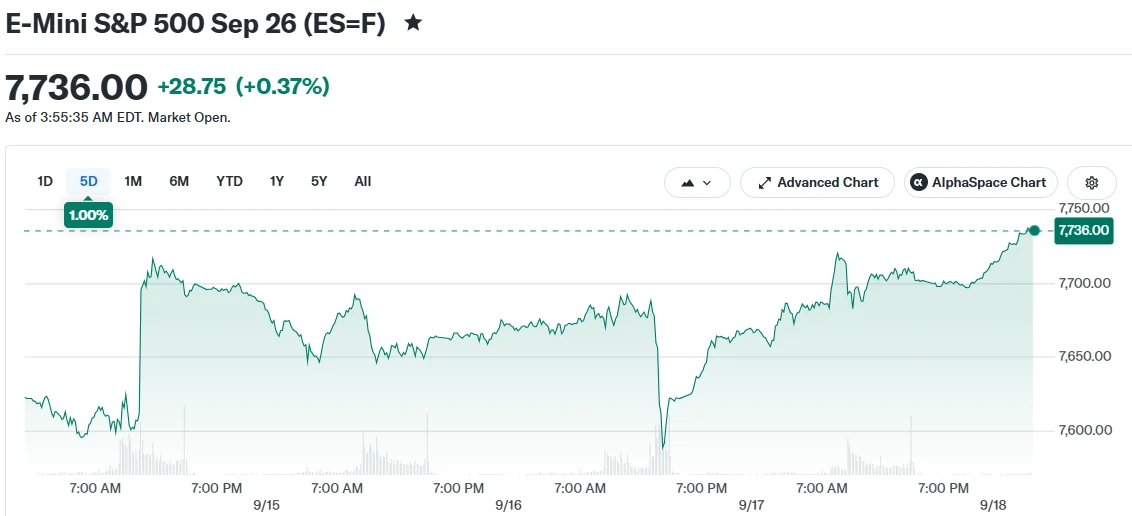
- Pre-market trading Friday showed continued strength after Bank of Japan’s policy decision
U.S. stocks staged a significant rebound Thursday, recovering from recent losses that followed the Federal Reserve’s decision to implement its first rate increase in three years. The broad-based rally gained momentum as crude oil prices retreated and Treasury yields moved lower throughout the session.
The Dow Jones Industrial Average advanced 316 points, marking a 0.61% increase to settle at 51,778. Meanwhile, the S&P 500 posted a 1.14% gain to reach 7,637, and the Nasdaq Composite delivered the strongest performance with a 1.69% surge to 26,418.
Technology Sector Drives Market Momentum
The technology sector emerged as the primary catalyst behind Thursday’s market strength. Both Nvidia and Amazon registered gains exceeding 2%, while Microsoft added 1.5% to its value. Semiconductor stocks with artificial intelligence exposure also demonstrated impressive performance, with Qualcomm advancing 2% and Intel posting a remarkable 7% jump.
The rebound represented a sharp reversal from earlier trading sessions this week, when these same equities experienced substantial declines. Market sentiment had been shaken after prominent AI industry leaders advocated for a temporary pause in AI development initiatives.
Federal Reserve Chairman Kevin Warsh emphasized Wednesday that inflationary pressures continue to run above acceptable levels. The central bank implemented a quarter-point increase to the federal funds rate. Committee members also indicated the possibility of an additional rate adjustment before year-end.

Markets responded positively despite the hawkish messaging, finding comfort in the Fed’s transparent communication. Robert Conzo, CEO of The Wealth Alliance, characterized the market’s response as fundamentally driven by a sense of relief.
“I think there is a relief that the Fed is addressing a sticky inflation problem,” Conzo said.
Energy Commodities and Bond Markets Show Weakness
The benchmark 10-year Treasury yield declined more than 7 basis points to settle at 4.93%, moving back below the psychologically important 5% threshold it had breached Wednesday following the Federal Reserve’s policy announcement.
Crude oil markets also experienced downward pressure. West Texas Intermediate crude declined 0.51% to finish at $101.91 per barrel. Brent crude futures fell 0.95% to $104.82. The pullback followed intelligence indicating Saudi Arabia has increased crude shipments to Asian customers via ship-to-ship transfer operations near Oman’s Sohar port facility.
Market participants also anticipate Saudi Arabia will resume operations of its strategic east-west pipeline, which ceased functioning following Houthi military strikes last week. Nevertheless, ongoing military confrontations between Saudi forces and Iran-aligned Houthi militants persist, and the Strait of Hormuz shipping lane remains blocked, preventing oil prices from experiencing more pronounced declines.
Conzo cautioned that sustained elevation in energy prices could complicate the Fed’s inflation management efforts. Rising energy costs typically cascade through the broader economy, affecting both retail businesses and end consumers.
During overnight trading, equity futures built on Thursday’s momentum. S&P 500 futures advanced 0.34%, Nasdaq 100 futures gained 0.54%, and Dow futures increased 0.29%.
The Bank of Japan implemented an anticipated rate adjustment but communicated an accommodative policy stance to financial markets, which contributed to equity strength throughout Asian trading sessions and reinforced optimism heading into Friday’s U.S. market open.
Despite Thursday’s rally, all three major U.S. equity benchmarks remained essentially unchanged to modestly lower for the week as a whole.
Get 3 Free Stock Ebooks
Discover top-performing stocks in AI, Crypto, and Technology with expert analysis.
- Top 10 AI Stocks - Leading AI companies
- Top 10 Crypto Stocks - Blockchain leaders
- Top 10 Tech Stocks - Tech giants



