


TLDR
- The Senate Clarity Act vote came up short, garnering only 49 of the required 60 votes to proceed this week.
- Shark Tank’s Kevin O’Leary anticipates Congress will tackle crypto market structure legislation again in early 2026, following midterm elections.
- A distinct tax-focused bill progressed through the House Ways and Means Committee, establishing guidelines for staking, mining, and minor cryptocurrency transactions.
- Matt Hougan of Bitwise changed his pessimistic outlook after observing bitcoin’s continued ascent despite declining prospects for the Clarity Act.
- Paul Atkins (SEC Chair) and Mike Selig (CFTC Chair) have indicated their agencies are prepared to establish crypto frameworks independently, without requiring new Congressional legislation.
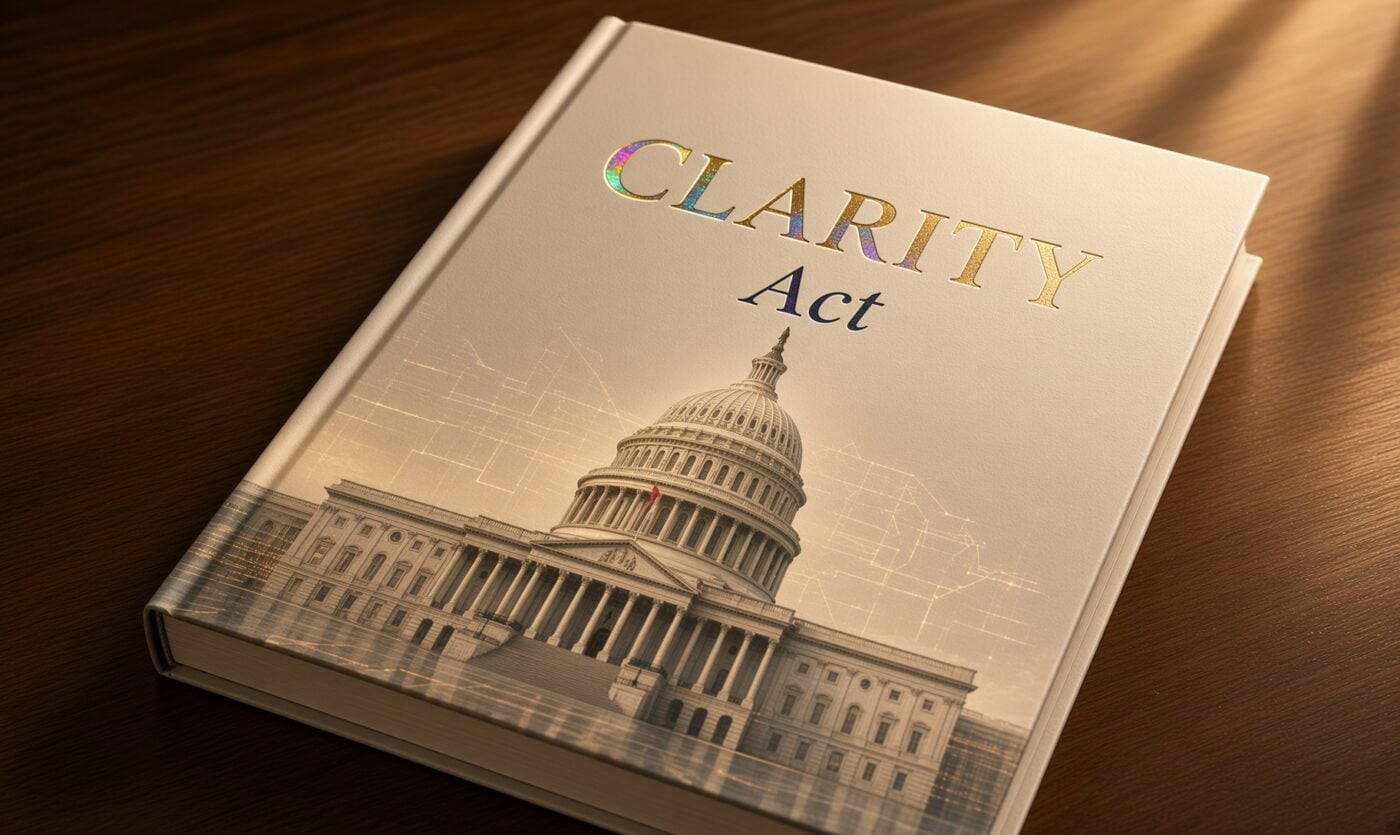
The Clarity Act, legislation designed to establish definitive regulations for cryptocurrency markets, did not secure enough Senate support this week. The measure obtained 49 votes but needed 60 to proceed.
The proposed legislation aimed to delineate regulatory responsibilities between the Securities and Exchange Commission and the Commodity Futures Trading Commission regarding digital asset oversight. Its defeat leaves these jurisdictional matters unresolved.
Senate Vote Comes Up Short for Clarity Act
Speaking at Thursday’s Avalanche Summit in New York, Shark Tank personality Kevin O’Leary discussed the unsuccessful vote. He indicated he had anticipated this outcome.
“I believed the probability of Clarity succeeding was essentially nonexistent, and that prediction proved accurate,” O’Leary stated. He remains convinced this defeat isn’t the final chapter for the legislation.
O’Leary referenced another piece of legislation that gained traction in the House this week. The Digital Asset Tax Certainty Act received approval from the House Ways and Means Committee.
This legislation would establish taxation frameworks for cryptocurrency operations including staking, mining, and minor transactions. It additionally addresses broker reporting obligations.
According to O’Leary, the tax legislation creates momentum for lawmakers to complete market regulation work. “When you establish taxation, policy must follow,” he explained.
He anticipates Congress will revisit market structure discussions following midterm elections. O’Leary suggested this could occur during the first or second quarter of 2026, regardless of Congressional control.

Bitcoin (BTC) Surges Even as Legislative Prospects Dim
Matt Hougan, Bitwise’s Chief Investment Officer, previously held a contrasting perspective ahead of the vote. He had compared the Clarity Act to crypto’s “Punxsutawney Phil” and predicted six additional weeks of market weakness should it fail.
Following the Senate vote, Hougan revised his assessment. In a client communication, he suggested the bill’s defeat might be less consequential than media coverage implies.
Hougan highlighted bitcoin’s price trajectory. The cryptocurrency hit a low around $57,950 on July 1 before surging beyond $80,000 by September 4.
Throughout this identical period, Polymarket’s probability odds for the Clarity Act’s passage this year plummeted from 39% to 14%. Hougan noted this represents the inverse of expected behavior if the bull market relied on legislative success.
He observed that major Wall Street institutions have continued developing cryptocurrency infrastructure without awaiting Congressional action. Examples he cited include Robinhood’s blockchain launch, Morgan Stanley’s Solana exchange traded fund, and DTCC’s inaugural tokenized stock trade settlements.
Hougan attributed this momentum to the current composition of federal regulatory agencies. He noted both the SEC and CFTC maintain pro-cryptocurrency leadership through 2029.
SEC Chair Paul Atkins has expressed his agency’s willingness to tackle the subjects addressed in the Clarity Act through independent rulemaking. CFTC Chair Mike Selig has made similar commitments regarding his agency’s jurisdiction.
Nevertheless, Hougan acknowledged constraints to this regulatory approach. Agency regulations remain vulnerable to reversal under future administrations, and only Congressional legislation can grant the CFTC comprehensive authority over spot cryptocurrency markets.
Bitcoin declined approximately 4% after the vote. Hougan suggested escalating interest rate anxieties and oil price fluctuations might have contributed to the pullback.
He anticipates additional turbulence ahead for the market. “The bull market facing us still has several obstacles to navigate,” he concluded.
Get 3 Free Stock Ebooks
Discover top-performing stocks in AI, Crypto, and Technology with expert analysis.
- Top 10 AI Stocks - Leading AI companies
- Top 10 Crypto Stocks - Blockchain leaders
- Top 10 Tech Stocks - Tech giants



