


Key Takeaways
- Since debuting on Shanghai’s STAR Market in August, Unitree Robotics has plummeted 44%, erasing approximately $30 billion in valuation
- Chinese regulators are reportedly preparing more stringent approval standards for humanoid robotics firms seeking mainland stock exchange listings
- Unprofitable competitors such as Deep Robotics and Leju Robot may face hurdles under the proposed stricter requirements
- Unitree reported a 19% decline in first-half profits year-over-year, while revenue expansion decelerated dramatically from 300%-plus in 2025 to just 48%
- Despite recent losses, Unitree maintains a valuation of 347 times projected earnings—nearly triple the STAR Market’s 118-times average
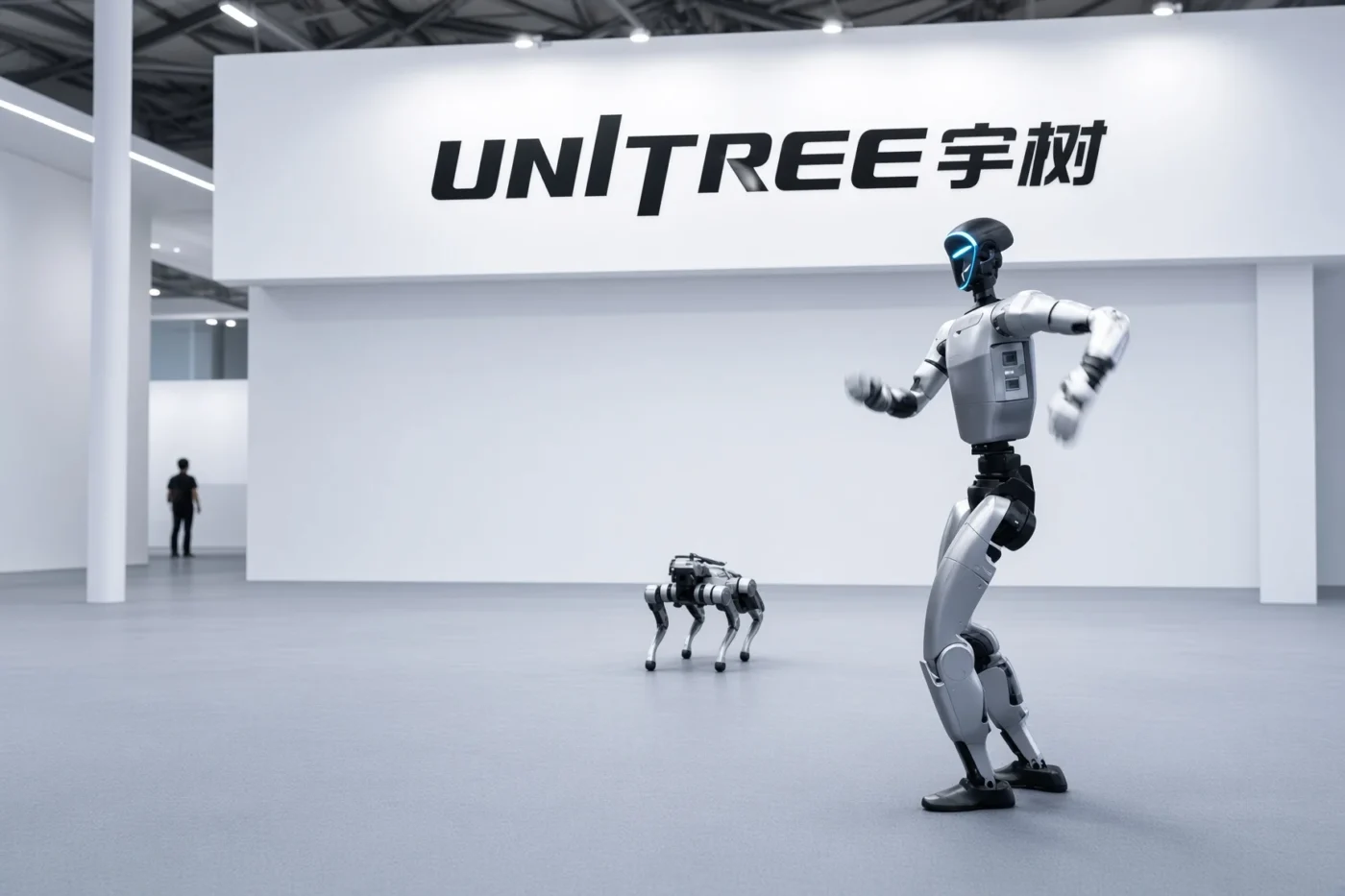
When Unitree Robotics debuted on Shanghai’s STAR Market on August 19, shares skyrocketed 460% during the opening session. Market enthusiasm was palpable. The manufacturer had delivered over 5,500 humanoid robots in the prior year, claiming the top position worldwide.
Yet barely four weeks have passed, and the narrative has shifted dramatically.
Shares have collapsed 44% from their zenith, eliminating more than 200 billion yuan—roughly $30 billion—in total market capitalization. This precipitous decline has caught the eye of Chinese regulatory bodies and sparked broader concerns about the humanoid robotics industry’s viability.
Authorities in Beijing are reportedly weighing more rigorous standards for humanoid robotics manufacturers pursuing public offerings on domestic markets. According to emerging reports, regulators plan to scrutinize sustainable revenue expansion, profitability trajectories, and authentic technological innovation credentials.
These proposed regulations could impact Deep Robotics and Leju Robot, both currently pursuing IPOs while operating in the red.
Financial Performance Weakening
Unitree’s financial results have shown concerning trends. Excluding one-time gains, the company’s first-half earnings declined 19% versus the corresponding period a year earlier. Revenue expansion has also decelerated precipitously, tumbling from more than 300% growth in 2025 to a modest 48%.

The manufacturer faces additional challenges from customer concentration risk. Roughly 70% of its robotic deployments serve research institutions and educational settings, constraining opportunities for immediate commercial scalability.
Despite the recent downturn, Unitree continues trading at 347 times forward earnings projections. By comparison, the STAR Market carries an average multiple of 118 times. Tuesday’s session saw shares changing hands at 469.80 yuan.
Kelvin Lau, an equity analyst at Daiwa Securities Group based in Hong Kong, indicated the company’s underlying business metrics cannot support such elevated multiples. He noted Unitree must substantially increase investment in AI foundation models and diversify its client portfolio to maintain market position.
Competitors Face Similar Challenges
Leju Robot, currently seeking approval for a ChiNext board listing in Shenzhen, recorded losses totaling 69.8 million yuan over the past year. This represents its steepest annual deficit across the previous three-year period.
Shenzhen Dobot has projected its first-half losses could balloon to 120 million yuan amid escalating operational expenses. The Shenzhen exchange granted preliminary approval for its public offering this past July.
Deep Robotics achieved profitability last year but cautioned that margins may compress during the current six-month period due to downward pricing pressure.
These challenges underscore a fundamental obstacle confronting the humanoid robotics sector. Most enterprises continue struggling to transform initial market enthusiasm into sustained commercial revenues. Industry-wide, the rate of industrial commercialization remains disappointingly modest.
Tesla continues advancing its Optimus humanoid robot project, and the headwinds confronting Chinese competitors may provide American corporations additional runway to narrow the competitive gap.
RBC Capital Markets projects the global addressable market for humanoid robotics could reach $9 trillion by 2050, with Chinese markets expected to represent over 60% of total demand.
Get 3 Free Stock Ebooks
Discover top-performing stocks in AI, Crypto, and Technology with expert analysis.
- Top 10 AI Stocks - Leading AI companies
- Top 10 Crypto Stocks - Blockchain leaders
- Top 10 Tech Stocks - Tech giants



