


Key Takeaways
- BofA established a 12-month price objective of 7,800 for the S&P 500, suggesting minimal 2% appreciation potential
- The financial institution increased its year-end projection to 7,400 from 7,100, still indicating approximately 3% potential decline
- Lead strategist Savita Subramanian cautioned that equity markets are primed for a correction
- BofA projects S&P 500 profit expansion of 33% for 2026 and 12% for 2027
- The firm recommends large-cap value stocks and equal-weighted indexes over traditional market-cap weighted benchmarks
Bank of America unveiled a conservative forecast for American equities Monday, establishing a 12-month price objective of 7,800 for the S&P 500. This projection suggests only modest 2% appreciation from present trading levels.
The projection originated from BofA’s chief equity strategist Savita Subramanian, who simultaneously elevated the institution’s year-end forecast to 7,400 from its earlier 7,100 estimate. However, even with this upward adjustment, the revised year-end number still projects approximately 3% potential downside from today’s valuations.
“Our 12-month target of 7800 is nothing to write home about, suggesting +2% from here,” Subramanian wrote in the note.
Equity Markets Primed for Correction
According to Subramanian, equities have experienced insufficient volatility throughout the current year. The market witnessed just a single 5% correction in 2026, occurring in March, while typical years average three such downturns.
Additionally, she noted that approximately 50% of BofA’s proprietary bear-market indicators have activated. This development, she explained, hints that patient investors might secure more favorable entry opportunities.
The equity strategist identified multiple risk factors warranting close monitoring. These encompass inflationary pressures, central bank monetary policy decisions, earnings sustainability, and lending market conditions.

She further emphasized that current valuation multiples embed inflation expectations below BofA’s actual projections. This disconnect between market assumptions and the bank’s inflation forecast represents a significant vulnerability.
Historical Parallels to the 1970s Era
Subramanian referenced the 1970s decade as a historical parallel, characterized by elevated inflation risks, currency depreciation, and central bank tightening cycles. That economic environment ultimately triggered equity market declines exceeding 40%.
However, she expressed minimal concern regarding political developments. Subramanian characterized a possible Democratic midterm victory as a “red herring” for corporate investment, noting that artificial intelligence infrastructure expansion is predominantly managed at the state level rather than through federal initiatives.
Notwithstanding near-term reservations, she maintained that the fundamental bullish thesis for equities endures. BofA anticipates productivity improvements as corporations substitute labor with more efficient operational models.
Regarding corporate profits, BofA anticipates S&P 500 earnings expansion of 33% throughout 2026, with subsequent 12% growth projected for 2027.
The institution expressed preference for large-capitalization value equities, carefully selected small- and mid-cap opportunities, and the equal-weighted S&P 500 benchmark rather than the conventional market-capitalization weighted alternative.
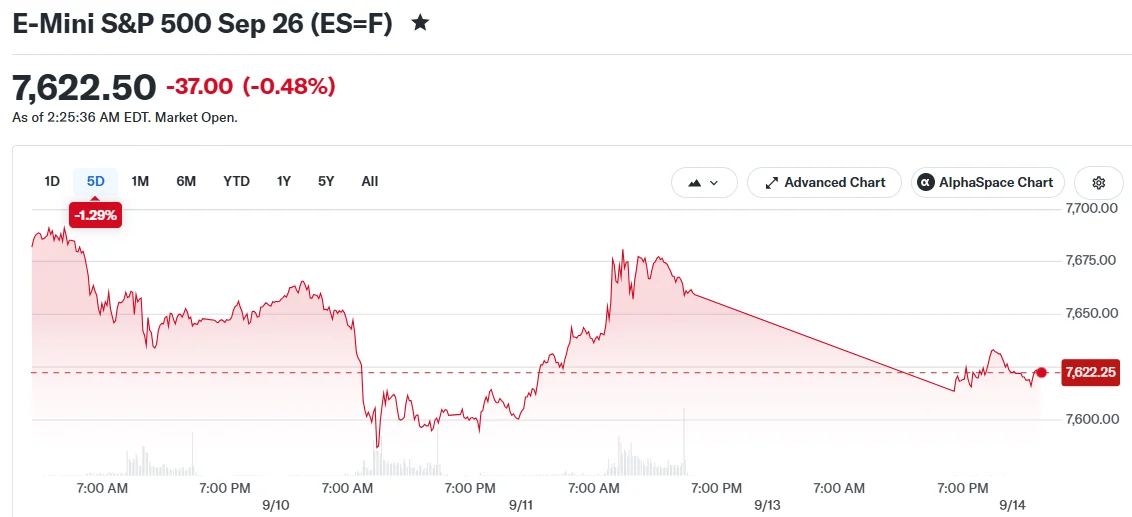
At the time of the research publication, the S&P 500 traded at 7,619.76, declining 0.48% intraday.
Get 3 Free Stock Ebooks
Discover top-performing stocks in AI, Crypto, and Technology with expert analysis.
- Top 10 AI Stocks - Leading AI companies
- Top 10 Crypto Stocks - Blockchain leaders
- Top 10 Tech Stocks - Tech giants



