



TLDR
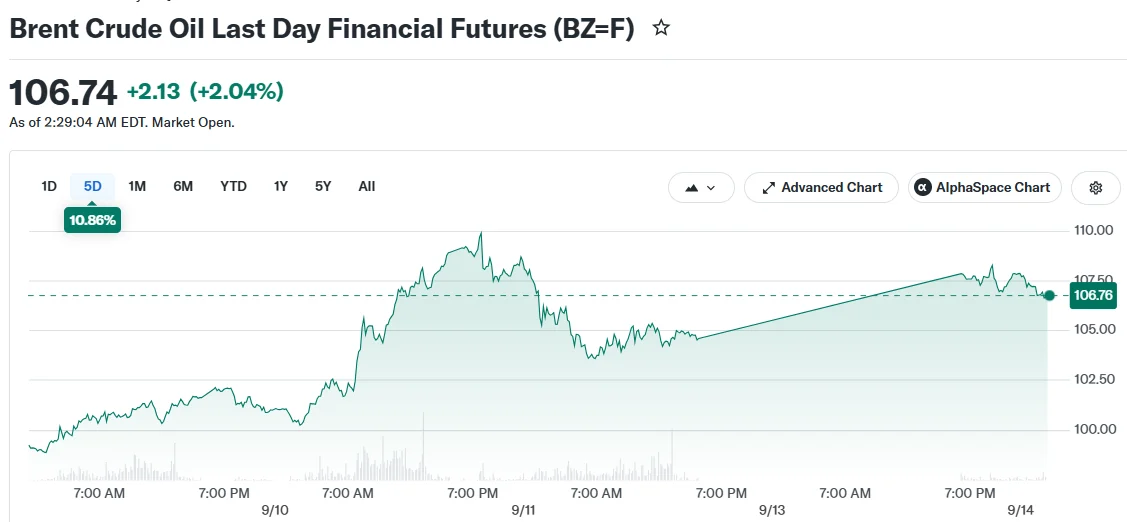
- Brent futures surged beyond 2% to reach $106.72 per barrel, with WTI touching $102.15 amid intensifying Houthi offensive against Saudi targets
- Critical East-West oil pipeline forced offline following drone attack, potentially affecting up to 4% of worldwide crude supply
- Yemen-backed militants captured Perim island, establishing control over strategic Bab el-Mandeb waterway
- Diplomatic discussions between Iran and Gulf states regarding Strait of Hormuz security delayed without new date
- Crude markets have rallied more than 8% over seven days, marking first time above $100 threshold since July
Oil prices jumped over 2% during Monday’s trading session as renewed Houthi assaults targeting Saudi Arabian petroleum facilities and additional incidents in the Strait of Hormuz intensified concerns about significant supply interruptions throughout the Middle Eastern region.
Brent crude contracts advanced to $106.72 per barrel, with West Texas Intermediate reaching $102.15. During morning trading hours, Brent briefly touched $108.41.
Critical Saudi Pipeline Forced Offline
Saudi authorities verified they had suspended operations on the East-West pipeline following an unmanned aerial vehicle attack by Houthi forces. This crucial infrastructure serves as an alternative transportation corridor enabling Saudi Arabia to export crude without navigating through the Strait of Hormuz.
Following the pipeline’s closure, the Yanbu terminal maintains sufficient stored crude to sustain only five to seven days’ worth of shipments, according to three sources with knowledge of Saudi petroleum operations.
The operational halt places as much as 4% of worldwide oil production in jeopardy. ANZ analysts cautioned that the kingdom has effectively lost its western shipping alternative should circumstances in the Strait of Hormuz deteriorate further.

Saudi government broadcasters distributed video evidence depicting destruction to residential structures and a religious facility in the southern Jazan region following a Houthi assault. The militant group additionally claimed responsibility for targeting a Saudi defense installation in an adjacent province.
Strategic Waterway Faces New Threats
Houthi forces established presence on the strategically significant Perim island last Friday, positioning themselves to conduct operations throughout the Bab el-Mandeb waterway. This narrow passage has been transporting approximately 4% to 5% of international oil volumes in recent weeks.
During the previous week, the organization launched coordinated strikes against numerous high-profile Saudi installations including an Aramco processing facility, petroleum storage terminals, aviation hubs, and maritime vessels. A commercial ship traversing the Strait of Hormuz sustained projectile damage during the weekend, igniting a blaze and necessitating crew evacuation.
Iranian authorities confirmed one fatality and four injured crew members aboard an Iranian merchant vessel struck along its territorial waters.
ING commodity analysts observed the assaults on Saudi energy assets represented a significant intensification, though comprehensive assessment of damages and pipeline closure duration remained undetermined.
Regional Diplomatic Efforts Delayed
Omani Foreign Minister Badr Albusaidi announced Sunday that a scheduled Monday conference between Iranian representatives and Gulf state officials to address Strait of Hormuz security had been postponed. Market participants had closely monitored this diplomatic initiative, as expectations of dialogue had temporarily moderated oil price increases last week.
Following the indefinite postponement, supply vulnerability through Hormuz is anticipated to persist at elevated levels. Crude shipments through the strategic waterway had already diminished to minimal volumes compared to pre-conflict rates following renewed US-Iran confrontations in August.
Crude prices have climbed more than 8% throughout the past week, breaching the $100 per barrel threshold for the first occasion since July.
Get 3 Free Stock Ebooks
Discover top-performing stocks in AI, Crypto, and Technology with expert analysis.
- Top 10 AI Stocks - Leading AI companies
- Top 10 Crypto Stocks - Blockchain leaders
- Top 10 Tech Stocks - Tech giants



