


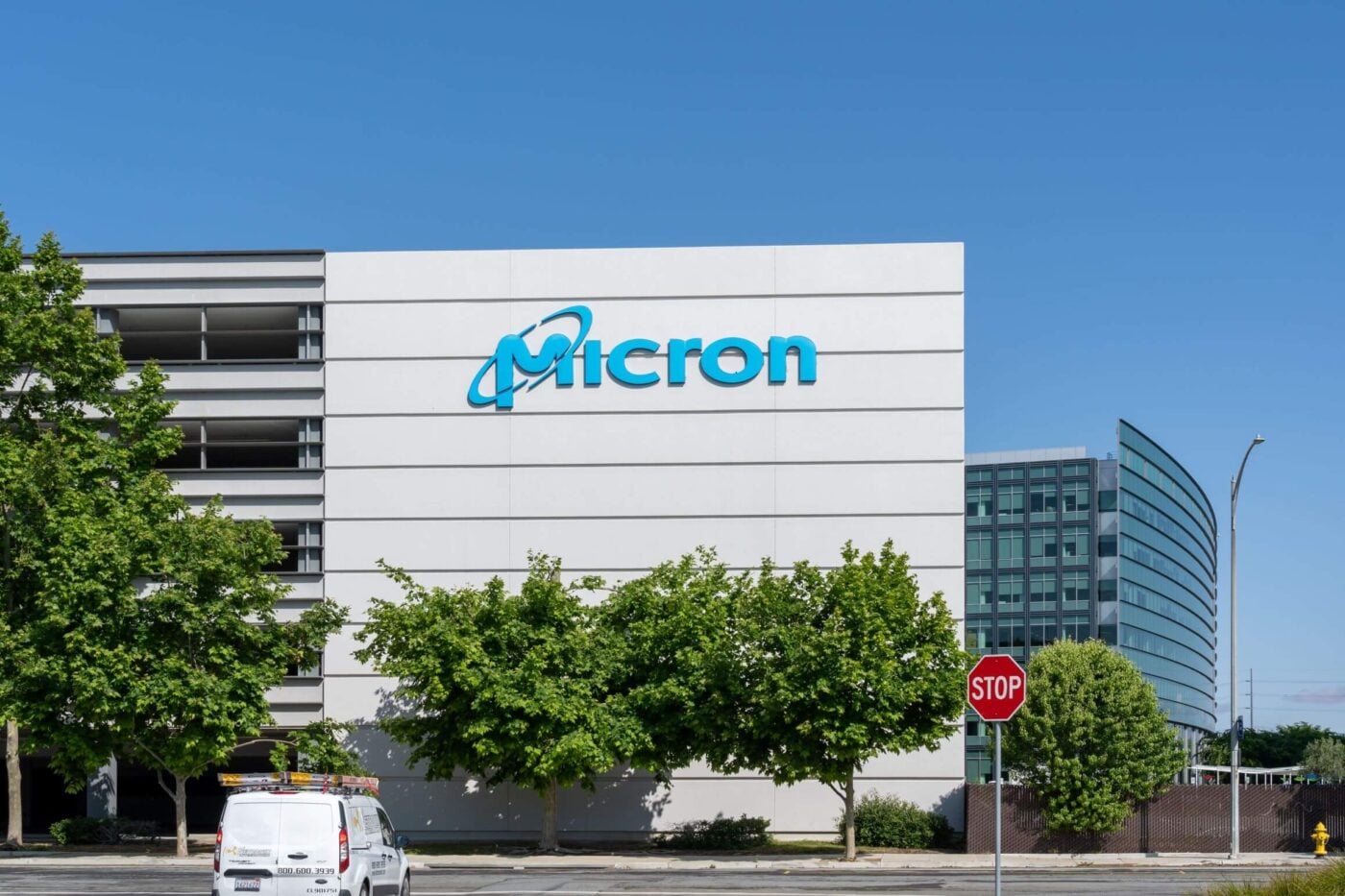
Key Highlights
- Taiwan labor unions at Micron, representing close to 10,000 employees, are warning of potential strike action amid bonus compensation disputes.
- Labor groups demand 15% of operating profit be designated for bonuses starting fiscal 2027, distributed on a quarterly basis.
- Over 80% of union members surveyed in August expressed support for strike measures.
- As Micron’s primary production hub, Taiwan facilities are critical to chip manufacturing, making disruptions highly impactful.
- The chipmaker maintains that this fiscal year’s performance-based bonuses will reach unprecedented company highs.
Shares of Micron (MU) declined 2.4% during Tuesday’s premarket trading session following announcements from Taiwan-based labor unions about advancing toward potential strike measures centered on bonus compensation disagreements.
Labor organizations in Taoyuan and Taichung collectively represent approximately 10,000 workers out of Micron’s total Taiwan workforce of roughly 15,000 employees. The island nation serves as the company’s primary production facility, specializing in DRAM and high-bandwidth memory chip manufacturing.
According to union statements, an internal poll conducted in August revealed that more than 80% of participating members supported moving forward with strike action.
At the heart of the conflict lies disagreement over profit distribution methods. Union representatives argue that Micron’s existing Incentive Pay Plan fails to adequately reflect the company’s surging profitability and lacks transparency regarding performance metric calculations.

Looking at fiscal 2026, labor groups are requesting a special one-time bonus payment. According to their calculations, this proposal would equate to approximately 83 months of salary per Taiwan-based worker.
Beginning in fiscal 2027, unions propose eliminating the current structure in favor of a new framework that designates 15% of operating profits for employee bonuses, distributed quarterly instead of annually.
Micron has countered these demands, emphasizing that its total compensation structure encompasses base wages, annual performance-based incentives, operational bonuses, and equity participation programs. The semiconductor manufacturer states that performance bonuses for the current fiscal year will surpass all previous records.
Competitor Compensation Models
Union representatives have highlighted profit-sharing agreements at Samsung and SK Hynix as industry standards. Samsung successfully avoided an 18-day labor strike in South Korea last May by accepting a bonus pool equivalent to 10.5% of its semiconductor division’s operating profit. SK Hynix had previously established a commitment allocating 10% of yearly operating profits toward employee compensation.
According to Micron’s Taiwan unions, these competitor agreements have created a growing compensation disparity between their membership and South Korean semiconductor workers.
Taiwan’s labor regulations mandate mediation before any strike action can proceed, meaning immediate work stoppages are not expected. The Central Taiwan Science Park administration, a government entity, confirmed that personnel are available to support negotiations and could initiate formal mediation proceedings if circumstances require.
Financial Context of the Disagreement
For its fiscal third quarter concluded May 28, Micron posted record-breaking revenue totaling $41.46 billion alongside net income of $28.24 billion. The semiconductor company’s market capitalization reached approximately $1.10 trillion as of Tuesday.
Additionally, the company has pledged $250 billion toward U.S.-based manufacturing expansion through 2035, representing substantial capital commitments.
Taiwanese government officials have noted that Micron has invested NT$1.4 trillion ($43.9 billion) domestically. Officials cautioned that potential strike action could impact employees, operational continuity, and Taiwan’s broader semiconductor ecosystem.
Taiwan President Lai Ching-te addressed the developing situation on Tuesday, emphasizing that the semiconductor industry’s success stems from sustained collaborative efforts and reaffirming Taiwan’s track record of fulfilling global supply commitments.
Micron representatives indicated the company remains committed to ongoing employee engagement through established communication channels while adhering to relevant legal procedures.
Get 3 Free Stock Ebooks
Discover top-performing stocks in AI, Crypto, and Technology with expert analysis.
- Top 10 AI Stocks - Leading AI companies
- Top 10 Crypto Stocks - Blockchain leaders
- Top 10 Tech Stocks - Tech giants



