


Key Takeaways
- Financial disclosures reveal President Trump acquired between $15,001 and $50,000 worth of SpaceX shares on June 23, occurring just 11 days following the company’s unprecedented $1.77 trillion public market debut
- This transaction represented just one piece of a broader portfolio activity that included more than 1,000 individual stock transactions throughout June 2026
- During the same period, Trump’s accounts divested holdings in major technology companies including Nvidia, Apple, Broadcom, Amazon and Tesla, with individual transaction values spanning from $15,001 to $250,000
- White House officials emphasized that independent third-party financial managers control Trump’s investment portfolio without any direct input or influence from the President
- SpaceX delivered second-quarter revenue totaling $7.81 billion, representing a substantial 92% increase compared to the previous year and surpassing Wall Street’s $6.93 billion forecast
According to financial disclosure documents signed on August 12 and made public on August 22, President Trump acquired up to $50,000 in SpaceX (SPCX) shares on June 23, 2026. Trading at $135 on Monday, SpaceX stock declined 1.44% for the session while posting a solid 17.32% gain over the preceding month.
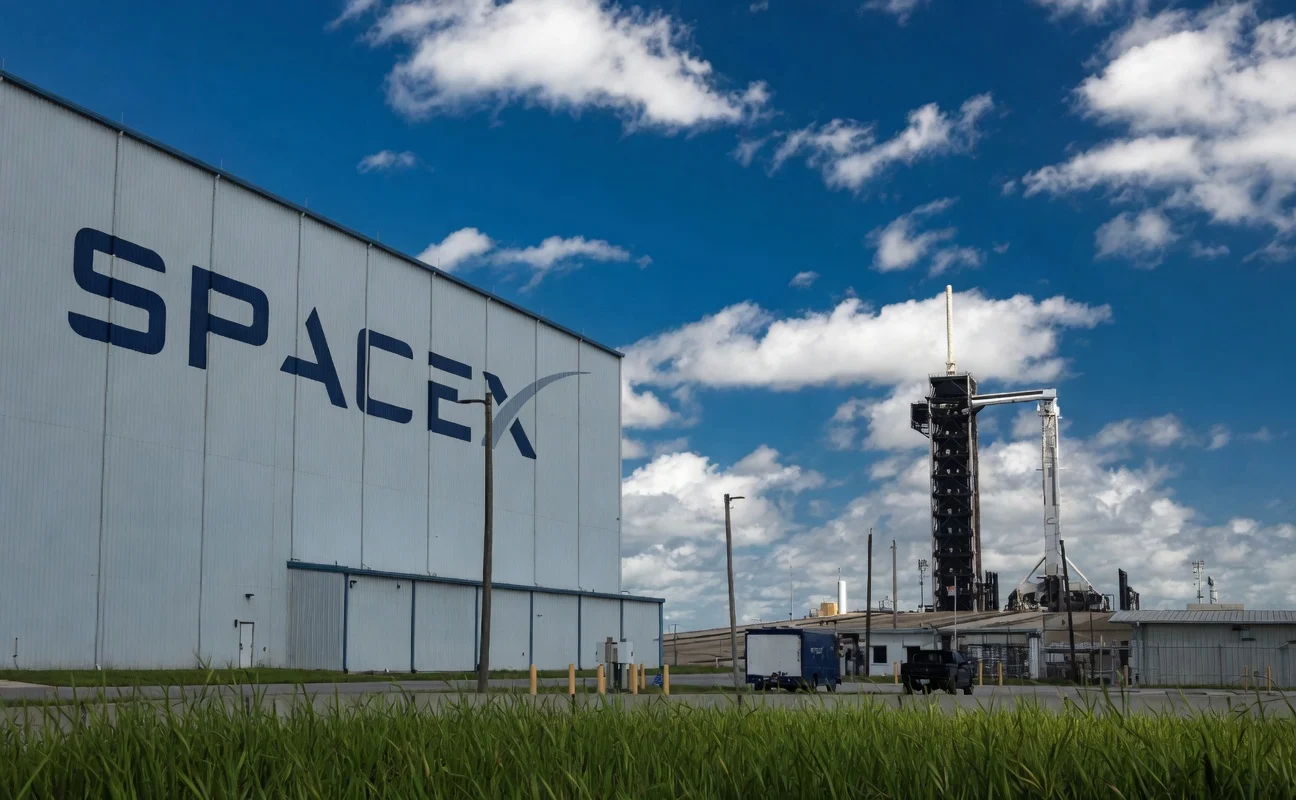
Space Exploration Technologies Corp., SPCX
This investment occurred merely 11 days following SpaceX’s June 12 initial public offering, which assigned the aerospace, satellite communications and artificial intelligence enterprise a market capitalization of roughly $1.77 trillion, establishing it as the largest initial public offering in United States history.
Because federal reporting regulations mandate that government officials disclose investments using value brackets instead of specific dollar amounts, the exact sum Trump allocated to SpaceX remains undisclosed to the public.
The SpaceX acquisition represented merely one transaction among more than 1,000 stock market activities Trump executed throughout June 2026. Additional notable purchases included positions in Berkshire Hathaway, Visa, Mastercard and Cintas.

Technology Holdings Liquidated During Same Period
Simultaneously, Trump’s investment accounts showed divestments across multiple prominent technology sector companies. These disposals encompassed Nvidia ($15,001 to $50,000), Apple ($50,001 to $100,000), Broadcom ($100,001 to $250,000), Amazon ($100,001 to $250,000) and Tesla ($15,001 to $50,000), with all transactions occurring during various dates throughout June 2026.
White House representatives moved swiftly to emphasize that Trump maintains no authority over these investment decisions. Press secretary Davis Ingle explained that independent third-party financial firms oversee the portfolio autonomously, implementing strategies that mirror established market indexes including the Schwab 1000.
“Neither President Trump nor any member of his family has any ability to direct, influence or provide input regarding how the portfolio is invested or when investments are bought or sold,” Ingle said.
Federal Government Connections Under Scrutiny
The transaction has attracted attention considering SpaceX’s substantial connections with federal government operations. SpaceX functions as a significant defense contractor for the United States military and consistently requires regulatory clearances from various federal authorities.
In the previous week, Trump authorized an official memorandum instructing his administration to substantially expand the volume of American commercial space missions, establishing an ambitious target of no fewer than 1,000 launches and atmospheric re-entries annually by 2030. SpaceX maintains a commanding position within this industry sector.
Kelly Loeffler, who leads the Small Business Administration as a Trump cabinet official, similarly benefited financially from the SpaceX public offering. She previously held an investment stake in xAI, Musk’s artificial intelligence venture that subsequently combined operations with SpaceX, and her initial position could potentially have been valued anywhere between $7 million and $2.6 billion when the IPO occurred, based on analysis from PitchBook analyst Franco Granda.
From an operational standpoint, SpaceX announced second-quarter revenue reaching $7.81 billion, marking a remarkable 92% year-over-year increase that exceeded the $6.93 billion analyst projection. The company’s per-share loss of 9 cents also came in better than anticipated compared to the 24-cent loss Wall Street analysts had forecasted.
SpaceX stock concluded Monday’s trading session at $135, declining 1.44% for the day.
Get 3 Free Stock Ebooks
Discover top-performing stocks in AI, Crypto, and Technology with expert analysis.
- Top 10 AI Stocks - Leading AI companies
- Top 10 Crypto Stocks - Blockchain leaders
- Top 10 Tech Stocks - Tech giants



