


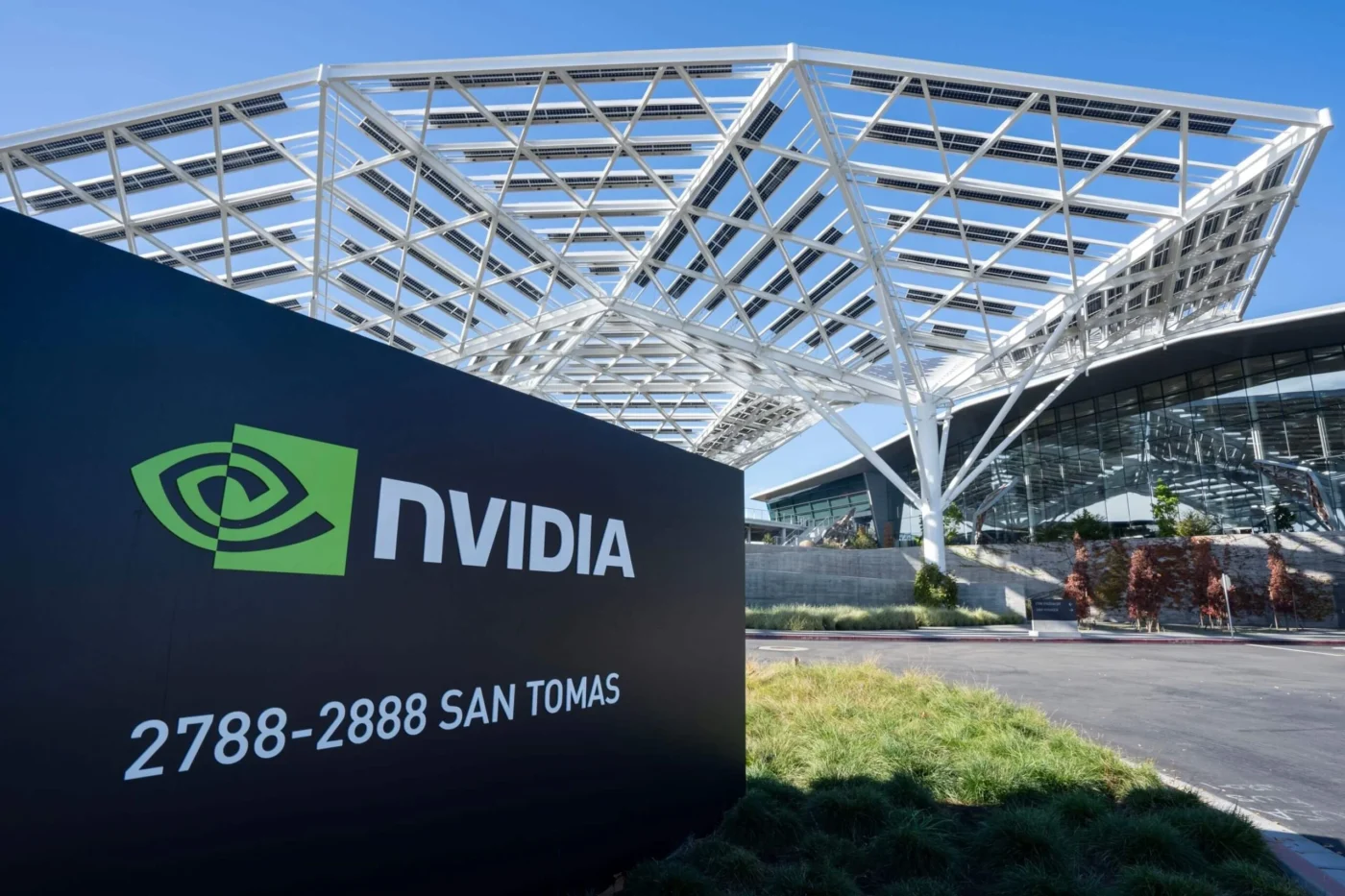
Key Takeaways
- Nvidia’s forward price-to-earnings multiple has compressed to 24x, approaching the S&P 500’s 21x level, signaling potential valuation concerns before Wednesday’s quarterly report.
- Options activity suggests a potential 5.4% swing post-earnings, translating to approximately $280 billion in market capitalization volatility.
- According to JPMorgan’s Harlan Sur, exceeding expectations may fail to drive share appreciation, with historical data showing 3-5% declines within a month following recent earnings beats.
- NVDA shares have retreated for seven consecutive sessions while maintaining an 11.7% gain year-to-date.
- Elevated Treasury yields and wider market volatility present additional challenges heading into the quarterly announcement.
Nvidia (NVDA) is scheduled to announce its second-quarter financial results this Wednesday, drawing intense scrutiny from market participants. Despite a seven-session losing streak leading up to the announcement, shares maintain a positive 11.7% return for 2024. Monday’s trading session saw NVDA decline 2.91%.
The chip giant’s forward valuation multiple currently stands at 24 times earnings. This figure represents a notable convergence toward the broader S&P 500’s 21x multiple—a remarkable development for a company experiencing hypergrowth dynamics.
This valuation contraction has been ongoing since August 2024, coinciding with explosive earnings expansion driven by artificial intelligence infrastructure demand. As actual earnings power increases, the premium investors are willing to pay above fundamentals naturally diminishes.
In a client note released Monday, JPMorgan’s Harlan Sur cautioned that simply surpassing analyst projections might prove insufficient. Analysis of the previous four quarters reveals that while Nvidia’s revenue forecasts exceeded consensus by approximately 4% on average, shares typically declined between 3% and 5% during the subsequent 7 to 30 trading days.

Essentially, investors have become conditioned to expect exceptional performance from Nvidia. Creating genuine positive surprise has grown increasingly challenging.
The derivatives market is anticipating a 5.4% movement in either direction for Thursday’s session following the earnings release. This translates to a potential $280 billion fluctuation in market capitalization—a figure exceeding the total enterprise value of approximately 90% of all S&P 500 constituents.
Notably, the current 5.4% implied volatility sits below the 6.5% anticipated before May’s earnings and substantially under Nvidia’s 7.4% average post-earnings movement over the preceding 12 quarterly reports.
Factors That Could Drive Multiple Expansion
JPMorgan’s Sur identified three specific developments that might justify higher valuation multiples for Nvidia.
The first involves management demonstrating sustained competitive advantages in AI computational hardware. Second, articulating concrete benefits from recently disclosed infrastructure financing arrangements—including a collaboration with six leading financial institutions targeting more than $500 billion in AI infrastructure investment. Third, any meaningful recovery in Chinese market operations could provide significant upside, with Sur’s models indicating that H200 GPU deployments could generate approximately $3 billion in incremental revenue per 100,000 units delivered.
Macroeconomic Considerations
Beyond company-specific factors, Nvidia confronts challenging broader market conditions. Climbing Treasury yields have created headwinds for growth-oriented and technology equities across the board, with 30-year rates recently touching 19-year peaks. Federal Reserve Chair Kevin Warsh’s upcoming Jackson Hole address later this week introduces additional uncertainty into the equation.
Market participants will scrutinize Nvidia’s forward revenue projections, semiconductor demand indicators, and whether cloud infrastructure providers continue expanding AI-focused capital expenditures.
“Nvidia probably has a pretty good pulse on the hyperscaler capex trajectory,” said Will Sterling, CIO at TritonPoint Wealth. “Return on investment from the hyperscalers is really important.”
As of Monday’s close, 30-year Treasury yields persisted above the 5% threshold, while the S&P 500 registered a 0.28% decline and the Philadelphia Semiconductor Index dropped 2.70% for the session.
Get 3 Free Stock Ebooks
Discover top-performing stocks in AI, Crypto, and Technology with expert analysis.
- Top 10 AI Stocks - Leading AI companies
- Top 10 Crypto Stocks - Blockchain leaders
- Top 10 Tech Stocks - Tech giants



