


Key Highlights
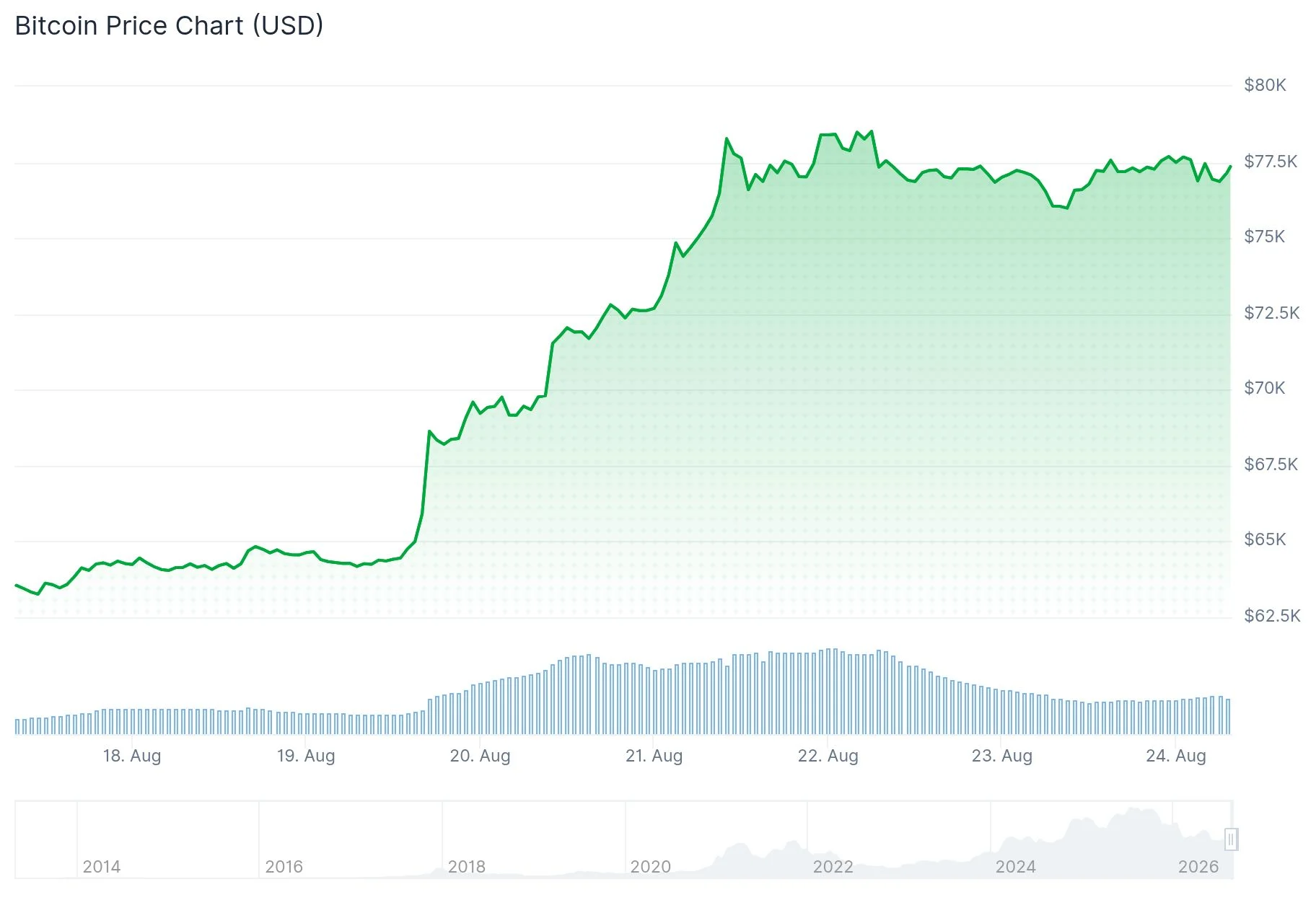
- Bitcoin climbed more than 21% over the week, maintaining levels above $77,100 while market participants anticipate Fed Chair Kevin Warsh’s Jackson Hole address
- XRP dominated crypto market gains with a 46% weekly surge, approaching $1.50
- Following failed trade negotiations, the United States implemented a 50% tariff on Canadian imports valued at $20 billion
- Asian equity markets declined sharply, with Samsung falling 8.7% and Alibaba plunging 9.6% following its announcement of a $10.2 billion share offering
- Neel Kashkari, Minneapolis Federal Reserve President, cautioned that the Iran conflict is driving energy costs higher and maintaining inflation above the Fed’s 2% objective
Bitcoin maintained its position above $77,100 throughout Monday’s trading session, concluding a remarkable week with gains exceeding 21%. Market participants are eagerly awaiting guidance from Federal Reserve Chair Kevin Warsh, who will make his inaugural appearance at the Jackson Hole economic symposium this week.
The Jackson Hole symposium has historically served as a platform where the Fed chair provides insights into upcoming monetary policy decisions. Reduced interest rates typically encourage capital flows into higher-risk investments such as cryptocurrencies, whereas rate increases have the reverse effect.
XRP emerged as the week’s standout performer, surging 46% to reach just below $1.50. Hyperliquid’s HYPE token appreciated 35% over the seven-day period to $80. Dogecoin registered a 30% increase, trading slightly above 9 cents, while Ether posted gains approaching 28% to settle at $2,442.
Solana recorded a 24% weekly advance despite experiencing Monday losses that pushed it to $94. BNB advanced 15% to $697, whereas Tron trailed the broader market with modest gains of 3.4% for the week.
Asian Equity Markets Decline as Samsung and Alibaba Disappoint
In contrast to cryptocurrency’s robust performance, Asian stock markets experienced widespread selling pressure. Samsung Electronics tumbled 8.7% in Seoul trading as market participants expressed disappointment with the company’s shareholder return program of up to $80 billion.

Alibaba shares plummeted 9.6% in Hong Kong following the e-commerce giant’s disclosure of plans to raise approximately $10.2 billion through a share placement, signaling to investors that its artificial intelligence investments may not be generating expected returns.
SoftBank experienced a 4.9% decline in Tokyo after revealing a record-breaking bond issuance valued at 1 trillion yen.
Canadian Imports Face Steep US Tariffs
In trade developments, the United States imposed a 50% tariff on approximately $20 billion in Canadian goods following the collapse of bilateral negotiations late Friday. The affected products encompass dairy products, alcoholic beverages, plywood, and apparel.
Canadian Prime Minister Mark Carney characterized the move as an “attack” and pledged to implement reciprocal tariffs on a dollar-for-dollar basis beginning September 8.
Minneapolis Federal Reserve President Neel Kashkari noted that the continuing US-Iran military tensions are exerting upward pressure on energy markets and sustaining elevated inflation levels. The July consumer price index registered 3.4%, significantly above the Federal Reserve’s 2% target threshold.
Brent crude oil prices advanced 6.63% during the previous week, reaching $94.39 per barrel. The national average for gasoline in the United States climbed to $4.10 per gallon, representing a substantial increase from $3.15 recorded a year earlier.
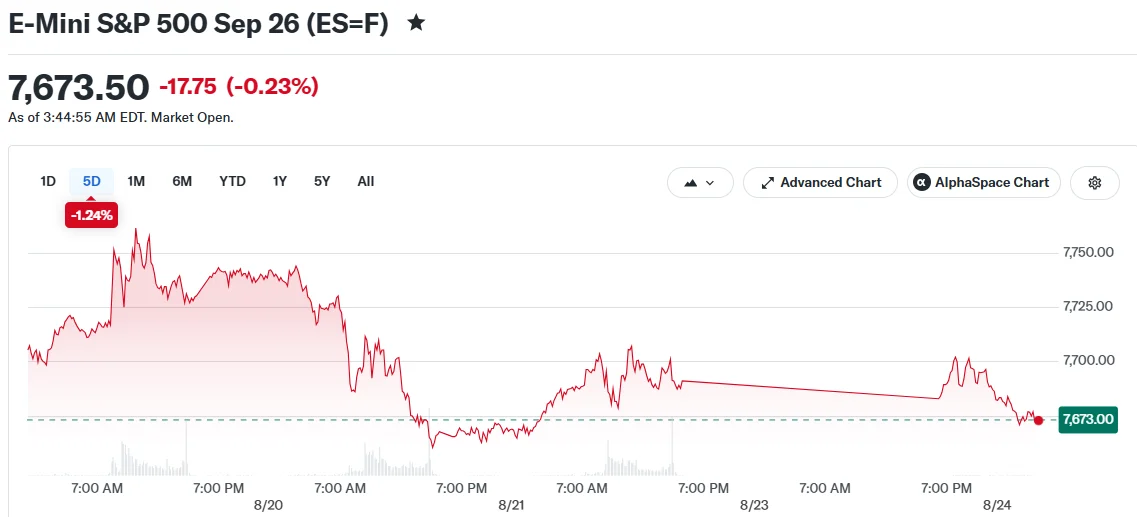
US equity indices posted losses across the board last week. The Dow Jones Industrial Average declined 0.85%, the S&P 500 retreated 1.4%, and the Nasdaq Composite fell 2.1%.
Nvidia is scheduled to release its quarterly earnings report this week. As the primary supplier of hardware for the majority of significant AI initiatives, the semiconductor company’s forward guidance represents a critical indicator for technology sector investors.
Get 3 Free Stock Ebooks
Discover top-performing stocks in AI, Crypto, and Technology with expert analysis.
- Top 10 AI Stocks - Leading AI companies
- Top 10 Crypto Stocks - Blockchain leaders
- Top 10 Tech Stocks - Tech giants



