


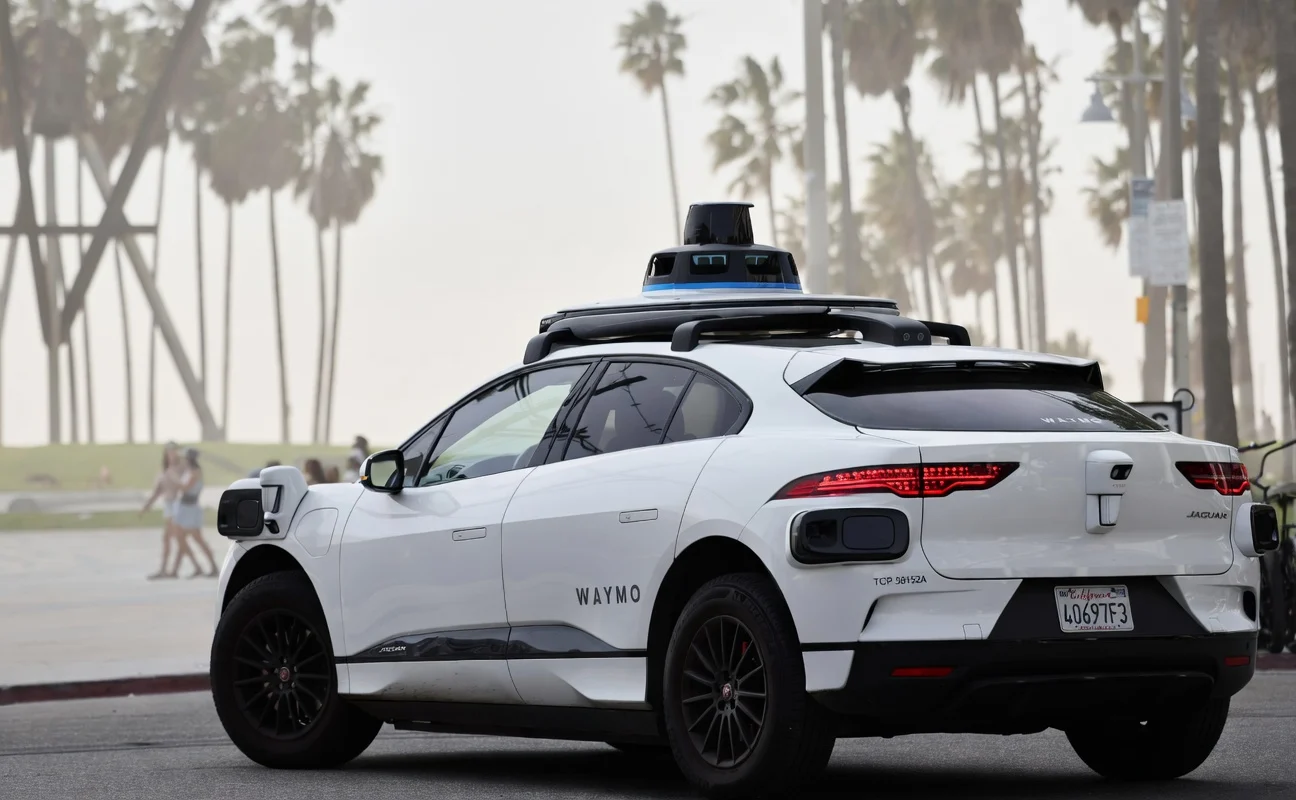
Key Highlights
- Waymo developed a proprietary ASIC processor delivering over 1,000 TOPS for autonomous vehicle operations
- The processor utilizes TSMC’s 5nm manufacturing process, decreasing dependency on Nvidia and AMD hardware
- Waymo’s Ojai robotaxi platform, based on Zeekr minivan architecture, debuts for public riders in Los Angeles, Phoenix, and San Francisco
- The Ojai integrates Waymo’s sixth-generation autonomy stack and features Google’s Gemini AI for passenger interactions
- Chinese manufacturing origins subject Ojai vehicles to US import tariffs, creating cost challenges despite efficiency gains
Alphabet’s autonomous vehicle subsidiary, Waymo, has introduced a proprietary silicon processor designed specifically for its self-driving taxi operations. The Thursday announcement highlighted the chip’s role in enhancing navigation capabilities through dense urban environments.
This application-specific integrated circuit (ASIC) delivers computing power exceeding 1,000 trillion operations per second, matching performance benchmarks established by Nvidia’s autonomous vehicle platforms.
Previously, Waymo’s fleet operated on third-party processors from manufacturers including Nvidia and AMD. This proprietary solution enables faster sensor data interpretation and more efficient execution of the artificial intelligence algorithms that enable real-time environmental understanding.
Taiwan Semiconductor Manufacturing Company produces the chip using its 5-nanometer fabrication technology. Though not TSMC’s most advanced node, this manufacturing standard remains prevalent among leading technology firms.
Next-Generation Robotaxi Platform Deployment
Concurrently, Waymo has made its Ojai robotaxi available to the general public across Los Angeles, Phoenix, and San Francisco. These vehicles now incorporate the newly developed custom processor.
The Ojai utilizes a minivan chassis produced by Zeekr, a subsidiary of China’s Geely Holding Group. Waymo‘s collaboration with Zeekr began in 2021, with subsequent years dedicated to preparing the platform for commercial deployment.

Vehicles arrive in the United States stripped of Chinese connectivity systems. Waymo’s Arizona operations center then integrates the company’s autonomous driving technology into each unit.
The Ojai platform houses Waymo’s sixth-generation self-driving architecture, engineered for cross-platform compatibility. Interior redesigns accompany the technical upgrades, while Google’s Gemini AI provides conversational assistance to passengers.
Approximately 300 Ojai vehicles currently serve Waymo’s commercial operations. Passengers requesting rides in the three initial markets may receive an Ojai for their journey.
Economic Considerations and Market Expansion
Waymo intends to introduce the Ojai to Denver, Las Vegas, and San Diego before year-end. The company maintains robotaxi services across 11 American cities.
The Ojai platform promises reduced production, operational, and maintenance expenses compared to the Jaguar I-Pace models that have anchored Waymo’s fleet for years. These economics support Waymo’s objective of achieving profitability at scale.
Nevertheless, American tariffs on Chinese-manufactured vehicles increase the per-unit import cost for each Ojai. This policy creates headwinds for Waymo’s financial optimization efforts.
Waymo maintains market leadership among US robotaxi providers, outpacing competitors such as Tesla and Amazon’s Zoox division. The pairing of a custom-designed vehicle with proprietary processing hardware demonstrates Waymo’s evolution toward greater vertical integration.
Alphabet’s comprehensive initiative to develop specialized chips for artificial intelligence infrastructure provides additional context. Waymo’s processor development aligns with this corporate-wide strategy to minimize reliance on external component suppliers.
Get 3 Free Stock Ebooks
Discover top-performing stocks in AI, Crypto, and Technology with expert analysis.
- Top 10 AI Stocks - Leading AI companies
- Top 10 Crypto Stocks - Blockchain leaders
- Top 10 Tech Stocks - Tech giants



