


Key Highlights
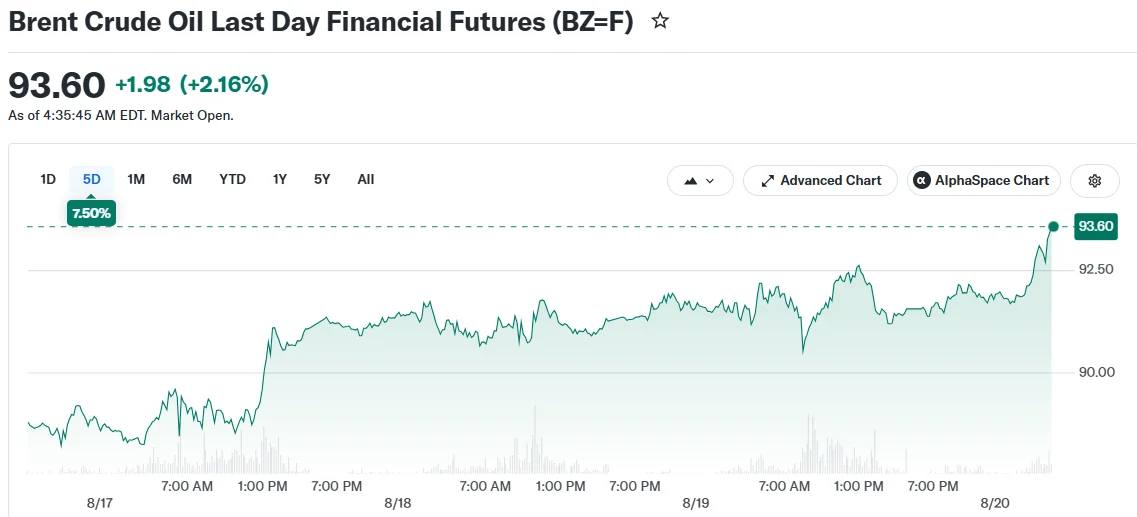
- Brent crude reached $92.82 per barrel while WTI climbed to $86.75, marking three-week peaks
- Crude benchmarks have posted gains for five consecutive trading sessions
- Maritime traffic through the Strait of Hormuz continues well below normal volumes
- Trump announced plans for unprecedented economic sanctions targeting Iran
- The United Arab Emirates has halted all commercial and financial dealings with Tehran
Crude oil benchmarks surged to three-week peaks during Thursday’s trading session, with Brent crude advancing 1.3% to settle at $92.82 per barrel while West Texas Intermediate climbed to $86.75. The gains represent the fifth consecutive day of upward momentum for both major oil futures contracts.
The sustained price increase stems from the escalating conflict between Washington and Tehran, which erupted following coordinated American and Israeli military operations against Iran on February 28. In response, Iranian forces have effectively strangled the Strait of Hormuz, a critical chokepoint that historically facilitated approximately 20% of global crude oil shipments.
Latest maritime intelligence indicates vessel movements through the Hormuz passage remain severely curtailed compared to volumes recorded before hostilities began, contradicting Washington’s assertions that the waterway operates normally. Iranian officials have disputed American claims, with both nations appearing entrenched in their positions.
“Middle Eastern tensions continue to escalate, creating potential for additional supply chain interruptions,” noted Giovanni Staunovo, an analyst with UBS. “Reduced petroleum exports from the region are creating fresh tightness in global oil markets.”
Compounding the situation, the United Arab Emirates announced an indefinite freeze on all financial and commercial activities involving Iran. The decision highlights the deteriorating relations between two major Gulf region economic powers.
Trump Unveils “Economic D-Day” Strategy Against Iran
President Donald Trump intensified his confrontational stance toward Tehran on Wednesday, unveiling what he characterized as “the most devastating economic campaign ever launched against any nation.” He framed the initiative as economic combat of historic proportions and cautioned international partners against maintaining Iranian business relationships.

Trump refrained from providing specifics regarding the proposed sanctions package. The president also maintained that American forces retain operational control over the Strait of Hormuz and suggested diplomatic channels with Iran might reopen “eventually.”
Iranian officials have countered these claims, asserting that meaningful negotiations have yet to occur. Tehran continues to insist that Washington honor commitments outlined in a June memorandum of understanding before diplomatic progress is possible. That preliminary agreement expired this week without extension.
Hiroyuki Kikukawa, chief strategist at Nissan Securities Investment, suggested markets will likely continue their upward trajectory given persistent uncertainty surrounding peace negotiations and heightened friction involving the UAE, Oman, and Iran.
From a supply perspective, American distillate reserves—encompassing diesel fuel and heating oil—declined for the third consecutive week. Meanwhile, crude stockpiles unexpectedly expanded by 4.4 million barrels.
Strategic petroleum reserve releases from major consuming nations, particularly the United States, have partially mitigated supply disruptions. Nevertheless, market analysts anticipate the Middle Eastern standoff will continue providing fundamental support for crude valuations through coming months.
The September WTI futures contract reached expiration on Thursday, while the more actively traded October contract stood at $85.52, representing a 1.3% daily increase.
Get 3 Free Stock Ebooks
Discover top-performing stocks in AI, Crypto, and Technology with expert analysis.
- Top 10 AI Stocks - Leading AI companies
- Top 10 Crypto Stocks - Blockchain leaders
- Top 10 Tech Stocks - Tech giants



