


TLDR
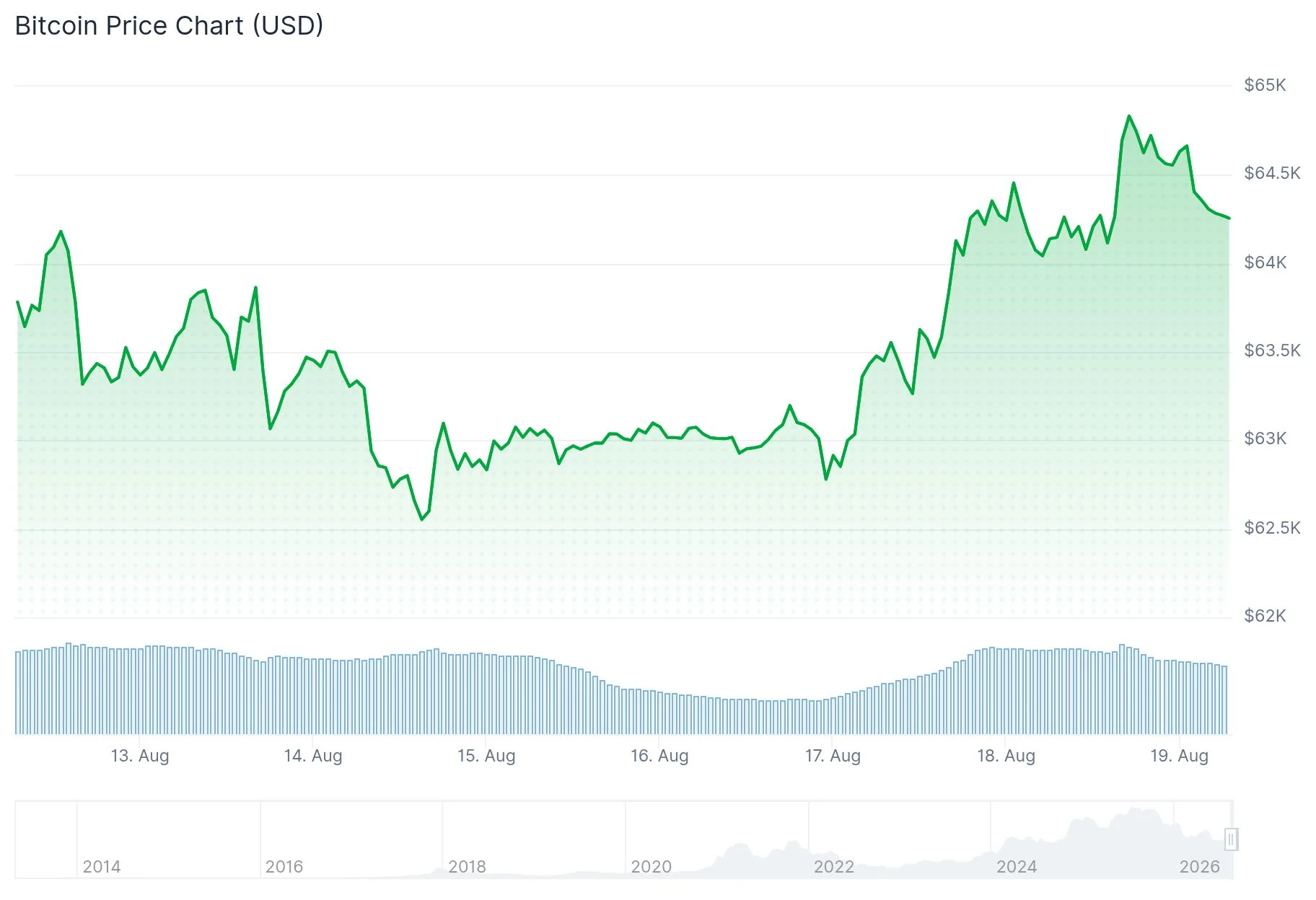
- Digital currency markets remained stable with Bitcoin maintaining levels around $64,250 through Wednesday trading
- Solana emerged as the top performer, climbing 2% to approach $77, while Ethereum advanced 1% beyond $1,900
- Major South Korean chipmakers Samsung Electronics and SK Hynix plummeted over 7%, pulling the Kospi index down more than 6%
- Technology-heavy Nasdaq declined 1.3% Tuesday amid semiconductor sector weakness described as tactical repositioning
- Federal Reserve meeting minutes scheduled for 2 p.m. ET release, with overwhelming majority of economists projecting unchanged September rates
Bitcoin maintained its position near $64,250 throughout Wednesday’s session, showing modest daily appreciation and roughly 1% weekly gains. The cryptocurrency sector demonstrated notable stability despite significant turbulence affecting global semiconductor equities.
Among prominent digital assets, Solana delivered the strongest performance, advancing 2% to reach nearly $77. Ethereum registered a 1% increase, trading just above $1,900, and currently leads major cryptocurrencies with a 1.5% seven-day gain.
XRP posted gains approaching 1%, settling just beneath the $1 threshold, despite registering a 2% decline across the week. Tron and dogecoin each appreciated by approximately half a percentage point, trading at 33 cents and 7 cents respectively.
However, not every digital asset posted positive movement. BNB experienced minor weakness, dipping to levels just above $600 with a 2% weekly decline. Hyperliquid’s HYPE token fell more than 1% to settle above $58, though it maintains leadership among major tokens with a robust 7% weekly advance.
Semiconductor Sector Experiences Significant Decline
South Korean technology giants Samsung Electronics and SK Hynix both experienced declines exceeding 7% during Wednesday’s Seoul trading session. These movements triggered a 6%+ decline in Korea’s Kospi benchmark and pulled the broader MSCI Asia Pacific index down 2%.

A regional semiconductor benchmark dropped more than 3%. This followed Tuesday’s 5% decline in the Philadelphia Semiconductor Index, marking its worst performance since the final days of July.
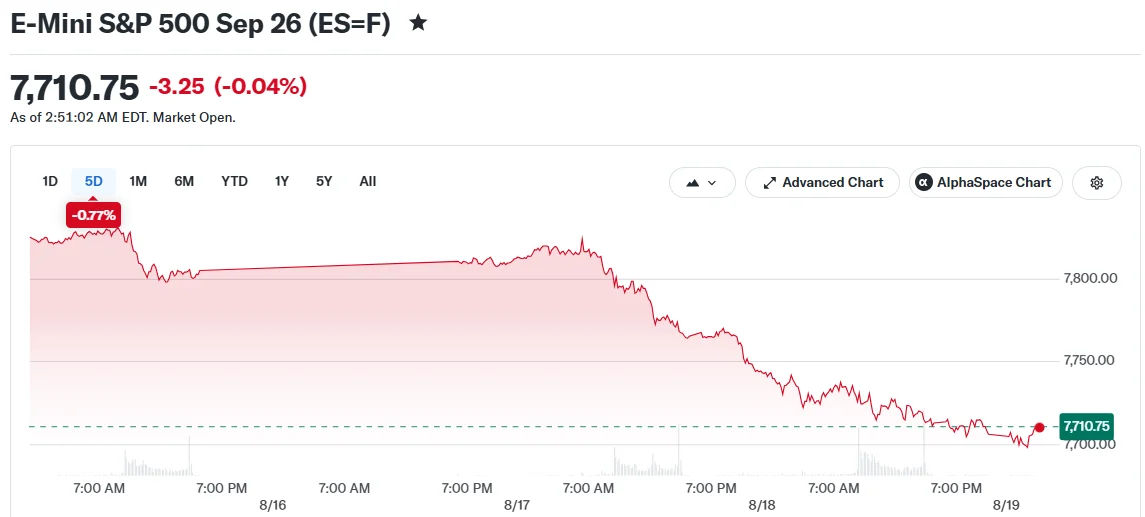
Across U.S. markets, the Nasdaq retreated 1.3% on Tuesday. The S&P 500 shed 0.7% while the Dow Jones Industrial Average declined 116 points, representing a 0.2% loss.
Semiconductor-related equities weighed heavily on broader market indices. Industrial bellwether Caterpillar and financial giant Goldman Sachs, both considered major beneficiaries of artificial intelligence capital expenditure trends, were among the Dow’s largest detractors.
Mizuho analyst Daniel O’Regan attributed the outsized price movements to reduced summer trading volumes, suggesting the fundamental story remains intact. He characterized the downturn as portfolio repositioning rather than a meaningful reversal in artificial intelligence investment themes.
Treasury Market Dynamics and Federal Reserve Outlook
An international fixed-income selloff drove 30-year U.S. Treasury yields to their most elevated levels since 2007. Ten-year yields similarly climbed toward levels last observed in early 2025, increasing capital costs for corporations investing in AI-related infrastructure.
Wednesday brought some stabilization to bond markets. The 10-year yield eased approximately one basis point to 4.69%. The 30-year U.S. yield retreated to 5.28% on Tuesday, breaking a consecutive two-session advance.
Gold appreciated as much as 0.6%, climbing above $4,360 per ounce following the prior day’s nearly 2% decline.
Minutes from the Federal Reserve’s July policy meeting are scheduled for release at 2 p.m. ET Wednesday. A Reuters poll revealed 94 of 104 surveyed economists anticipate rates will remain within the 3.50% to 3.75% range through September. Market pricing currently assigns approximately 68% probability to an unchanged policy stance.
Fed Chair Kevin Warsh is slated to deliver remarks at next week’s Jackson Hole economic symposium.
Get 3 Free Stock Ebooks
Discover top-performing stocks in AI, Crypto, and Technology with expert analysis.
- Top 10 AI Stocks - Leading AI companies
- Top 10 Crypto Stocks - Blockchain leaders
- Top 10 Tech Stocks - Tech giants



