


Key Highlights
- Major US equity indices ended Monday’s session in negative territory as crude oil rallied on escalating Middle East tensions
- Brent crude surpassed $90 a barrel following Trump’s warnings regarding Oman and the Strait of Hormuz
- Long-term Treasury yields climbed to 5.31%, marking the highest reading since June 2007
- Overnight futures trading showed continued weakness, with tech-heavy Nasdaq futures declining 0.8%
- Major retail sector reports from Walmart, Target, and Home Depot expected this week alongside Wednesday’s Fed minutes release
Wall Street ended Monday’s trading session in the red as surging crude oil prices and elevated bond yields weighed on investor sentiment. Market participants expressed growing concern following the lapse of a diplomatic understanding between Washington and Tehran, heightening worries about potential escalation.
The Dow Jones Industrial Average retreated 0.5%, while both the S&P 500 and Nasdaq Composite registered declines of 0.5% and 0.3%, respectively. The selloff brought an end to a three-week rally that had propelled the S&P 500 higher.
Brent crude contracts climbed beyond the $90 threshold during Monday’s session, subsequently pushing above $91 in Tuesday trading. The rally intensified after President Trump indicated the ongoing conflict with Iran would likely persist.
The president additionally issued warnings to Oman regarding potential military consequences should the nation obstruct the Strait of Hormuz. This critical waterway facilitates approximately one-fifth of global petroleum transit, meaning any blockage could trigger significant supply chain disruptions worldwide.
Reports from Iranian state media indicated that Tehran had detained a tanker vessel registered to the UAE, further amplifying regional instability. The development maintained downward pressure on equity markets as participants evaluated the possibility of broader conflict expansion.

Bond Yields Reach Heights Unseen Since Financial Crisis Era
The energy sector stood alone among S&P 500 components with gains on Monday, advancing 0.9%. Meanwhile, most other industry groups registered losses, with communications and consumer staples facing particularly steep declines.
The rally in oil prices contributed to upward momentum in government bond yields. The 30-year rate advanced 5 basis points to settle at 5.31%, representing the steepest level observed since mid-2007. Benchmark 10-year yields similarly trended higher.
Elevated energy expenses have rekindled apprehension regarding inflationary pressures. Such dynamics could constrain the Federal Reserve’s flexibility in implementing monetary easing, adding complexity to the central bank’s strategic considerations.
At its late July policy gathering, the Fed maintained its policy rate in the 3.50% to 3.75% range. The decision proved contentious, with a trio of committee members advocating for a rate increase instead.
Major Retailer Reports and Central Bank Communications Ahead
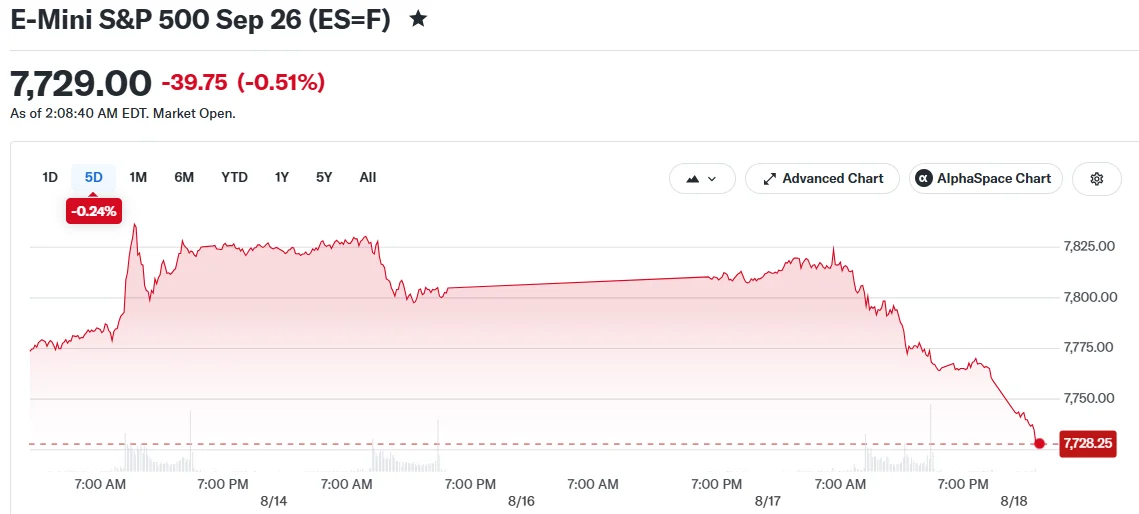
Equity index futures extended losses during Tuesday’s Asian session. S&P 500 contracts declined 0.4%, while Nasdaq 100 futures fell 0.8% and Dow Jones futures slipped 0.1%.
Market attention now shifts to an eventful week featuring key retail sector earnings announcements. Industry giants Walmart, Target, and Home Depot are scheduled to unveil their quarterly performance.
These financial disclosures should provide valuable insights into the resilience of American consumer demand. Recent economic indicators including July retail activity and labor market statistics disappointed expectations, prompting questions about household spending momentum.
Minutes from the most recent Federal Open Market Committee gathering are scheduled for release on Wednesday. The document should illuminate the perspectives of central bank officials regarding the ongoing monetary policy deliberations.
Traders will scrutinize both corporate earnings results and Fed communications for signals that could shape market direction through the remainder of August.
Get 3 Free Stock Ebooks
Discover top-performing stocks in AI, Crypto, and Technology with expert analysis.
- Top 10 AI Stocks - Leading AI companies
- Top 10 Crypto Stocks - Blockchain leaders
- Top 10 Tech Stocks - Tech giants



