



Key Highlights
- Michael Hartnett of Bank of America identifies gold as the optimal protection against declining dollar value
- Precious metal funds attracted $6.3 billion in the past week, marking the largest influx since January 2026
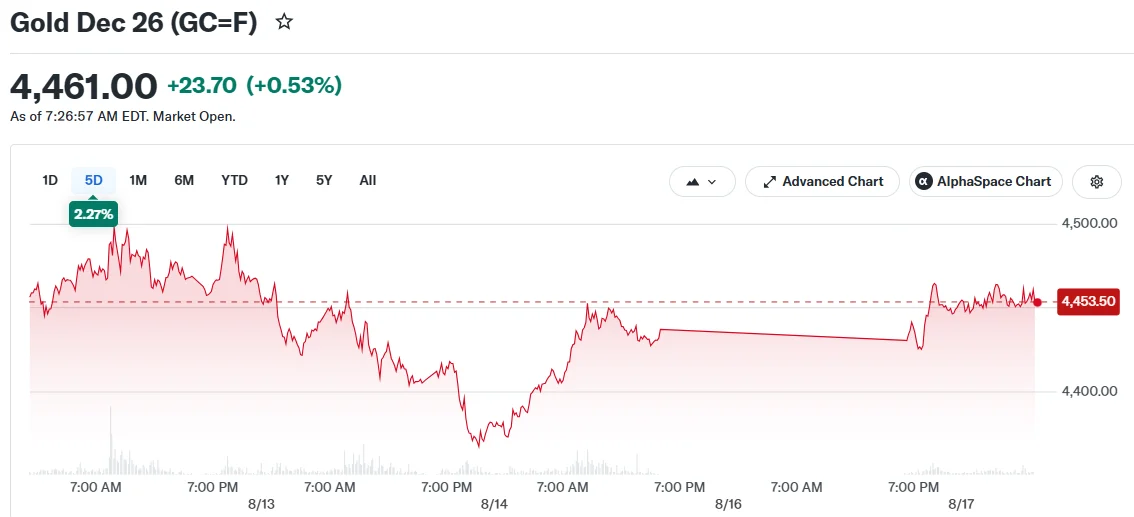
- Spot prices climbed to approximately $4,394 per ounce, benefiting from dollar depreciation
- Diminishing prospects of a Federal Reserve rate increase in September are enhancing gold’s attractiveness
- Maritime complications in the Strait of Hormuz continue to sustain energy-related inflation concerns
The precious metal is hovering near the $4,400 per ounce threshold following a robust trading week, as major financial institutions position it as a priority investment for the latter half of 2026.
Michael Hartnett, chief investment strategist at Bank of America, advised investors on Monday that going “long gold” represents the optimal strategy, positioning the metal as superior protection against dollar depreciation, fixed-income market volatility, and the escalating political friction between capitalist and socialist populist movements characterizing the current decade.
Precious metal investment vehicles recorded $6.3 billion in net inflows during the most recent reporting period, representing the most substantial weekly influx since January 2026. BofA’s proprietary flow tracking also revealed $25.4 billion moving into cash positions, $23.8 billion into fixed-income securities, and $16.1 billion into equity markets.
Spot prices for the yellow metal advanced 0.4% to reach $4,394.31 per ounce during Monday’s morning session. Futures contracts increased 0.3% to $4,451.62. The precious metal concluded the previous week with gains approaching 1%.
Currency Depreciation and Central Bank Policy Outlook
The U.S. dollar index declined 0.3% to settle at 99.40, providing additional momentum to gold prices. Currency weakness typically reduces the cost of bullion for international purchasers, thereby stimulating demand.

Fresh economic indicators from the United States have also diminished expectations for Federal Reserve rate increases. Consumer confidence declined for the first time in a quarterly period, while retail spending registered its steepest monthly contraction in over twelve months.
Diminished rate-hike expectations provide tailwinds for gold since the asset generates no yield. When interest rates are anticipated to remain stable or decrease, the opportunity cost of maintaining gold positions declines.
The Federal Reserve maintained its current rate structure at the July policy meeting. Chair Kevin Warsh offered limited guidance on future monetary direction, emphasizing only the central bank’s unwavering commitment to achieving the 2% inflation target. Three committee members voted in opposition, advocating for a quarter-point rate increase.
Market participants are anticipating Wednesday’s publication of the July Federal Reserve meeting transcript for additional clarity regarding the policy trajectory.
Middle Eastern Shipping Constraints Elevate Price Pressures
Energy sector dynamics present ongoing uncertainty. Maritime activity through the Strait of Hormuz experienced dramatic reduction over the weekend after incidents involving three tankers operated by the Abu Dhabi National Oil Company. Only five commercial vessels transited on Saturday, with zero on Sunday, contrasting sharply with 31 during the previous weekend.
Research analysts at TD Cowen cautioned that persistent crude oil price volatility may constrain appreciation in gold and copper if inflationary pressures intensify and compel the Federal Reserve to maintain elevated rates.
Bank of America’s proprietary Bull and Bear Indicator moderated to 9.3 from the previous 9.7 reading, with market positioning characterized as “excessively bullish.” The institution additionally highlighted Brazil’s October 4 electoral contest as a pivotal development for emerging market trajectories within its “Anything But Dollar” investment framework.
Get 3 Free Stock Ebooks
Discover top-performing stocks in AI, Crypto, and Technology with expert analysis.
- Top 10 AI Stocks - Leading AI companies
- Top 10 Crypto Stocks - Blockchain leaders
- Top 10 Tech Stocks - Tech giants



