



Key Highlights
- Brent crude reached $89.81 while WTI touched $84.08 on Wednesday, extending their rally for the fifth and sixth consecutive sessions
- Shipping disruptions in the Strait of Hormuz and Bab el-Mandeb strait continue to stoke fears of major supply constraints
- Tehran maintains that Hormuz will remain blocked until Washington accepts its demands, including unfreezing Iranian assets
- American crude stockpiles jumped by 9.1 million barrels, significantly exceeding analyst forecasts, potentially tempering some supply anxieties
- The Strategic Petroleum Reserve in the United States dropped beneath 300 million barrels, reaching its weakest point in over four decades
Oil prices advanced on Wednesday following renewed assaults on maritime vessels in two strategically important Middle Eastern shipping channels, maintaining market anxiety over potential supply constraints.
Brent crude futures gained 1% to reach $89.81 per barrel, marking its sixth consecutive session of appreciation. West Texas Intermediate increased 1.1% to $84.08, extending its upward trajectory for a fifth straight day.
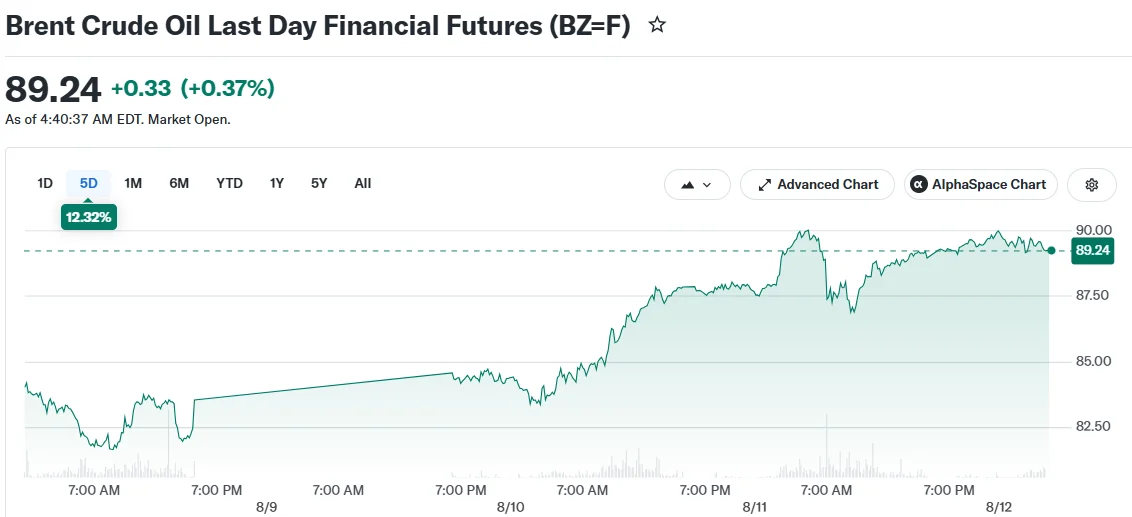
The price appreciation followed reports from American authorities and Yemen’s Houthi faction detailing separate maritime attacks in the Strait of Hormuz and the Bab el-Mandeb Strait occurring on Tuesday.
These strategic waterways serve as vital conduits for oil and natural gas shipments from the Middle East, working in conjunction with the Suez Canal.
A senior Iranian security official declared that the Strait of Hormuz would continue to be closed until Washington agreed to Tehran’s stipulations for ending hostilities, which include unfreezing Iranian financial assets.

President Donald Trump of the United States has firmly rejected these requirements, with negotiations showing minimal advancement.
Maritime tracking information revealed only eight vessels successfully navigated through Hormuz on Tuesday, representing a seven-day minimum. Prior to the conflict, daily transit through the strait typically ranged from 125 to 140 ships.
American Crude Inventories Show Unexpected Growth
Notwithstanding the price momentum, an unexpected increase in U.S. crude reserves could constrain additional gains.
Industry figures from the American Petroleum Institute indicated U.S. crude inventories expanded by approximately 9.1 million barrels during the previous week, substantially exceeding market projections.
Gasoline reserves declined by 1.5 million barrels while distillate inventories decreased by 596,000 barrels during the identical timeframe.
Market analysts suggested the crude inventory increase might alleviate certain anxieties regarding supply constraints, pending verification by official Energy Information Administration figures scheduled for release later Wednesday.
A Reuters survey had actually projected inventory declines, rendering the unexpected accumulation a significant factor under close market scrutiny.
Emergency Oil Reserve Reaches Four-Decade Minimum
The Strategic Petroleum Reserve in the United States fell below the 300 million barrel threshold during the previous week, declining by 6.1 million barrels to reach 298.7 million barrels.
This represents the weakest level in 43 years, based on Department of Energy records.
President Trump authorized the discharge of 172 million barrels in March as a measure to counterbalance supply interruptions resulting from the Iran confrontation.
The reserve was established for deployment during supply crises, and the ongoing depletion illustrates the extent of strain on worldwide oil availability.
In Libya, the National Oil Corporation announced that fires affecting fuel storage facilities at the Zawiya oil installation were completely contained.
Looking ahead, the EIA projects that interruptions to Middle Eastern crude supplies will continue through the conclusion of 2027. The agency forecasts 2026 Brent prices will average $86.81 per barrel while West Texas Intermediate is expected to average $80.88.
Get 3 Free Stock Ebooks
Discover top-performing stocks in AI, Crypto, and Technology with expert analysis.
- Top 10 AI Stocks - Leading AI companies
- Top 10 Crypto Stocks - Blockchain leaders
- Top 10 Tech Stocks - Tech giants



