


Key Highlights
- Brazil’s Itaú Unibanco, the largest private bank in Latin America, has partnered with OpenAssets for an ANBIMA-supervised tokenization initiative
- The collaboration will explore blockchain-based issuance and trading of fixed-income products and investment vehicles
- From 39 submissions by more than 50 institutions, ANBIMA approved 20 use cases for testing
- Tokenized real-world assets on public blockchains have surged from $18.9 billion to $38.3 billion over 12 months
- Brazil continues to establish itself as a leading market for blockchain-based asset tokenization initiatives
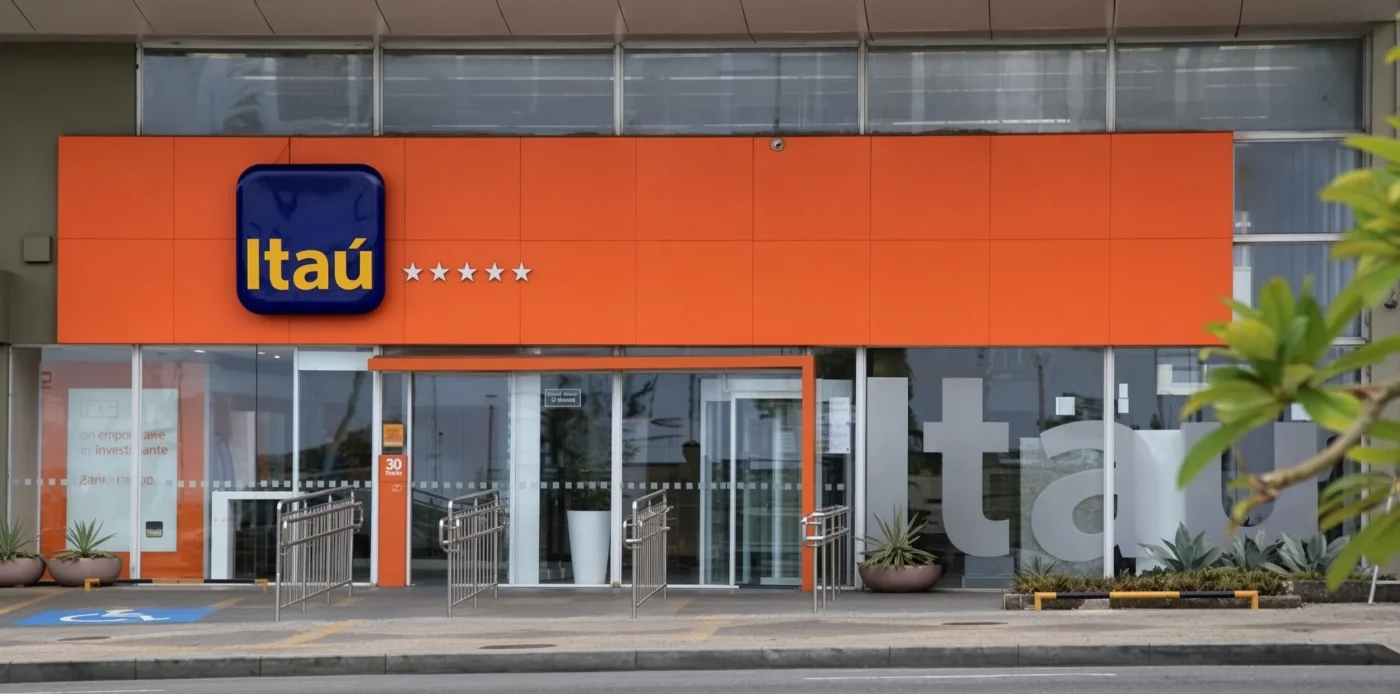
Brazil’s Itaú Unibanco, the biggest private banking institution across Latin America, has entered into a collaboration with digital asset platform OpenAssets to participate in a tokenization initiative supervised by the Brazilian Financial and Capital Markets Association (ANBIMA).
The initiative aims to evaluate how blockchain technology can facilitate the creation, exchange, and settlement of fixed-income instruments and investment vehicles. Both organizations will create technical demonstrations and assess regulatory and operational necessities for deploying tokenized financial products in institutional environments.
Itaú represents a significant player in this endeavor. Based in São Paulo, the financial institution manages over $562 billion in total assets, as reported by S&P Global.
OpenAssets will supply the technological backbone for tokenization throughout the testing phase. Itaú will leverage its expertise in capital markets as both entities examine the practical implementation of institutional-quality asset tokenization.
Pilot Program Framework
In April, ANBIMA approved 20 use cases for this experimental program, selecting them from 39 submissions presented by over 50 financial institutions, investment firms, and technology providers. The experiments are conducted on a controlled, permissioned blockchain network within a sandbox setting, ensuring no actual monetary transactions occur.
Corporate bonds and collective investment schemes represent some of the particular use cases under evaluation. The initiative will additionally investigate technical protocols and regulatory frameworks that financial institutions would need to implement for operating these platforms.

This marks another step in Itaú’s blockchain journey. The institution previously participated in Brazil’s Drex central bank digital currency pilot during 2023, which examined blockchain-enabled transactions involving tokenized currency and assets.
Brazil’s Expanding Tokenization Ecosystem
Brazil has positioned itself among the most progressive jurisdictions for asset tokenization. During July 2025, lending platform VERT Capital revealed intentions to tokenize as much as $1 billion worth of debt instruments and receivables utilizing the XDC Network. Cryptocurrency platform Mercado Bitcoin similarly unveiled strategies to tokenize $200 million in assets on the XRP Ledger.
In a particularly innovative development, agricultural producers in Paraná state tokenized 10 dairy cattle and made the digital tokens available for trading through systems integrated with the B3 stock exchange.
On a worldwide scale, the market value of tokenized real-world assets operating on public blockchain networks has increased more than twofold during the previous year, climbing from approximately $18.9 billion in August 2025 to $38.3 billion currently, based on RWA.xyz statistics. United States Treasury securities constitute the dominant segment, representing over $16 billion.
OpenAssets secured $10 million in funding last year to develop its tokenization platform. Valor Capital Group spearheaded the investment round, with participation from Tether and descendants of Itaú Unibanco’s founding family.
“Brazil has been one of the most forward-looking markets in finance and it is a natural place to move tokenization from exploration to production,” said Gabor Gurbacs, chairman and CEO of OpenAssets.
Get 3 Free Stock Ebooks
Discover top-performing stocks in AI, Crypto, and Technology with expert analysis.
- Top 10 AI Stocks - Leading AI companies
- Top 10 Crypto Stocks - Blockchain leaders
- Top 10 Tech Stocks - Tech giants



