


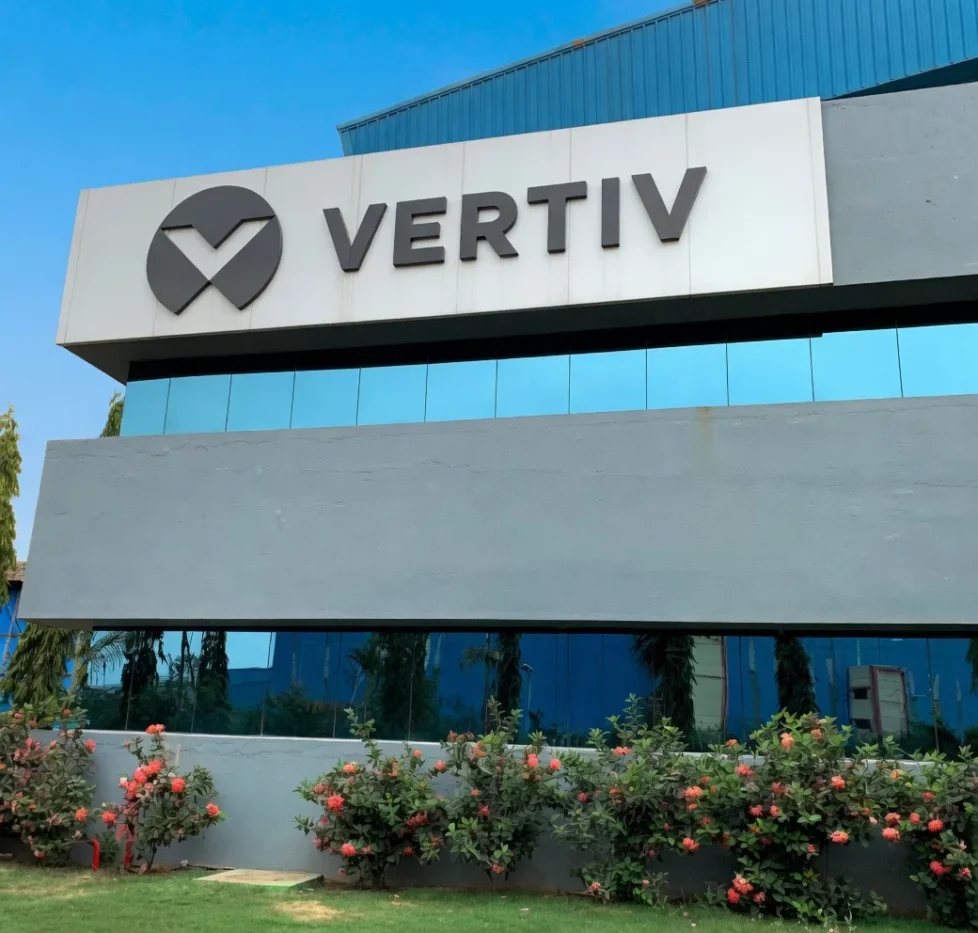
Key Highlights
Vertiv stock experienced a 10% pre-market decline following impressive quarterly performance.
Q2 revenue increased 24% reaching $3.27 billion driven by data center infrastructure demand.
Adjusted operating earnings surged 51% alongside 410 basis point margin improvement.
Adjusted free cash generation soared 234% to $925 million during the quarter.
Management elevated full-year 2026 projections across revenue, profitability, margins, and cash metrics.
Shares of Vertiv Holdings Co (NYSE: VRT) dropped 10.01% during pre-market hours to $242.50 following Tuesday’s significant retreat. The previous trading session ended with a 6.27% decline at $269.56 despite the company delivering exceptional quarterly performance. The infrastructure provider posted accelerated revenue expansion, enhanced profitability margins, improved cash generation, and elevated its complete 2026 annual outlook.
Exceptional Second-Quarter Revenue Performance at Vertiv
Vertiv delivered Q2 net sales totaling $3.27 billion, representing a 24% year-over-year increase. The company achieved 18% organic revenue growth, supplemented by 5% from strategic acquisitions and an additional 1% from favorable foreign exchange impacts. Supply chain bottlenecks and the phased nature of large-scale infrastructure deployments created modest timing variations in revenue recognition.
Operating earnings advanced 44% to $638 million throughout the quarter, propelled by enhanced operational execution and favorable pricing dynamics. On an adjusted basis, operating profit climbed 51% to $738 million, while the adjusted operating margin reached 22.6%. This represented a substantial 410 basis point margin expansion compared to the corresponding quarter in 2025.
Management attributed this performance to accelerating requirements for data center electrical distribution and thermal management solutions. High-performance computing deployments increasingly demand sophisticated power delivery and cooling architectures across expansive facility footprints. Accordingly, Vertiv has strategically increased manufacturing capacity and technological development investments to address these evolving customer requirements.
Robust Cash Generation and Financial Position
The infrastructure provider produced $1.1 billion in operational cash flow during Q2. Adjusted free cash flow totaled $925 million, marking a remarkable 234% increase versus the prior-year comparable period. Enhanced profitability, optimized working capital management, and decreased financing expenses drove this substantial improvement.

Vertiv concluded June with $5.6 billion in available liquidity while maintaining a net cash balance sheet position. This financial strength provides management considerable flexibility for funding capacity expansion initiatives and evaluating strategic growth opportunities. Elevated tax obligations and increased capital deployment partially offset these cash flow gains.
Management anticipates capital expenditures will approximate 4% of total annual revenue. This investment level represents the upper boundary of its planned 2026 allocation range. These expenditures will enable additional production capability as worldwide data center infrastructure demand maintains its upward trajectory.
Elevated 2026 Revenue and Profitability Projections
Vertiv currently anticipates Q3 revenue ranging between $3.65 billion and $3.85 billion. The company forecasts organic sales expansion of 34% to 36% for the upcoming quarter. Adjusted earnings per diluted share are projected between $1.77 and $1.83.
For the complete 2026 fiscal year, management now expects net sales ranging from $13.8 billion to $14.2 billion. Full-year organic sales growth projections stand between 30% and 32%. Adjusted operating profit should reach $3.29 billion to $3.37 billion.
Additionally, Vertiv projects adjusted earnings per diluted share between $6.65 and $6.75. Adjusted free cash flow guidance spans $2.4 billion to $2.6 billion. These upgraded forecasts reflect sustained customer demand momentum, expanding project backlogs, and ongoing strategic investments throughout principal data center infrastructure markets globally.
Get 3 Free Stock Ebooks
Discover top-performing stocks in AI, Crypto, and Technology with expert analysis.
- Top 10 AI Stocks - Leading AI companies
- Top 10 Crypto Stocks - Blockchain leaders
- Top 10 Tech Stocks - Tech giants



