


Key Takeaways
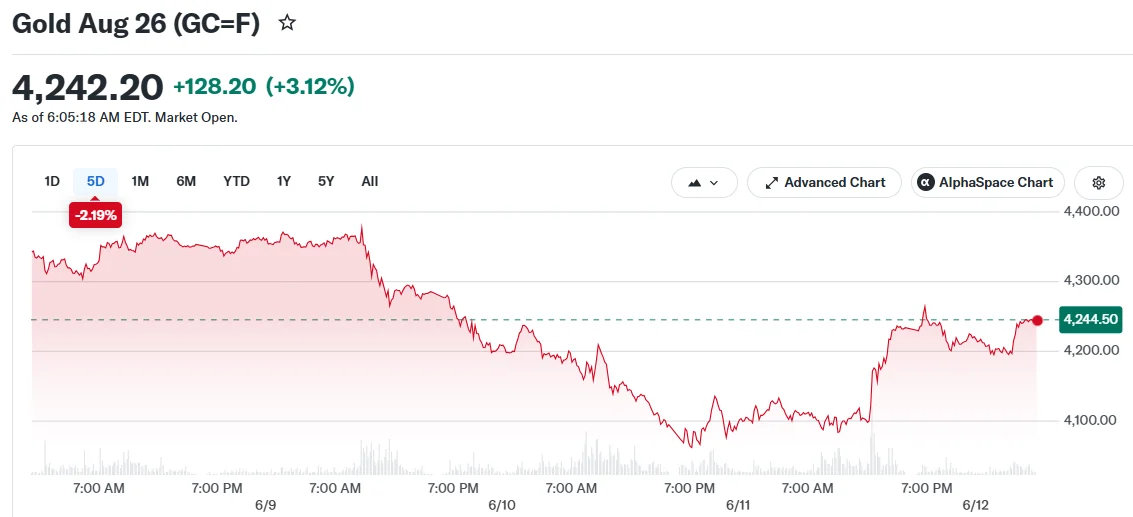
- Precious metal gained 0.2% Friday, trading near $4,220 per ounce, while facing a consecutive weekly decline
- Diplomatic sources indicate potential U.S.-Iran agreement covering Strait of Hormuz access and sanction relief
- Brent crude prices dropped more than 4% following presidential statements on imminent peace agreement
- European Central Bank implemented its first rate increase in almost three years, responding to conflict-induced inflation
- Major investment bank UBS revised Federal Reserve rate cut timeline to 2027, dampening gold investment appeal
Precious metal markets showed marginal gains Friday while maintaining a trajectory toward weekly losses, with market participants closely monitoring diplomatic developments between Washington and Tehran.
Bullion prices climbed 0.3% to approximately $4,224 per ounce during London market hours. However, the modest intraday advance masks a broader weekly retreat exceeding 2%, marking consecutive weeks of downward pressure.
According to Iran’s semi-official Mehr news agency, bilateral negotiations encompass a comprehensive 14-point framework. Key provisions reportedly feature the reopening of crucial maritime passages through the Strait of Hormuz, unlocking $24 billion in previously frozen Iranian financial holdings, and establishing a 60-day negotiation period for nuclear program discussions.
During Thursday remarks, President Trump indicated Iran’s supreme leader had endorsed a peace framework potentially ready for execution this weekend. He characterized the arrangement as “a very strong memorandum of understanding that is a little bit conceptual.”
Tehran’s foreign ministry offered a more cautious stance, stating the nation “has not yet reached a conclusion on this matter.” Officials emphasized the agreement requires comprehensive evaluation and formal approval from Iranian authorities.
Energy Markets Respond to Diplomatic Progress
Brent crude tumbled over 4% to $86.47 per barrel. The benchmark fell beneath the $90 threshold Thursday in response to presidential commentary. Energy prices had surged earlier this year as the ongoing conflict, now entering its fourth month, created disruptions affecting critical shipping routes through the Strait of Hormuz.
The ongoing conflict has intensified global inflation concerns. Declining crude prices may provide some relief to these pressures, though Brent quotations remain substantially elevated compared to pre-conflict benchmarks.

The European Central Bank implemented monetary tightening this week, marking its initial rate increase in nearly three years. ECB President Christine Lagarde cautioned that inflationary pressures stemming from the geopolitical crisis are extending beyond energy sector impacts.
Bullion Faces Continued Headwinds
Market sentiment regarding peace announcements has grown increasingly skeptical. Ole Hansen, commodity strategy head at Saxo Bank, noted that investors have witnessed over 30 comparable declarations in recent months.
“Forget what Trump says and focus instead on what the Iranians do,” Hansen said.
Gold currently trades approximately 20% beneath pre-war levels from late February. The precious metal recently breached its 200-day moving average, a significant technical threshold that accelerated selling momentum earlier in the week.
Julius Baer revised its medium-term bullion price projection downward from $4,500 to $4,250 per ounce for the 3-to-12-month horizon. UBS analysts now anticipate Federal Reserve monetary easing will be postponed until 2027, diminishing anticipated demand for gold-backed exchange-traded funds in 2026.
The Chicago Mercantile Exchange revealed plans to introduce continuous trading capabilities for its 1-ounce gold futures contract beginning July 26, establishing 24-hour, seven-day market access responding to evolving trader requirements.
Silver declined 0.5% to $66.97 per ounce, while platinum and palladium posted gains.
Get 3 Free Stock Ebooks
Discover top-performing stocks in AI, Crypto, and Technology with expert analysis.
- Top 10 AI Stocks - Leading AI companies
- Top 10 Crypto Stocks - Blockchain leaders
- Top 10 Tech Stocks - Tech giants



