



Key Takeaways
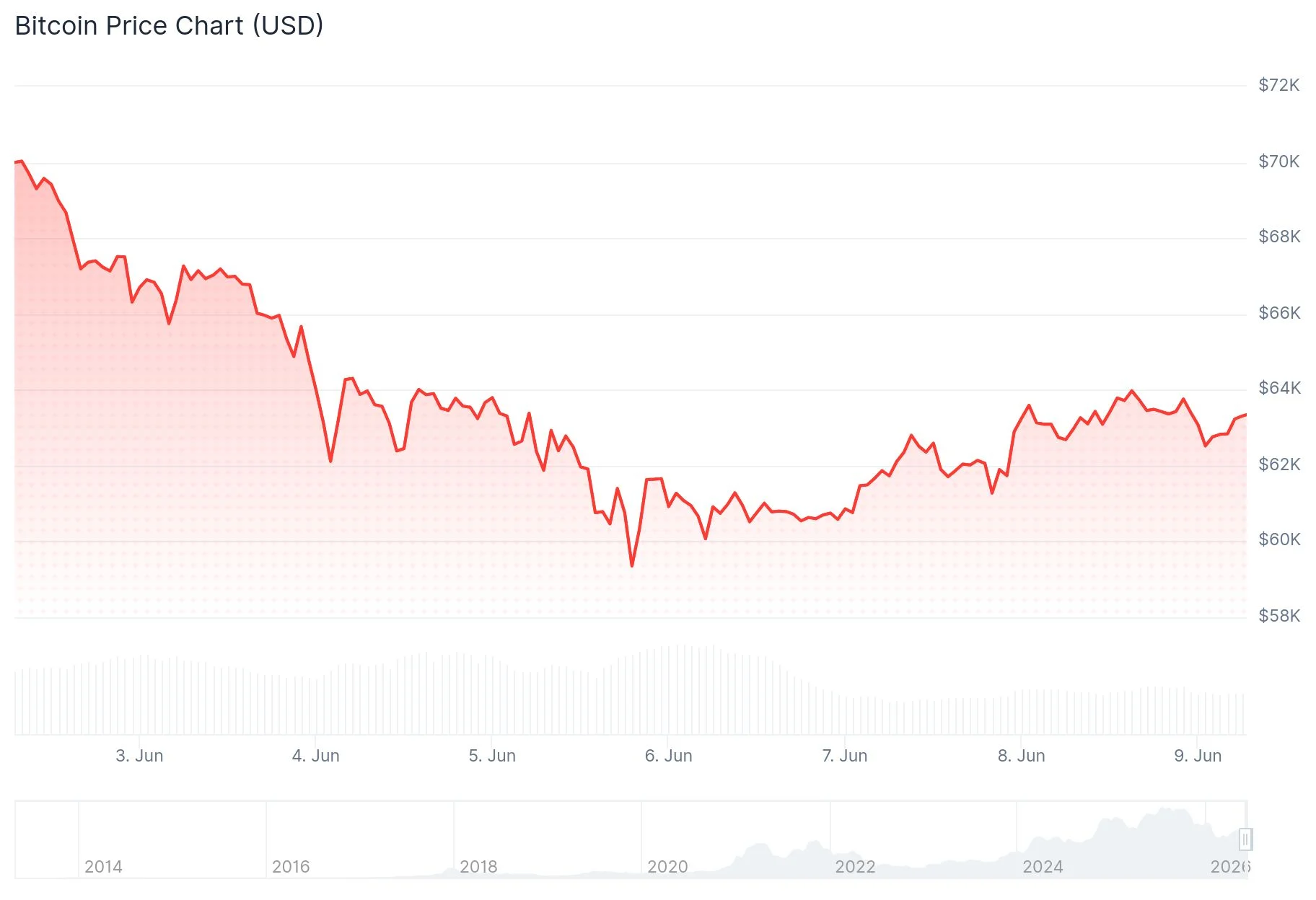
- Bitcoin plummeted nearly 14% last week, reaching a 2026 bottom of $60,800
- Strategy offloaded 32 BTC worth $2.5 million—marking its first bitcoin sale since 2022—to fund preferred stock dividends
- Jeff Dorman, CIO at Arca, claims the sale indicates Strategy might face forced selling, dismissing AI rotation theories
- Michael Saylor attributed the decline to approximately $400 billion shifting toward AI data centers and semiconductor investments
- Despite holding more than 843,000 BTC, Strategy’s position shows roughly $10 billion in unrealized losses
Bitcoin experienced a sharp 14% decline last week, momentarily dipping to a 2026 floor of $60,800. The downturn has ignited conflicting interpretations about its underlying cause.
Michael Saylor, Executive Chairman of Strategy, attributes the decline to capital reallocation toward artificial intelligence infrastructure. Meanwhile, cryptocurrency investment firm Arca contests this narrative.
Saylor Attributes Decline to AI Capital Flows
In a post on X, Saylor suggested capital markets are channeling unprecedented amounts into AI infrastructure. He referenced approximately $400 billion moving into data center and chip investments over a six-month period, with 2026 technology budgets projected to exceed $600 billion.
Characterizing the movement as a rotation rather than a market breakdown, he stated, “Volatility creates opportunity.”
Saylor additionally highlighted withdrawals from Bitcoin exchange-traded funds. According to Farside Investors data, over $4.3 billion in BTC has exited ETFs since May 14, with zero positive inflow days recorded after May 13.
Bitcoin currently trades around $63,000, representing approximately a 50% drop from its peak of $124,000. Strategy’s stock has declined 66% year-over-year.

Arca Identifies the Sale as the Catalyst
In his weekly market commentary, Arca’s Jeff Dorman argued the selling wave was “clearly due to the Saylor/MSTR news,” labeling Saylor’s AI explanation as “gaslighting.”
Dorman’s analysis focuses less on the transaction’s magnitude—32 BTC valued at approximately $2.5 million is relatively insignificant—and more on its implications. This represented Strategy’s first bitcoin liquidation since 2022, specifically executed to cover preferred stock dividends.
This development prompted an unavoidable market concern: if Strategy liquidated bitcoin for one month’s dividend obligations, what happens when the next payment comes due?
Dorman observed that Strategy possesses approximately five months of remaining cash flow. The company recently deployed its available cash to retire $1.5 billion in convertible debt at a discount, diminishing its buffer for future dividend payments.
Strategy’s preferred stock STRC dropped beneath its $100 par value to $95.35, suggesting the market is incorporating additional risk.
Potential Path to Market Stabilization
Dorman presented a potential stabilization scenario. Should Strategy secure $2 to $4 billion through combined stock and bitcoin liquidations and publicly disclose it via an 8-K filing, funding preferred dividends through September 2028, he anticipates a market rebound.
However, he doubts Saylor will pursue this approach. “Saylor is basically addicted to buying Bitcoin,” he noted. The more probable scenario, according to Dorman, involves modest monthly sales sufficient only to cover dividends—creating persistent, incremental selling pressure.
Strategy maintains 843,706 BTC acquired at an average price of $75,699. With bitcoin trading near $63,000, the holdings reflect approximately $10 billion in unrealized losses. While these losses remain on paper, they continue pressuring the stock.
Among 18 analysts tracking Strategy stock, 15 assign it a strong buy rating. The consensus price target stands at $363.62.
Dorman offered one positive observation: early in the week, bitcoin declined independently while other cryptocurrency assets remained stable. He interpreted this as evidence of increasing market maturity—investors evaluating each asset on individual merit rather than indiscriminately selling across the board.
Get 3 Free Stock Ebooks
Discover top-performing stocks in AI, Crypto, and Technology with expert analysis.
- Top 10 AI Stocks - Leading AI companies
- Top 10 Crypto Stocks - Blockchain leaders
- Top 10 Tech Stocks - Tech giants



