


Key Takeaways
- SpaceX aims to go public in June 2026 at a $1.75 trillion valuation, potentially becoming the biggest IPO ever recorded.
- Revenue expansion at SpaceX decelerated to 18% in 2025, a sharp decline from 51% and 89% growth rates in previous years.
- The space giant posted $5 billion in losses during 2025, primarily due to its $250 billion xAI acquisition and AI infrastructure costs.
- Rocket Lab executed a flawless April 22, 2026 mission deploying eight JAXA satellites — marking its eighth successful launch this year.
- RKLB currently commands a $49 billion valuation with a price-to-sales multiple of 74, indicating aggressive investor expectations.
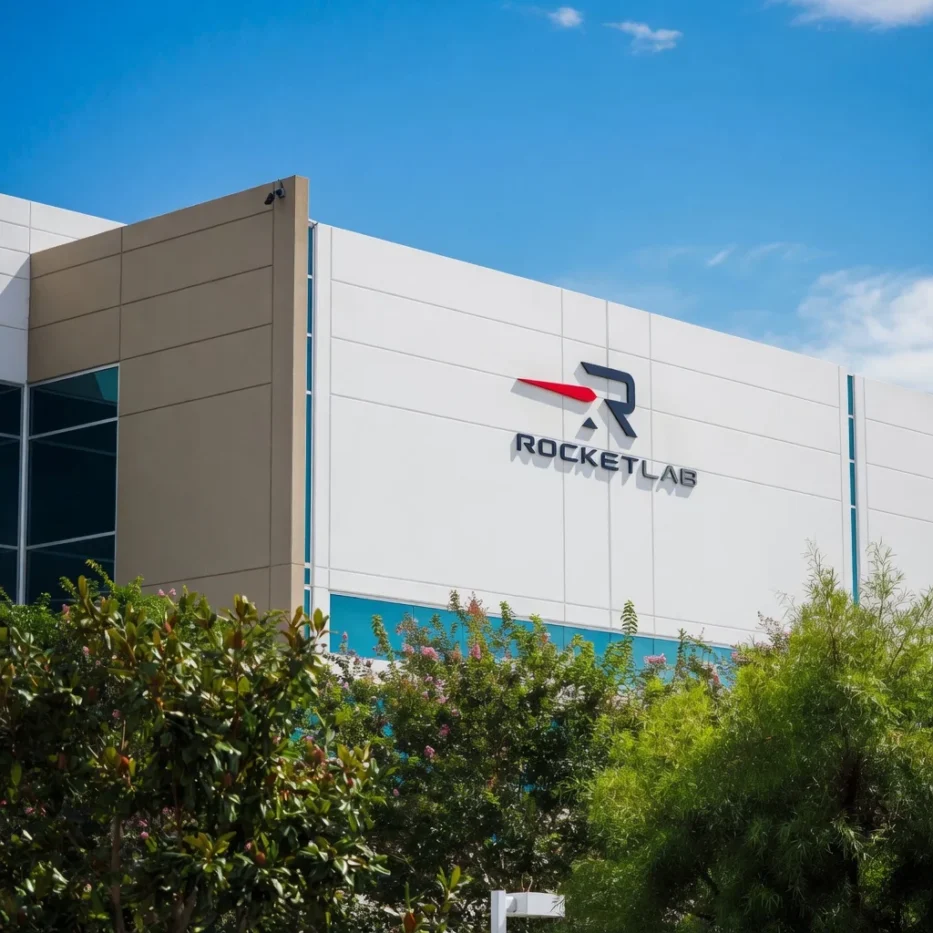
While media attention centers on SpaceX’s forthcoming public debut, Rocket Lab (RKLB) has been methodically expanding its launch portfolio. The company’s April 22 mission delivered eight satellites to orbit for Japan’s JAXA space agency — representing its second dedicated JAXA contract within months and the eighth successful deployment in 2026.
Peter Beck, Rocket Lab’s CEO, positioned Electron as “the preferred small launcher for national space agencies.” The payload manifest showcased diverse capabilities: ocean surveillance technology, an educational satellite platform, a multispectral imaging demonstration unit, and an innovative origami-inspired antenna system that expands to 25 times its stowed configuration.
The mission demonstrated operational excellence at a strategically significant moment.
SpaceX leadership recently convened with investment bankers to structure a June IPO timeline. The company seeks a $1.75 trillion market capitalization — positioning it as the world’s eighth-largest enterprise, surpassing both Tesla and Meta. Unusually, retail investors may receive 30% of share allocations, dramatically exceeding the standard 5–10% retail participation.

This elevated retail allocation has generated concern among market watchers. Some analysts fear it could trigger meme stock-style trading patterns, severing the connection between stock price and underlying business fundamentals.
SpaceX Revenue Deceleration Raises Questions
According to private market intelligence from Sacra, SpaceX’s revenue expanded just 18% during 2025. This represents significant deceleration compared to 51% growth in 2024 and 89% expansion in 2023. The trajectory shift demands investor attention.
The xAI transaction compounds valuation concerns. SpaceX acquired Elon Musk’s artificial intelligence venture in February through a $250 billion stock transaction. Operating in a fiercely competitive AI landscape has proven costly. The Information documented that SpaceX incurred $5 billion in losses throughout 2025, predominantly from AI infrastructure investments.
Potential shareholders entering at a $1.75 trillion valuation are essentially betting on substantial future acceleration from an enterprise showing current deceleration and absorbing significant operating losses.
Rocket Lab Valuation Presents Its Own Challenges
Rocket Lab trades at a $49 billion market capitalization with a price-to-sales ratio reaching 74. By conventional metrics, this represents premium pricing. Such elevated multiples require flawless execution and consistent growth delivery.
The upcoming Neutron rocket represents the company’s next major milestone. This medium-lift vehicle aims to compete directly against SpaceX’s workhorse Falcon 9 platform. Current projections target a late 2026 inaugural flight. Schedule slippage could trigger sharp stock corrections.
RKLB shares have fluctuated between $20.23 and $99.58 during the trailing 52 weeks, illustrating significant price volatility. The company maintains a 31.66% gross margin.
Nevertheless, comparing a $49 billion valuation against $1.75 trillion reveals substantially greater percentage appreciation potential for Rocket Lab — assuming operational performance continues meeting expectations.
The recent JAXA deployment represents Rocket Lab’s second dedicated mission for Japan’s space agency within a short timeframe, following the December 2025 RAISE-4 launch contract.
Get 3 Free Stock Ebooks
Discover top-performing stocks in AI, Crypto, and Technology with expert analysis.
- Top 10 AI Stocks - Leading AI companies
- Top 10 Crypto Stocks - Blockchain leaders
- Top 10 Tech Stocks - Tech giants



