



Key Highlights
- BTC slid to approximately $73,753 following Iran’s withdrawal from second-round peace negotiations with the United States
- The leading cryptocurrency had surged to $78,300 Friday before geopolitical developments triggered a reversal
- Iranian officials declined Islamabad talks, pointing to US naval operations blocking their ports
- The temporary US-Iran ceasefire agreement reaches its expiration date on Wednesday, April 22
- Market sentiment indicator Crypto Fear & Greed Index remains at 29 — firmly within “fear” zone
The world’s largest cryptocurrency began its weekend session with strong momentum but surrendered those advances rapidly as U.S.-Iran relations deteriorated over the past two days.
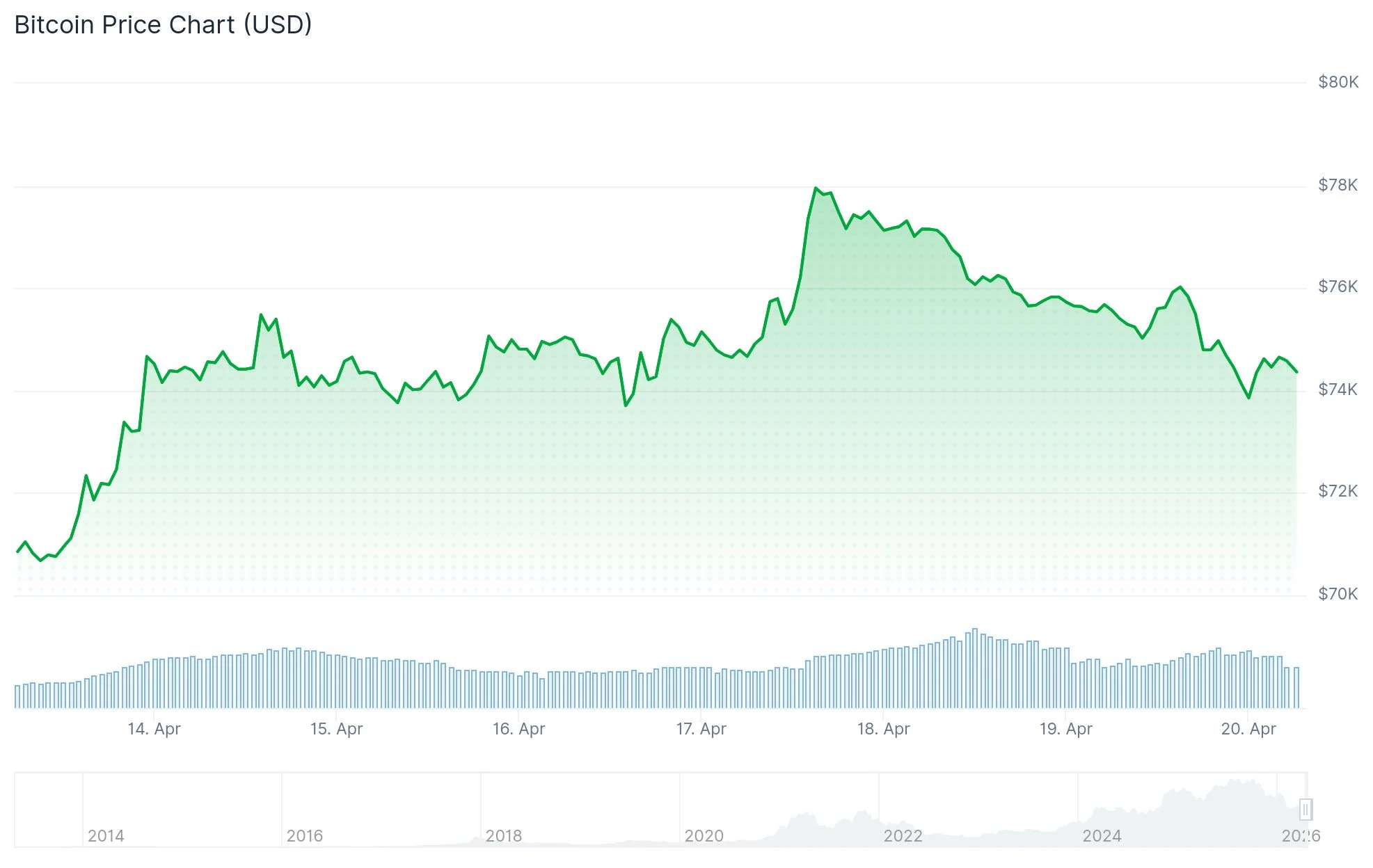
The digital asset reached $78,300 on Coinbase during late Friday trading — representing its strongest level since the beginning of February. That upward movement proved short-lived. By the close of Sunday trading, Bitcoin had tumbled beneath the $74,000 threshold.
The catalyst emerged when Iran refused to participate in a scheduled second round of diplomatic negotiations in Islamabad, Pakistan. Iranian representatives cited the ongoing US naval blockade affecting their ports and inconsistent requirements from the American government.
Esmail Baghaei, Iran’s Foreign Affairs spokesperson, took to X to condemn the US blockade as a breach of both the ceasefire terms and international legal frameworks, specifically referencing the UN Charter.
In response, US President Donald Trump declared Iran committed a “serious violation” of the ceasefire following an Iranian attack in the Strait of Hormuz. Trump expressed continued optimism for reaching an agreement while emphasizing it would be achieved “one way or another.”
The initial negotiating session occurred April 11–12 in Islamabad, spanning more than 21 hours without producing any consensus. US Vice President JD Vance acknowledged that Iran refused to accept the conditions presented by the American delegation.

BTC Tumbles to $73,753 Level
On April 19, the cryptocurrency declined to roughly $73,753 on Bitstamp, representing a roughly 2% decrease over 24 hours. This downward move forced BTC outside the $74,000–$77,000 trading corridor it had maintained.
The wider digital asset ecosystem followed Bitcoin’s descent, with total market capitalization shedding an estimated $83 billion. The Crypto Fear & Greed Index registers 29 out of 100, maintaining its position deep in “fear” territory.
US equity futures also experienced declines Sunday evening. S&P 500 futures shed 0.8%, Nasdaq-100 dropped 0.6%, and Dow Jones futures retreated approximately 450 points. Oil futures surged more than 4.5% to exceed $95 per barrel on concerns about potential Strait of Hormuz closure.
Market observer Wu Blockchain shared on X that Bitcoin spot ETFs registered $996 million in net accumulation during the April 13–17 period, extending the streak of positive flows to three consecutive weeks. Ethereum ETFs attracted $276 million, XRP spot ETFs brought in $55 million, while SOL spot ETFs accumulated $35 million.
Critical Price Zones Under Observation
Technical analysis reveals support positioned around the $70,500–$71,000 area with resistance hovering near $75,000. BTC has attempted to breach $76,000 on multiple occasions in recent weeks but failed to sustain momentum above that threshold.
The temporary ceasefire arrangement between the United States and Iran reaches its deadline Wednesday, April 22. Iranian leadership has declined further diplomatic engagement and accused Washington of breaching the agreement. As of 8:30 p.m. ET Sunday, Bitcoin was trading marginally above the $74,000 mark.
Get 3 Free Stock Ebooks
Discover top-performing stocks in AI, Crypto, and Technology with expert analysis.
- Top 10 AI Stocks - Leading AI companies
- Top 10 Crypto Stocks - Blockchain leaders
- Top 10 Tech Stocks - Tech giants



