


Key Takeaways
- AMD achieved record-breaking 2025 revenue of $34.6 billion with robust data center expansion, while Intel’s $52.9 billion marked zero growth year over year
- Data Center operations generated $16.6 billion for AMD in 2025, fueled by EPYC processors and artificial intelligence products
- Intel reported Q1 2026 revenue growth of 7% reaching $13.6 billion, though GAAP earnings remained in the red at $(0.73) per share
- Analysts assign AMD a Moderate Buy consensus with a $296.44 average target, while Intel receives a Hold rating at $72.98
- AMD represents a momentum play with demonstrated execution; Intel offers a higher-risk turnaround opportunity
The rivalry between Intel and AMD continues to define the semiconductor landscape, yet 2025 reveals a striking divergence in how investors perceive these chip giants. One company showcases accelerating growth. The other battles through restructuring challenges.
Let’s examine what the financial data reveals.
AMD’s Data Center Momentum
AMD delivered an exceptional 2025 performance. The chipmaker posted all-time high revenue of $34.6 billion across the full year, maintaining a 50% gross margin and generating $4.3 billion in net income. Using non-GAAP metrics, operating income reached $7.8 billion.
Advanced Micro Devices, Inc., AMD
The star performer was undoubtedly the data center division. AMD’s Data Center segment generated $16.6 billion throughout 2025. This performance was fueled by accelerating adoption of EPYC server chips and the company’s expanding portfolio of AI-focused solutions.
AMD’s revenue diversification provides additional strength. The Client and Gaming divisions combined for $14.6 billion, with the Embedded segment adding another $3.5 billion. This diversified revenue mix offers AMD greater resilience compared to competitors dependent on narrower product portfolios.
Wall Street sentiment reflects this strength. Among 40 analysts monitored by MarketBeat, 31 assign a Buy rating and 1 recommends a Strong Buy. The consensus 12-month price target stands at $296.44.

Intel’s Restructuring Journey
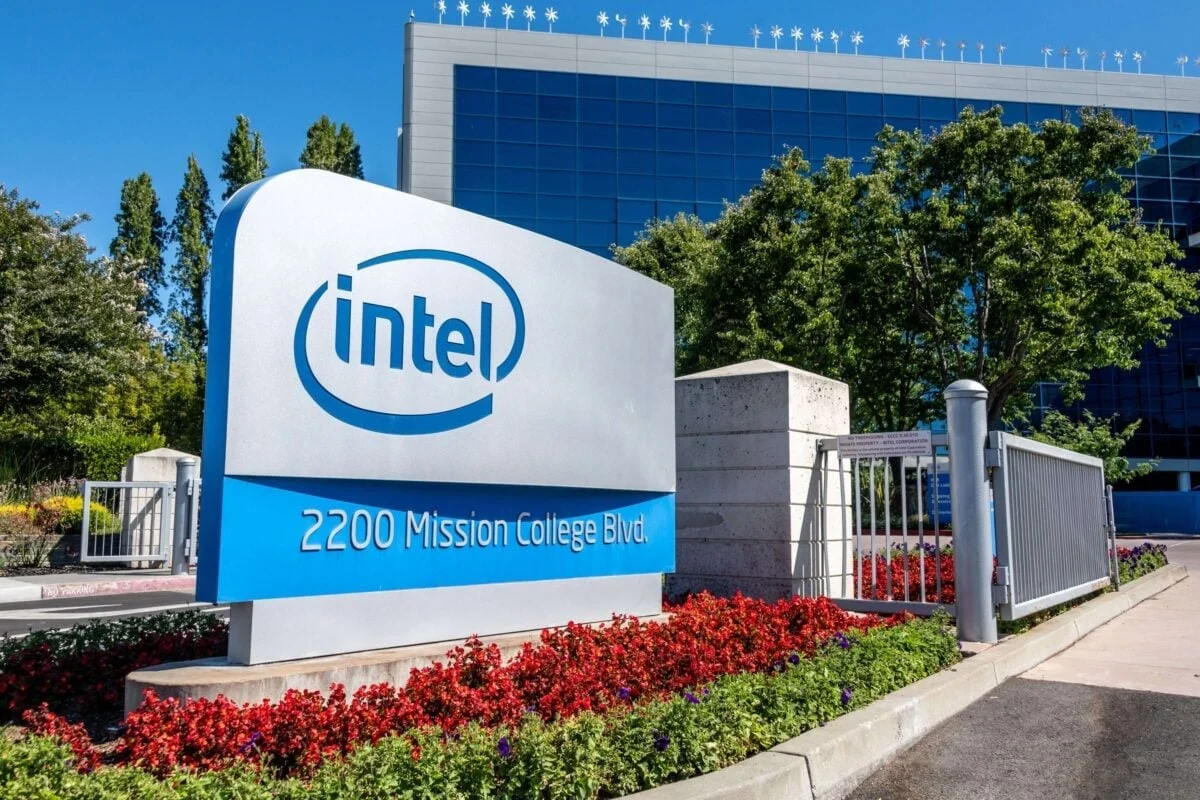
Intel maintains its position as the larger entity by total revenue. The company’s 2025 full-year revenue totaled $52.9 billion, representing no change from the previous year. Fourth-quarter results showed a 4% decline to $13.7 billion.
The opening quarter of 2026 delivered modest progress. Revenue climbed 7% year over year to $13.6 billion. However, Intel’s GAAP earnings per share remained underwater at $(0.73) for the quarter.
This persistent negative earnings figure positions Intel firmly in the “restructuring” narrative rather than a “growth” storyline for most market participants.
Intel retains significant advantages: massive scale, an expansive customer network, and strategic investments in chip manufacturing via its foundry operations. Yet investors demand evidence that these initiatives can generate sustainable profitability before revising their outlook.
Analyst sentiment mirrors this cautious stance. Among 40 analysts tracking Intel, 25 assign a Hold rating, 11 recommend a Buy, and 4 suggest a Sell. The consensus price target settles at $72.98.
Intel’s latest quarterly figures from Q1 2026 show: $13.6 billion in revenue alongside a GAAP loss of $(0.73) per share.
Final Thoughts
These semiconductor rivals operate in identical markets but occupy vastly different competitive positions. AMD demonstrates clear momentum and execution. Intel brings established scale and infrastructure. The right choice for your portfolio hinges on your preference: validated growth or restructuring upside.
Get 3 Free Stock Ebooks
Discover top-performing stocks in AI, Crypto, and Technology with expert analysis.
- Top 10 AI Stocks - Leading AI companies
- Top 10 Crypto Stocks - Blockchain leaders
- Top 10 Tech Stocks - Tech giants



