


Key Points
- President Trump declared the U.S.-Iran conflict is “very close to being over” in Fox News interview
- Peace negotiations set to continue in Pakistan in the coming days
- U.S. Central Command confirms complete naval blockade of Iranian maritime routes
- Current ceasefire agreement extends through April 21
- Brent crude oil prices remain elevated at approximately $95 per barrel, significantly above pre-conflict levels
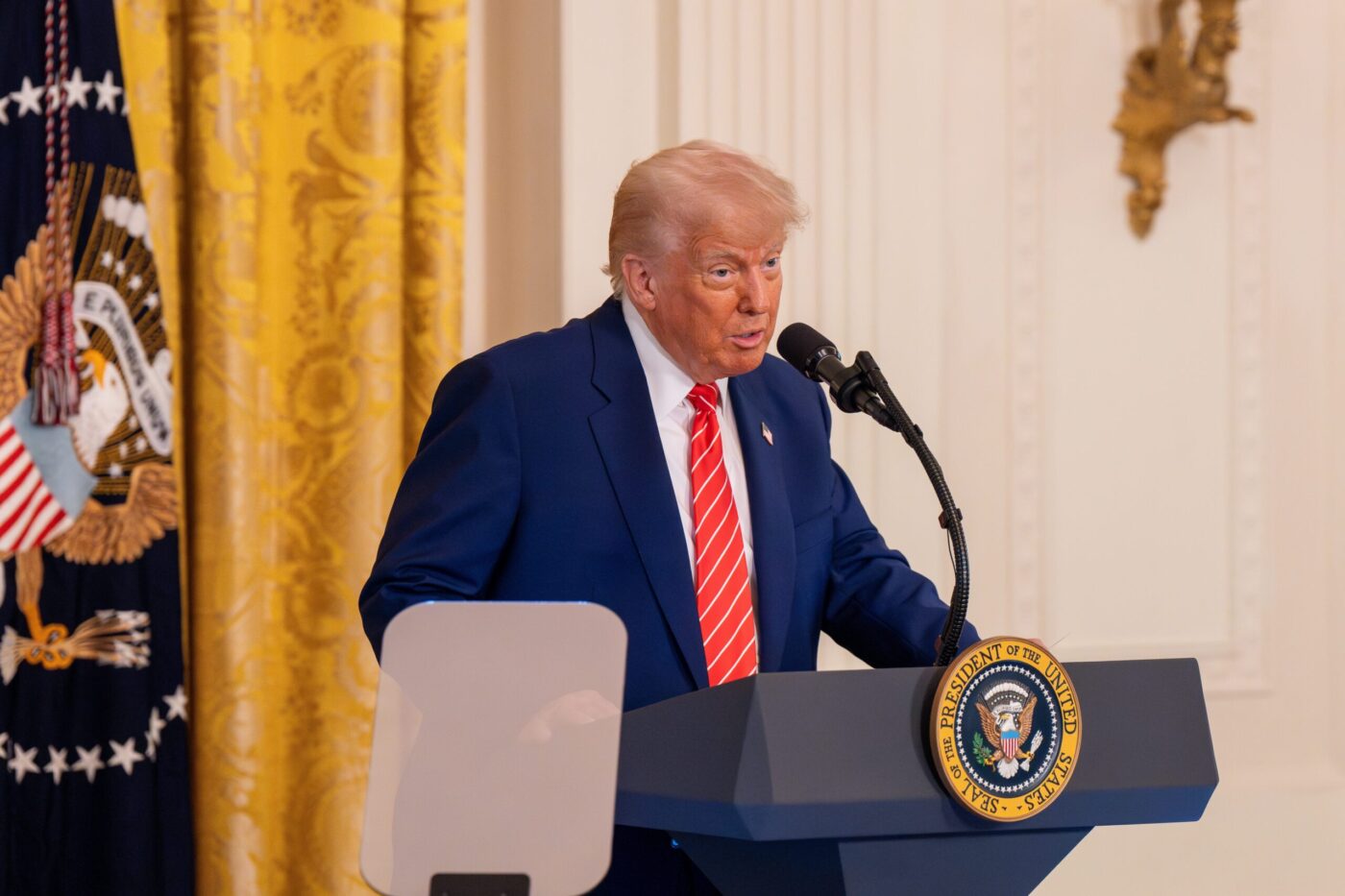
President Donald Trump has indicated the military conflict between the United States and Iran is approaching its conclusion, despite ongoing U.S. naval operations restricting Iranian maritime commerce. The president shared these remarks during an interview with Fox Business host Maria Bartiromo, scheduled for broadcast Wednesday morning.
“I think it’s close to over, yeah. I view it as very close to being over,” Trump stated.
The military confrontation commenced on February 28, when American and Israeli forces executed simultaneous strikes against Iranian targets. The operation resulted in the death of Supreme Leader Ayatollah Ali Khamenei and inflicted substantial damage on Iran’s governmental and military infrastructure.
The conflict has claimed the lives of thirteen American military personnel. Casualties throughout the broader region number in the thousands.
Trump has consistently maintained that American forces have “decimated” Iranian military capacity. Iranian officials have largely contested these characterizations.
An interim ceasefire arrangement is presently active, scheduled to expire on April 21. Initial peace discussions took place in Pakistan over the previous weekend, with Vice President JD Vance and senior administration officials leading the American delegation.
Those initial discussions yielded no concrete agreements. Vance indicated “a lot of progress” had been achieved but noted that Iran now controls the momentum.

“The ball is very much in their court,” Vance commented.
Negotiations are anticipated to reconvene Thursday. According to the Associated Press, mediators are addressing three primary issues: Iran’s nuclear development program, the Strait of Hormuz closure, and financial compensation for war damages.
Complete Naval Blockade Confirmed Operational
President Trump authorized a comprehensive naval blockade of Iranian ports Monday. U.S. Central Command verified Tuesday that the blockade had been fully established.
“U.S. forces have completely halted economic trade going into and out of Iran by sea,” Central Command announced.
The blockade appears designed to increase leverage on Iran before upcoming negotiations.
Nevertheless, the Wall Street Journal noted that more than 20 commercial ships have recently transited the Strait of Hormuz, indicating some maritime traffic may be resuming through the strategic waterway.
Crude Oil Prices Continue Elevated Trading
Oil markets continue monitoring the situation closely. Brent crude futures traded at $95.10 per barrel Wednesday morning, rising 0.3% for the session. U.S. West Texas Intermediate stood at $91.12, showing modest decline.
Both benchmarks remain substantially elevated compared to pre-war price levels.
Trump also suggested U.S. military operations have not completely concluded. “If I pulled up stakes right now, it would take them 20 years to rebuild that country. And we’re not finished,” he remarked.
He further stated that Iran “wants to make a deal very badly.”
In a related development, Israel and Lebanon conducted their first direct diplomatic talks in decades this week in Washington. Israeli military operations against Hezbollah positions in Lebanon have continued, potentially complicating the broader ceasefire arrangement.
Get 3 Free Stock Ebooks
Discover top-performing stocks in AI, Crypto, and Technology with expert analysis.
- Top 10 AI Stocks - Leading AI companies
- Top 10 Crypto Stocks - Blockchain leaders
- Top 10 Tech Stocks - Tech giants



