



Quick Overview
- Bitcoin hovers around $63,000, continuing to serve as the crypto market’s primary benchmark
- Ethereum dipped under $1,900 while U.S. ETF products attracted $103.9 million during one week
- Solana expanded block capacity to 100 million compute units with prices hovering near $75
- Chainlink approached $10 following fresh integrations and agent platform beta release
- Hyperliquid surged approximately 154% during the opening six months of 2026
While the cryptocurrency sector has experienced turbulence recently, declining valuations present potential entry points for patient, long-term investors. Five digital assets currently deserve attention: Bitcoin, Ethereum, Solana, Chainlink, and Hyperliquid.
Bitcoin: The Industry Standard
Bitcoin continues to serve as the cornerstone asset for cryptocurrency portfolios. With the most extensive network infrastructure, unmatched brand recognition, and the most substantial institutional support among digital currencies, BTC maintains its dominant position.
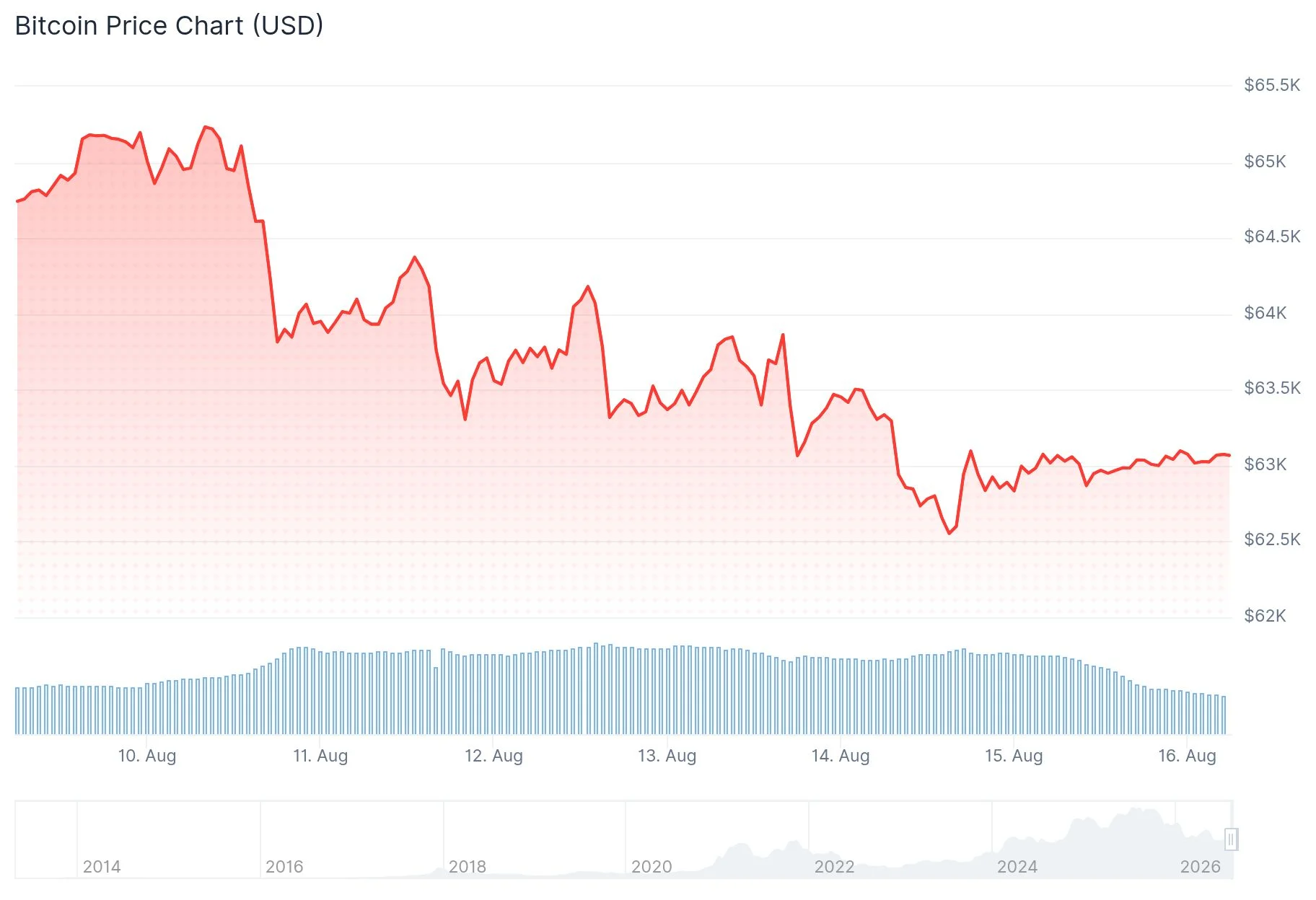
BTC currently changes hands around the $63,000 mark. Reduced market liquidity combined with widespread economic uncertainty have pressured valuations downward, though this correction could entice purchasers viewing Bitcoin as a durable wealth preservation vehicle.
While Bitcoin may not deliver the dramatic gains associated with smaller-cap projects, it presents significantly reduced protocol-specific risks, establishing it as the standard against which all other cryptocurrencies are evaluated.
Ethereum: Institutional Appetite Persists
Ethereum serves as the foundation for decentralized finance protocols, stablecoin infrastructure, asset tokenization platforms, NFT marketplaces, and countless decentralized applications. It remains the most extensively utilized smart contract blockchain globally.

ETH slipped beneath $1,900 throughout the recent downturn. However, institutional appetite remained robust. During the week concluding July 24, U.S. Ethereum ETF products accumulated $103.9 million in net inflows, topping all cryptocurrency ETF categories for that timeframe.
The convergence of ongoing developer engagement, powerful network effects, and expanding institutional participation maintains Ethereum’s position among priority holdings for forward-looking investors.
Solana: Rapid, Affordable, and Expanding
Solana presents direct competition to Ethereum, particularly for applications requiring high-speed, low-fee transactions. The blockchain recently upgraded its block capacity ceiling to 100 million compute units.
The platform’s ecosystem continues broadening across payment systems, tokenized asset frameworks, and cross-chain connectivity solutions. SOL traded around $75 in mid-August, substantially below its historical peaks.
This valuation disconnect between present prices and previous highs may represent an attractive entry point for those confident in the platform’s extended development trajectory.
Chainlink: The Foundation Layer Investment
Chainlink bridges blockchain networks with external data sources while facilitating cross-network transfer of assets and information. It represents critical infrastructure supporting the emerging tokenization sector.
LINK climbed toward $10 during mid-August following additional CCIP integration announcements and the beta rollout of Chainlink for Agents. These milestones demonstrate continued platform advancement and ecosystem expansion.
Should tokenized financial instruments achieve mainstream adoption, Chainlink is positioned to capture significant value as an essential infrastructure provider operating behind the scenes.
Hyperliquid: Elevated Risk, Elevated Potential
Hyperliquid represents the highest-risk selection on this watchlist. The decentralized perpetual futures trading venue has experienced rapid adoption, with HYPE appreciating approximately 154% during 2026’s first six months.
Such aggressive growth creates elevated expectations. Approaching token unlock events and evolving regulatory landscapes introduce risks requiring careful consideration.
Nevertheless, Hyperliquid demonstrates that decentralized trading infrastructure can effectively challenge centralized cryptocurrency exchanges for market share.
Get 3 Free Stock Ebooks
Discover top-performing stocks in AI, Crypto, and Technology with expert analysis.
- Top 10 AI Stocks - Leading AI companies
- Top 10 Crypto Stocks - Blockchain leaders
- Top 10 Tech Stocks - Tech giants



