



Key Takeaways
- Zano reset its network to block 3,833,000, eliminating approximately 30 days of recorded transactions.
- An exploit in the Gateway Address system enabled unlimited creation of ZANO and Freedom Dollar tokens.
- Exchange MEXC suspended ZANO and FUSD trading operations throughout the network migration process.
- The project confirmed reimbursements will utilize existing developer and team reserves rather than minting new tokens.
- ZANO cryptocurrency declined over 12% within a 24-hour period amid the recovery efforts.
The Zano network, a layer-1 blockchain emphasizing transaction privacy, has initiated a complete network reset following the discovery of a critical security flaw that permitted the unauthorized generation of tokens. The restoration process eliminates approximately 30 days of blockchain data.
Network operations resumed from block 3,833,000, the final block recorded before the implementation of Hard Fork 6, which launched the Gateway Address functionality in August.
Root Cause of the Network Reset
The Gateway Address system was designed to streamline integration for cryptocurrency exchanges, cross-chain bridges, and payment processors connecting to the Zano ecosystem. This architecture provided these platforms with a unified account-based balance system rather than Zano’s traditional unspent transaction output model.
Security researchers identified a critical weakness in this mechanism that enabled the creation of unlimited quantities of both ZANO and Freedom Dollar tokens without proper authorization. Project developers stated this vulnerability fundamentally compromised the fixed-supply economic model underlying the currency.
A comprehensive technical breakdown detailing the specific exploit methodology has not been published. The development team emphasized that standard wallet cryptographic keys and transaction anonymity features remained uncompromised.

Gateway Address creation required a 100 ZANO registration fee that was permanently removed from circulation. Blockchain records indicate a minimum of two addresses were established within the feature’s initial seven-day period.
Network Recovery Process
Implementing the rollback necessitates that mining operations, staking participants, node operators, trading platforms, and infrastructure providers download updated software and synchronize with the restored blockchain. Version 2.2.3.600 was distributed specifically for this migration.
Standard wallet users can perform updates without re-entering recovery seed phrases. Zano has begun re-establishing its proprietary infrastructure, including mobile wallet backend services.
External service providers must complete migrations according to their individual timelines. The project advised users to verify whether specific exchanges or wallet services have completed the transition before initiating fund transfers.
Trading platform MEXC halted all deposit and withdrawal functionality for both ZANO and FUSD tokens during the migration period. No specific resumption timeline had been communicated at the time of writing.
Quinten van Welzen, serving as Zano’s head of marketing and growth, clarified that the development team lacks unilateral authority to enforce a blockchain rollback. He explained that developers can only distribute software updates and request adoption from network participants.
He noted that major mining operations hold significant influence in such decisions. Expanding the network’s independent operator base would enhance overall resilience, he stated.
All transactions executed during the affected 30-day window will be absent from the restored chain. This encompasses both legitimate user activity and the exploited token generation.
The rollback possesses no ability to reverse transactions that achieved finality on external blockchain networks. Assets converted to USDT, DAI, or alternative tokens on separate protocols remain beyond the scope of this recovery.
Zano representatives indicated they are collaborating with impacted projects to determine financial losses. A structured compensation and claims submission framework has not yet been released.
Van Welzen specified that reimbursement capital will originate from the development treasury, team token allocations, and contributions from major stakeholders. He confirmed no additional ZANO tokens will be generated to address losses.
Initial project communications referenced a more limited rollback scope while investigators were still determining the full extent of the compromise. Van Welzen subsequently explained those preliminary assessments preceded complete understanding of the vulnerability.
The ultimate rollback timeframe extended to approximately one month after forensic analysis revealed the comprehensive scale of the exploitation.
Market Impact and Future Outlook
ZANO was trading around $6.32 throughout the recovery operation, representing a decline of approximately 12.85% across 24 hours, based on CoinMarketCap data. Total market capitalization registered near $97.6 million.
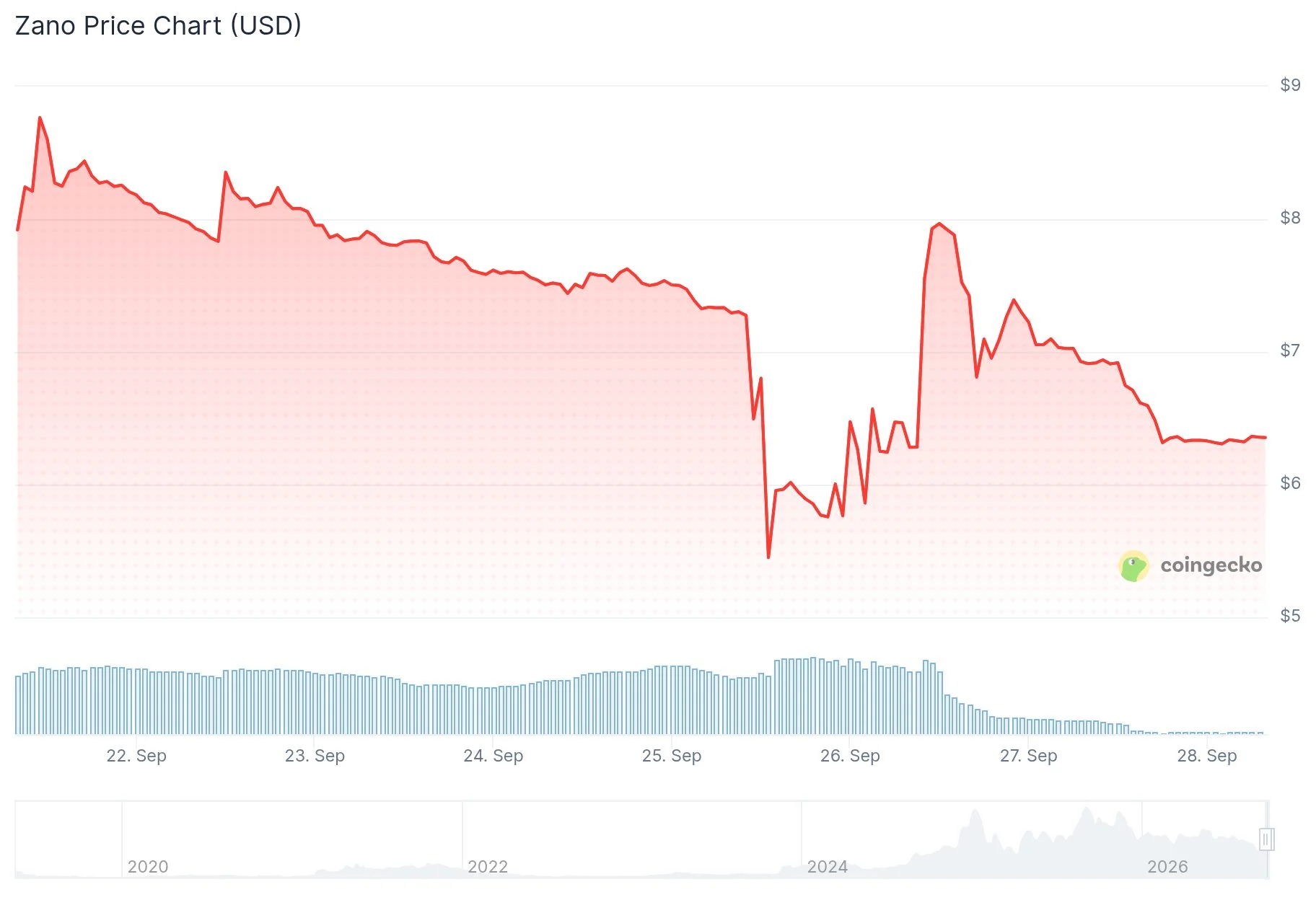
Project leadership announced plans to release a detailed technical analysis documenting the exploit’s mechanics and a comprehensive audit of associated codebase. No timeline has been established for restoring Gateway Address functionality.
The feature will remain disabled pending completion of the security review process.
Get 3 Free Stock Ebooks
Discover top-performing stocks in AI, Crypto, and Technology with expert analysis.
- Top 10 AI Stocks - Leading AI companies
- Top 10 Crypto Stocks - Blockchain leaders
- Top 10 Tech Stocks - Tech giants



