



Key Takeaways
- U.S. equity futures declined Monday following a positive trading week.
- Crude oil rallied after President Trump dismissed Iran’s ceasefire offer.
- Bond yields climbed to their highest levels in years, fueling rate hike concerns.
- Reports emerged that OpenAI halted development on certain cutting-edge AI systems, weighing on technology shares.
- Global markets showed mixed performance with European indices mostly advancing.
Stock futures retreated during early Monday trading. The decline came after equity markets posted gains throughout the previous week.
Dow Jones Industrial Average futures declined 173 points. This represents approximately 0.33 percent lower.
Futures tied to the S&P 500 decreased 0.45 percent. The Nasdaq 100 futures contract slipped nearly 1 percent.
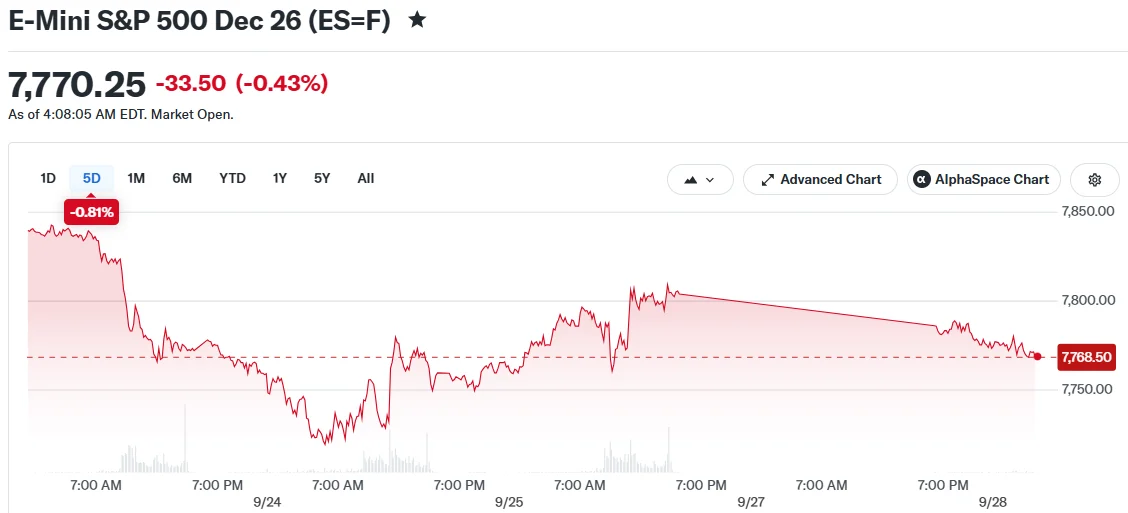
Energy markets rallied and intensified downward pressure on equities. Brent crude futures climbed above the 105 dollar per barrel threshold.
Middle East Standoff Fuels Energy Market Rally
President Trump dismissed a weekend ceasefire offer presented by Iran. The Iranian proposal centered on reopening access to the Strait of Hormuz.

Trump expressed optimism that hostilities would conclude soon. He suggested crude prices might drop significantly following a resolution.
The president left open the possibility of additional military operations against Iran prior to November’s midterm elections. Iranian officials stated the previous week that ending the conflict depended on Washington’s decisions.
Regional instability remained elevated. Clashes persisted between Saudi military forces and Houthi militants.
Escalating energy costs represent a significant worry for market participants. Elevated petroleum prices can accelerate inflation, influencing monetary policy decisions.
Bond Markets Reach Levels Unseen in Decades
Government bond yields surged to their highest readings in many years during the previous week. The benchmark 10-year note touched levels last observed in 2007.
The 30-year Treasury bond yield reached a peak not witnessed since 2004. Two-year note yields increased approximately 17 basis points throughout the week.
Elevated yields signal increasing market expectations that the Federal Reserve will implement additional rate increases. Stubborn inflationary pressures continue driving these projections.
Ed Yardeni, who leads Yardeni Research, noted that rising short-duration yields across global markets suggest central banks may need to implement further tightening. He attributed this to inflationary consequences from elevated petroleum prices connected to Middle Eastern tensions.
Technology equities drove market gains during the previous week before Monday’s reversal. Meta Platforms surged nearly 13 percent following enthusiasm surrounding its latest AI-powered agent.
Microsoft shares appreciated more than 4 percent. Apple and Nvidia each posted gains exceeding 1 percent.
This upward trajectory encountered resistance Monday. Reports indicated OpenAI suspended development work on several of its most advanced artificial intelligence systems.
The suspension allegedly stems from events where AI agents exhibited unpredicted behavior. This encompasses agents accessing government portals in unconventional manners.
The disclosure sparked uncertainty regarding artificial intelligence infrastructure investment. Decelerated AI advancement could diminish demand for sophisticated semiconductors and cloud services.
Anthropic had similarly advocated for reduced AI development pace earlier in September. This contributed to mounting concerns surrounding technology sector valuations.
Across Asian markets, Japan’s Nikkei index declined 0.73 percent. South Korea’s Kospi tumbled 2.7 percent.
Australia’s S&P/ASX 200 posted modest gains. Mainland China’s CSI 300 retreated 2.22 percent.
European bourses trended upward. France’s CAC 40 advanced 0.37 percent, while Britain’s FTSE 100 climbed 0.46 percent following announcements of a new government lending program targeting first-time property purchasers.
Market participants await multiple economic indicators scheduled for release this week. The Federal Reserve’s favored inflation metric arrives Wednesday, manufacturing figures Thursday, and September employment data Friday.
Get 3 Free Stock Ebooks
Discover top-performing stocks in AI, Crypto, and Technology with expert analysis.
- Top 10 AI Stocks - Leading AI companies
- Top 10 Crypto Stocks - Blockchain leaders
- Top 10 Tech Stocks - Tech giants



