


Key Takeaways
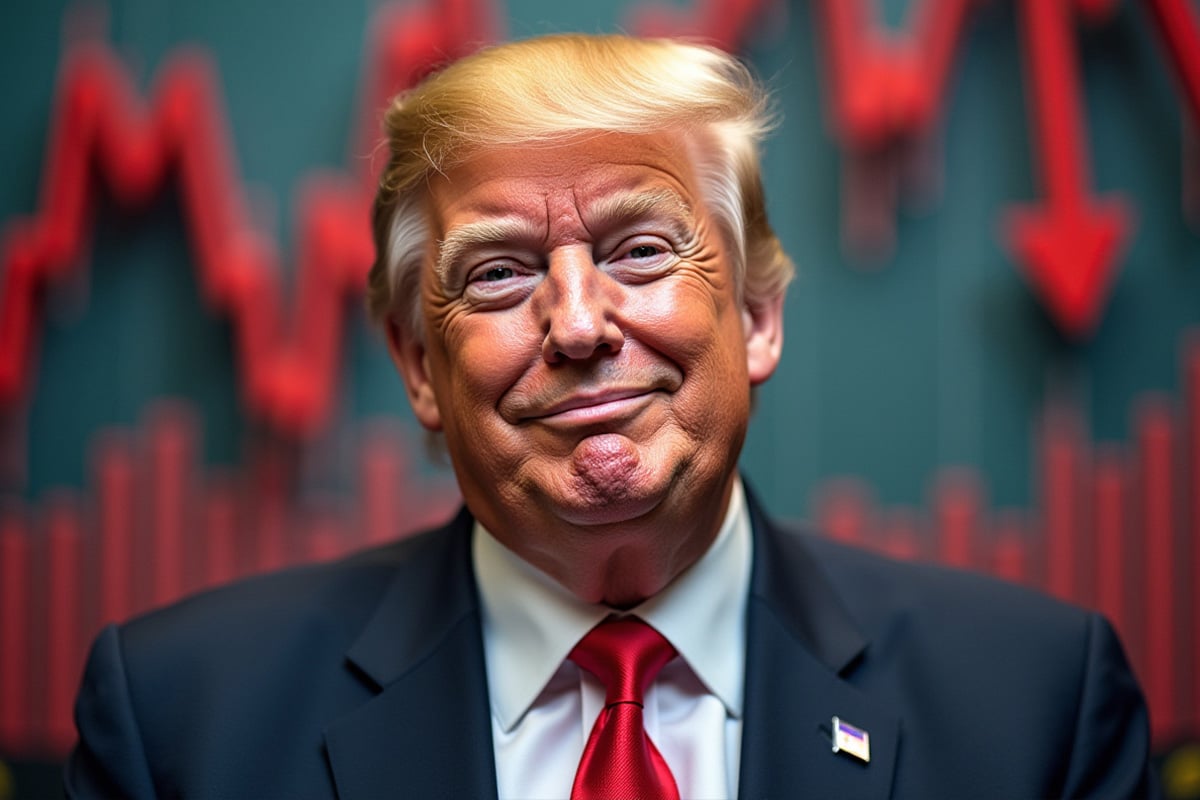
- Blockchain data shows 988,905 TRUMP memecoin purchasers — representing 66% of all participants — incurred collective losses of $3.81 billion by June’s end
- Donald Trump generated more than $630 million in personal revenue from the cryptocurrency as it plummeted 97% from all-time highs
- An elite cohort of early-stage investors extracted $4 billion in gains before the token’s dramatic collapse
- World Liberty Financial token holders experienced an 85% loss rate, with aggregate losses reaching $83 million across tracked wallets
- Civil litigation remains a possibility despite SEC’s 2025 decision to cease memecoin investigations, according to legal scholars
The former president introduced his namesake digital token merely 72 hours prior to assuming office in January 2025. The cryptocurrency surged beyond $73 per token before collapsing to approximately $1.70 — representing a staggering 97% decline from peak valuations.
Blockchain intelligence platform Nansen’s analysis indicates that 988,905 individual wallets — approximately 66% of total participants — experienced financial losses on their token holdings. The aggregate damage through June 2026 reached $3.81 billion.
Trump’s mandatory financial disclosure statement, published in late June, documented personal earnings exceeding $630 million specifically from the TRUMP cryptocurrency. His combined cryptocurrency-related income for the period surpassed $1.4 billion.
2/3 of retail investors lost money on the $TRUMP memecoin…
According to the New York Times, close to 1 million people lost a combined $3.81 billion on Trump’s memecoin, which launched in early 2025.
The meme is still worth more than $400M but is well down from all-time highs… pic.twitter.com/Nx8P07r9uJ
— BSCN (@BSCNews) July 6, 2026
The analytics firm characterized the situation as “a concentrated group of initial participants securing massive returns while mainstream retail investors shouldered the financial burden.” Approximately 500,000 strategically positioned early buyers realized a combined $4 billion in profit.
The token’s design enabled Trump to generate revenue through transaction fees independent of price performance. Following the launch, Trump consistently promoted the cryptocurrency through multiple posts on his Truth Social platform.
Nicholas Pinto, who supported Trump in the 2024 election and lost approximately $250,000 of his $500,000 stake, described the situation to the New York Times as: “It is almost a legal scam.”

White House officials disputed this assessment. Press representative Anna Kelly stated that Trump “proudly made the United States the crypto capital of the world” and emphasized that every decision was executed “in the best interest of the American people.”
World Liberty Financial Token Shows Similar Pattern
Nansen’s research extended to World Liberty Financial, a cryptocurrency venture associated with Trump and his three adult sons. The platform markets a digital asset called WLFI, which launched at 1.5 cents before increasing to 5 cents.
Among approximately 27,000 monitored wallets, 85% experienced negative returns totaling $83 million in losses. The profitable minority generated combined gains of $23 million.
Since becoming tradeable on secondary markets in September, the token has depreciated 82%. A World Liberty representative attributed the decline to wider cryptocurrency market conditions.
Trump’s disclosure documents revealed earnings approaching $800 million from the World Liberty Financial ecosystem. A Trump-affiliated entity receives 75% of all WLFI token sales irrespective of secondary market pricing.
Potential Legal Exposure Persists
The Securities and Exchange Commission declared in February 2025 it would discontinue memecoin transaction reviews, potentially restricting direct regulatory enforcement against Trump.
The TRUMP token’s official website featured disclaimer language characterizing the asset as an “expression of support” rather than an investment vehicle.
Nevertheless, New York University legal ethics professor Stephen Gillers indicated that such disclaimers might not prevent future civil litigation from financially damaged investors.
During a CNBC interview addressing potential conflicts of interest, Trump asserted there was “nothing illegal” and “nothing wrong” regarding his cryptocurrency earnings, while suggesting others managed his investment activities.
Get 3 Free Stock Ebooks
Discover top-performing stocks in AI, Crypto, and Technology with expert analysis.
- Top 10 AI Stocks - Leading AI companies
- Top 10 Crypto Stocks - Blockchain leaders
- Top 10 Tech Stocks - Tech giants



