


Key Takeaways
- President Trump dismissed Iran’s peace proposal as “totally unacceptable,” describing the ceasefire as hanging by a thread
- Brent crude surged to approximately $105 per barrel, while WTI approached $99
- Tehran’s demands include ending the US naval blockade, sanctions relief, and maintaining partial authority over Strait of Hormuz shipping
- Saudi Aramco’s chief executive estimates the world is losing 100 million barrels weekly due to the strait’s closure
- Market participants are monitoring upcoming US inflation reports and Trump’s scheduled talks with President Xi Jinping
President Trump on Monday rejected Iran’s most recent diplomatic overture, branding it “totally unacceptable” and dismissing it as a “piece of garbage.” Speaking to the press, he characterized the ceasefire as being on “massive life support,” intensifying concerns that the conflict, now in its tenth week, could reignite.
[[SCRIPT_0]]
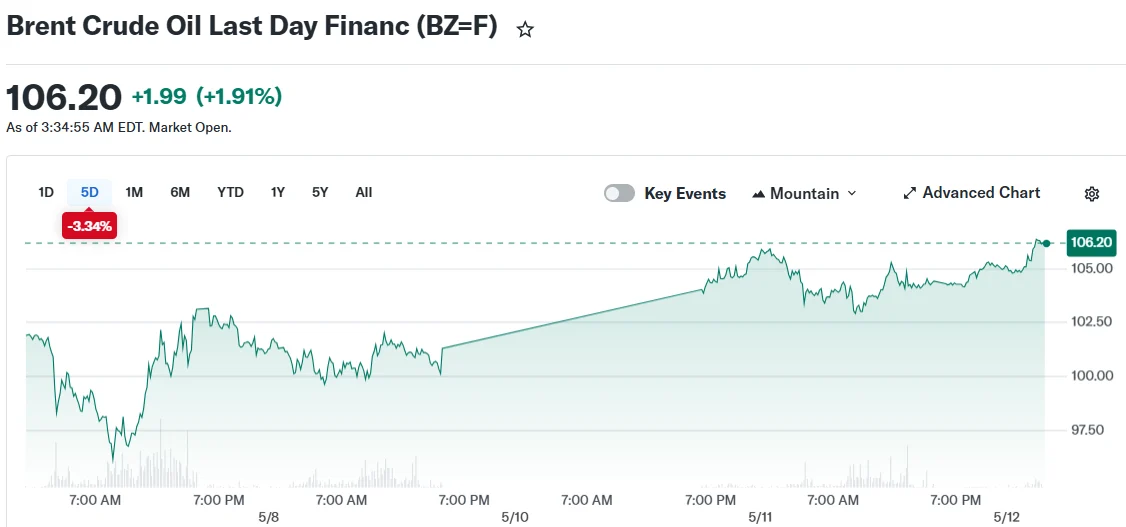
Brent crude advanced to approximately $105 per barrel on Tuesday, extending Monday’s nearly 3% rally. West Texas Intermediate similarly climbed to roughly $99 per barrel.
The military confrontation erupted approximately ten weeks ago, with a delicate truce established in early April. However, ongoing maritime incidents in the region have maintained elevated tensions.
Tehran’s response to Washington’s peace framework included several conditions: terminating the US naval blockade, removing economic sanctions, restoring Iranian petroleum exports, compensating war damages, and preserving partial oversight of vessel traffic traversing the Strait of Hormuz.

The Strait of Hormuz represents a critical artery for global energy transport. Approximately 20% of the world’s oil and refined fuel products flow through this narrow passage.
Supply Chain Impact of the Strait Disruption
Amin Nasser, chief executive of Saudi Aramco, stated that global markets are hemorrhaging 100 million barrels of oil supply weekly as long as the waterway remains effectively blocked. While Aramco has diverted certain shipments through its Red Sea facilities, prices continue climbing and major importers like China are reducing purchase volumes.
US gasoline prices have spiked, creating political pressure for Trump and Republican lawmakers as November’s midterm elections approach. The administration has authorized strategic petroleum reserve releases to moderate price increases.
Analysts at Bloomberg Economics concluded that comprehensive peace negotiations appear improbable. They anticipate hostilities may resume but would likely stabilize into lower-intensity confrontations, which they termed “the new normal.”
According to Axios, Trump is convening his national security advisors to evaluate potentially resuming military operations. In a Fox News interview, Trump mentioned reconsidering a proposal to provide naval escorts for commercial vessels transiting the strait.
Key Market Indicators to Monitor
Investors are focused on Tuesday’s US Consumer Price Index release. Economists projected headline inflation would accelerate to 3.7% from 3.3% year-over-year, partially attributed to elevated energy costs stemming from the regional conflict.
Wednesday’s producer price data is similarly anticipated to reflect mounting inflationary pressure from increased gasoline and transportation expenses.
Accelerating inflation could constrain Federal Reserve policy options and extend the elevated interest rate environment.
Market participants are also tracking Trump’s upcoming summit with Chinese President Xi Jinping in Beijing. The bilateral discussions are expected to address Iran policy, commercial relations, and energy security concerns. China remains Iran’s primary crude oil customer and maintains considerable diplomatic leverage with Tehran.
The Treasury Department imposed additional sanctions Monday targeting entities facilitating Iranian oil sales to China. Experts suggest the Trump-Xi negotiations could significantly influence the conflict’s trajectory.
Technical market strength indicators have weakened in recent trading sessions as certain refineries have reduced procurement activity.
Get 3 Free Stock Ebooks
Discover top-performing stocks in AI, Crypto, and Technology with expert analysis.
- Top 10 AI Stocks - Leading AI companies
- Top 10 Crypto Stocks - Blockchain leaders
- Top 10 Tech Stocks - Tech giants



