


TLDR
- Following its June 2026 IPO at $1.77 trillion, SpaceX’s market capitalization surged past the $2 trillion milestone
- Despite generating $18.67 billion in 2025 revenue, SpaceX reported a $4.94 billion net loss
- AST SpaceMobile’s orbital fleet expanded to nine satellites following a June 17 SpaceX launch of three additional BlueBird units
- With $3.5 billion in cash reserves, AST reported Q1 2026 revenue of $14.7 million and projects $150–$200 million for full-year 2026
- Analyst consensus for AST SpaceMobile trends toward Reduce, with a mean price target of $81.33
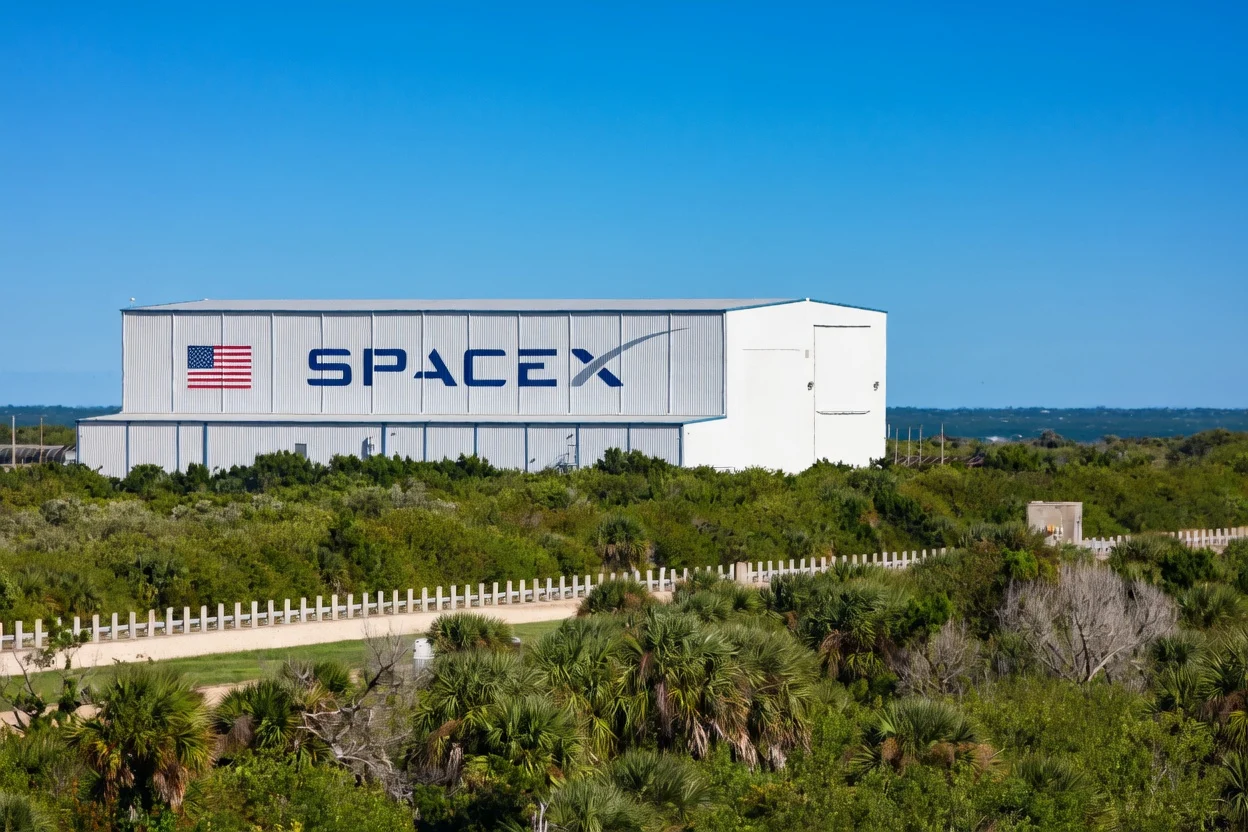
When SpaceX completed its initial public offering in June 2026, the company commanded a staggering $1.77 trillion valuation. Within days of commencing trading, the market capitalization exceeded $2 trillion, positioning it among the planet’s most valuable corporations.
Space Exploration Technologies Corp., SPCX
Revenue figures for 2025 reached $18.67 billion, representing significant growth from the previous year’s $14.02 billion. However, substantial capital expenditures on rocket technology and supporting infrastructure resulted in a $4.94 billion net loss.
SpaceX has evolved far beyond its original identity as a rocket manufacturer. The enterprise now integrates launch capabilities, reusable rocket technology, and Starlink’s satellite internet operations. Reuters has characterized the company as a “space, satellite and AI provider.”
Starlink provides SpaceX with predictable, recurring income that distinguishes it from competitors in the space industry. The broadband division already functions at commercial scale, with future expansion dependent on Starship advancement, government partnerships, and broader Starlink deployment.

The critical consideration for potential shareholders centers on valuation. SpaceX commands a premium that anticipates massive future expansion despite current unprofitability.
AST SpaceMobile’s Expanding Orbital Constellation
AST SpaceMobile pursues an alternative strategy. This enterprise develops a satellite constellation designed to interface directly with standard smartphones without requiring specialized equipment.
Three additional AST BlueBird satellites reached orbit on June 17 via a SpaceX launch, increasing AST’s operational constellation to nine units. The company aims to deploy 45 satellites by year-end 2026.
First-quarter 2026 financial results showed $14.7 million in revenue and a loss per share of -$0.66. AST maintains $3.5 billion in cash holdings and reaffirms its full-year 2026 revenue projection of $150 million to $200 million.
The investment narrative remains in its infancy. Shareholders are wagering on eventual commercialization rather than present-day operations.
Following the most recent launch, uncertainties persist. Barron’s highlighted that investors await verification that the recently deployed satellites have successfully unfolded and are functioning as intended.
Key Distinctions Between These Space Companies
The fundamental difference between these enterprises lies in operational validation. SpaceX has successfully constructed a substantial, functioning commercial space operation. AST continues working to demonstrate that its direct-to-device concept can achieve global viability.
SpaceX represents a more established option. It possesses the revenue stream, physical infrastructure, and proven performance history. AST presents greater potential returns if its constellation achieves commercial deployment, though execution challenges are considerably more pronounced.
Wall Street sentiment mirrors this dichotomy. Eleven analysts tracking AST SpaceMobile assign a Reduce consensus, comprising one buy rating, seven hold recommendations, and three sell ratings. The mean price objective sits at $81.33.
SpaceX remains too recently public for comprehensive analyst coverage, yet its immediate post-IPO market value demonstrates substantial investor confidence in its market dominance.
While both organizations operate within the same industry vertical, they occupy markedly different developmental phases.
For prospective investors, the decision ultimately contrasts established market presence against speculative growth opportunity.
Get 3 Free Stock Ebooks
Discover top-performing stocks in AI, Crypto, and Technology with expert analysis.
- Top 10 AI Stocks - Leading AI companies
- Top 10 Crypto Stocks - Blockchain leaders
- Top 10 Tech Stocks - Tech giants



