


TLDR
- SpaceX begins trading Friday with shares priced at $135, potentially raising $75 billion in what may become history’s largest public offering
- Companies like AST SpaceMobile and Rocket Lab may see valuation compression as SpaceX’s ~35x sales multiple contrasts with their 60-80x ratios
- Wireless providers including Verizon, AT&T and T-Mobile have declined on competitive concerns but may rebound if the offering disappoints
- AI represents SpaceX’s largest growth opportunity at $22.7 trillion, though its xAI division lacks a defined profitability strategy
- While Nasdaq accelerated index eligibility rules, S&P Dow Jones maintains its traditional 12-month waiting requirement
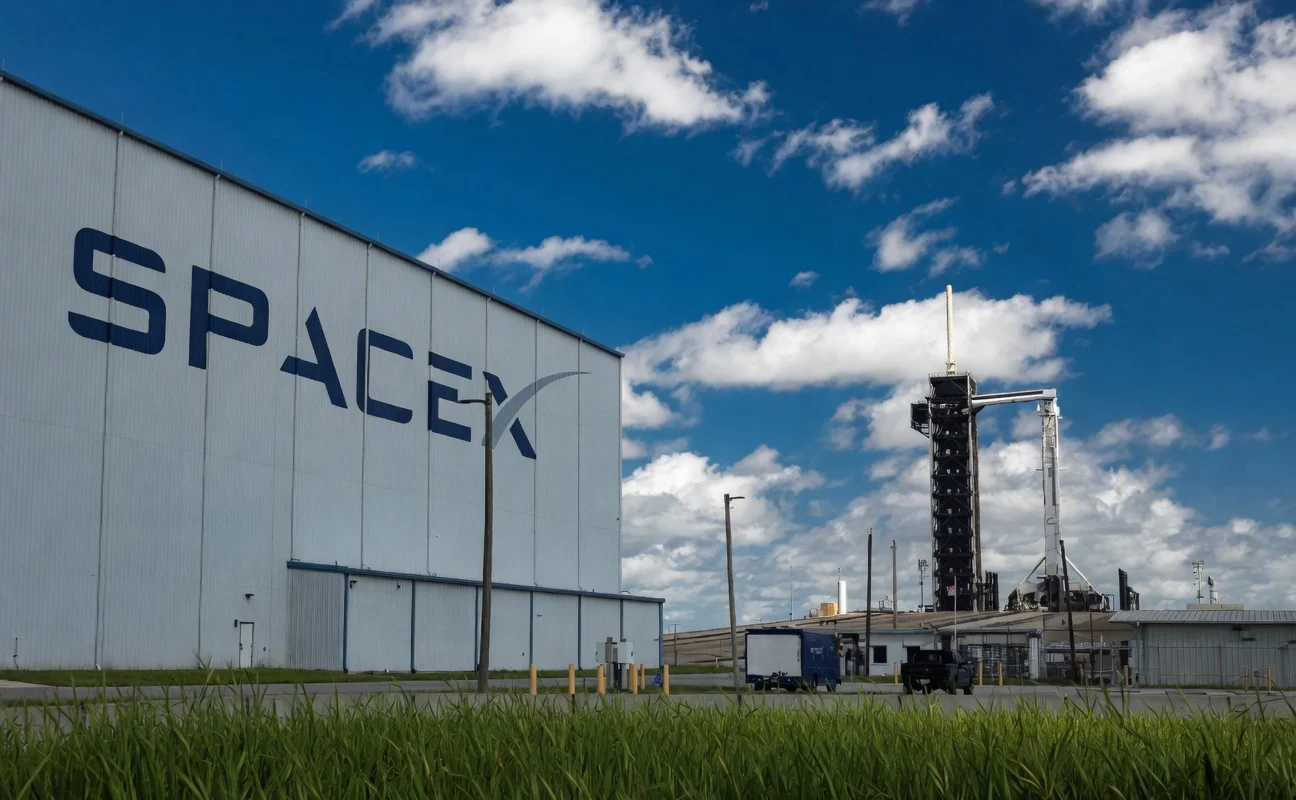
This Friday marks a watershed moment as SpaceX prepares its market debut, pricing 555.6 million shares at $135 apiece. The offering stands to generate approximately $75 billion, positioning it as potentially the largest initial public offering ever recorded.
LATEST: ⚡ SpaceX’s IPO has attracted over $250B in demand, nearly 4x oversubscribed, as the company seeks to raise $75B in what would be the largest IPO ever, according to Reuters. pic.twitter.com/rAWRKbvL3W
— CoinMarketCap (@CoinMarketCap) June 10, 2026
In a conversation with JPMorgan CEO Jamie Dimon on X, Elon Musk explained the capital raise will fund the deployment of 100,000 advanced Starlink satellites alongside orbital AI data infrastructure. The transaction could propel Musk, currently holding the title of world’s wealthiest individual, toward becoming the planet’s first trillionaire.
Implications for Publicly Traded Space Companies
The valuation metrics emerging from SpaceX’s public offering present challenges for existing space sector equities.
At approximately 35 times projected revenues, SpaceX establishes a new benchmark. Meanwhile, AST SpaceMobile commands roughly 80 times forward revenue, while Rocket Lab trades near 60 times. Both securities have experienced remarkable appreciation over the trailing twelve months — climbing approximately 150% and 290% respectively.
The introduction of SpaceX as a direct peer comparison threatens these premium valuations. Market observers characterize this phenomenon as multiple compression or “derating” — where valuation metrics adjust downward to align with established comparables.
Intuitive Machines and Redwire confront comparable valuation headwinds. These four enterprises all carry short interest approaching 20%, representing three to four times the Russell 1000 average. This positioning creates potential for volatile price action, including possible short covering if SpaceX’s market reception drives sector sentiment higher.

Wireless Carriers and Artificial Intelligence Plays Face Uncertainty
SpaceX extends far beyond launch services. Its Starlink constellation directly challenges established telecommunications infrastructure.
Legacy wireless operators including Verizon, AT&T and T-Mobile have experienced share price weakness in anticipation of increased competition. Should the IPO falter, these telecommunications stocks may find relief.
According to disclosure documents, SpaceX identifies artificial intelligence as its most significant expansion opportunity, quantifying the addressable market at $22.7 trillion. The company’s xAI division, which combined with SpaceX operations earlier this year, faces competition from Anthropic, OpenAI and Microsoft. Notably, the prospectus provides no concrete roadmap toward xAI profitability.
A lackluster market debut could send shockwaves through AI-related equities more generally. SpaceX represents the inaugural unprofitable AI enterprise to pursue public markets. Both OpenAI and Anthropic are anticipated to launch their own offerings before year-end.
Index Membership and Governance Structure
Nasdaq recently modified its eligibility criteria, permitting Nasdaq 100 inclusion after merely 15 trading sessions — a change that could accelerate SpaceX’s index entry. Conversely, S&P Dow Jones maintains its established 12-month seasoning period.
Through concentrated ownership of Class B shares, Musk retains absolute voting control over corporate governance. Company filings explicitly caution that Musk’s departure would create significant operational challenges.
Prior to the public offering, SpaceX shares traded around $163 on the Hyperliquid crypto platform — suggesting potential upside of roughly 20% from the IPO pricing.
Get 3 Free Stock Ebooks
Discover top-performing stocks in AI, Crypto, and Technology with expert analysis.
- Top 10 AI Stocks - Leading AI companies
- Top 10 Crypto Stocks - Blockchain leaders
- Top 10 Tech Stocks - Tech giants



