


Key Highlights
- Confidential SEC documents reveal SpaceX is pursuing an IPO with a potential valuation between $1.75 and $2 trillion
- The satellite broadband division Starlink achieved $11.4 billion in annual revenue with exceptional 63% EBITDA margins
- Subscriber count exceeded 10 million users spanning 160 nations by February 2026
- Future plans include orbital AI computing facilities, challenging tech giants including Microsoft, Amazon, Alphabet, and Meta
- A $2 trillion valuation would position SpaceX alongside Nvidia, Alphabet, Apple, Microsoft, Amazon, and Broadcom among America’s elite public enterprises
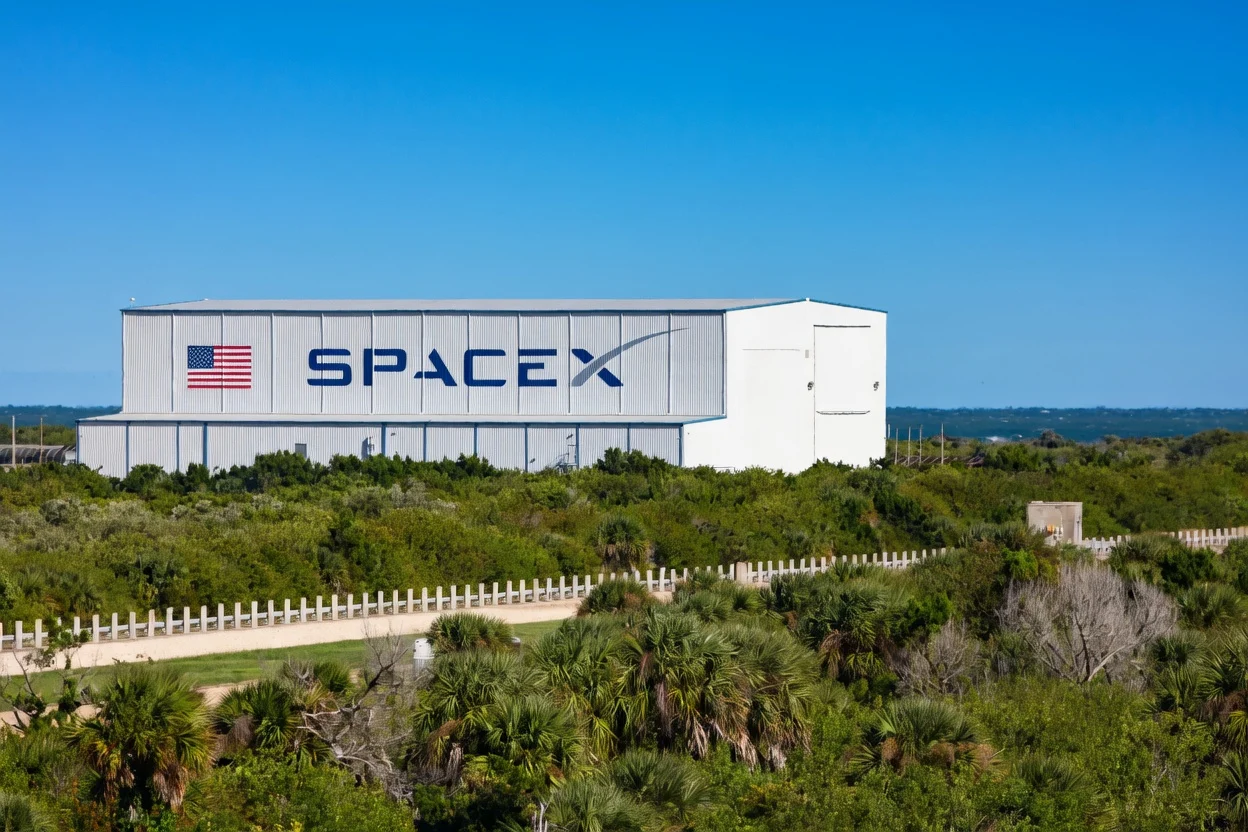
Elon Musk’s aerospace venture has submitted confidential documentation to the Securities and Exchange Commission for a public offering that could establish a market capitalization ranging from $1.75 trillion to $2 trillion. Achieving this target would place the company’s worth above Tesla, Walmart, Berkshire Hathaway, and Eli Lilly combined.
Insider information about the filing has begun circulating, revealing financial performance that’s capturing significant attention across Wall Street.
The satellite internet division generated $11.4 billion in revenue during the previous year while maintaining remarkable EBITDA profitability of 63%. By comparison, traditional telecommunications giants AT&T, Verizon, and T-Mobile average just 38% EBITDA margins collectively. T-Mobile performs best among the three at 39%.
Starlink represented approximately 61% of SpaceX’s overall revenue stream in 2025. Total company revenues reached approximately $18.5 billion during the same period.
The satellite service concluded 2025 with over 9 million active subscribers distributed across more than 155 nations. Musk announced via X in February 2026 that the subscriber base had surpassed 10 million across 160 countries and territories.
Unprecedented Valuation Metrics Challenge Traditional Analysis
Using the $1.75 trillion market capitalization against $18.5 billion in annual revenue produces a price-to-sales ratio approaching 95x. This exceeds even Palantir, which currently commands approximately 87.5x sales. Emerging space infrastructure company AST SpaceMobile trades at more moderate multiples despite its growth trajectory.

Conventional financial metrics appear inadequate for this situation. The company’s expansion velocity suggests historical data provides limited predictive value.
The current private market valuation of $1.3 trillion already positions SpaceX at roughly double the aggregate market capitalization of AT&T, Verizon, T-Mobile, American Tower, and Crown Castle.
Reaching $1.8 trillion would surpass the entire combined value of all aerospace and defense corporations within the S&P 500 index — encompassing GE Aerospace, Lockheed Martin, and RTX, which collectively total below $1.5 trillion.
Several established industry participants have opted for collaboration over competition. Comcast now deploys Starlink technology to supplement its fiber optic and cable infrastructure. T-Mobile routes certain device traffic through SpaceX’s satellite network.
Orbital Computing Centers Represent SpaceX’s Frontier Expansion
The company’s ambitions extend beyond satellite internet provision. SpaceX aims to deploy artificial intelligence computing facilities in space orbit, utilizing its xAI acquisition. This strategy creates direct competition with cloud computing leaders — Microsoft, Amazon, Alphabet, and Meta — whose combined market value approximates $11.7 trillion with average EBITDA margins near 57% for the current year.
Microsoft achieves the highest margins in this group at 61% — still trailing Starlink’s 63% performance.
Musk has projected that space-based AI operations could become more cost-effective than ground-based alternatives within two to three years. xAI remains unprofitable currently, and comprehensive financial statements have not been disclosed.
Beyond artificial intelligence, the Starship heavy-lift vehicle — engineered to transport up to 100 passengers — forms the foundation for long-term expansion strategies encompassing lunar missions, freight operations, and ultimately Martian exploration.
Should Starlink expand its customer base to 30 to 50 million subscribers maintaining average monthly fees of $100, the division alone could produce $60 billion in yearly revenue. Current residential pricing spans $50 to $120 monthly, while maritime commercial packages reach $2,150.
SpaceX has not issued official statements regarding the disclosed financial information.
Get 3 Free Stock Ebooks
Discover top-performing stocks in AI, Crypto, and Technology with expert analysis.
- Top 10 AI Stocks - Leading AI companies
- Top 10 Crypto Stocks - Blockchain leaders
- Top 10 Tech Stocks - Tech giants



