


Key Points
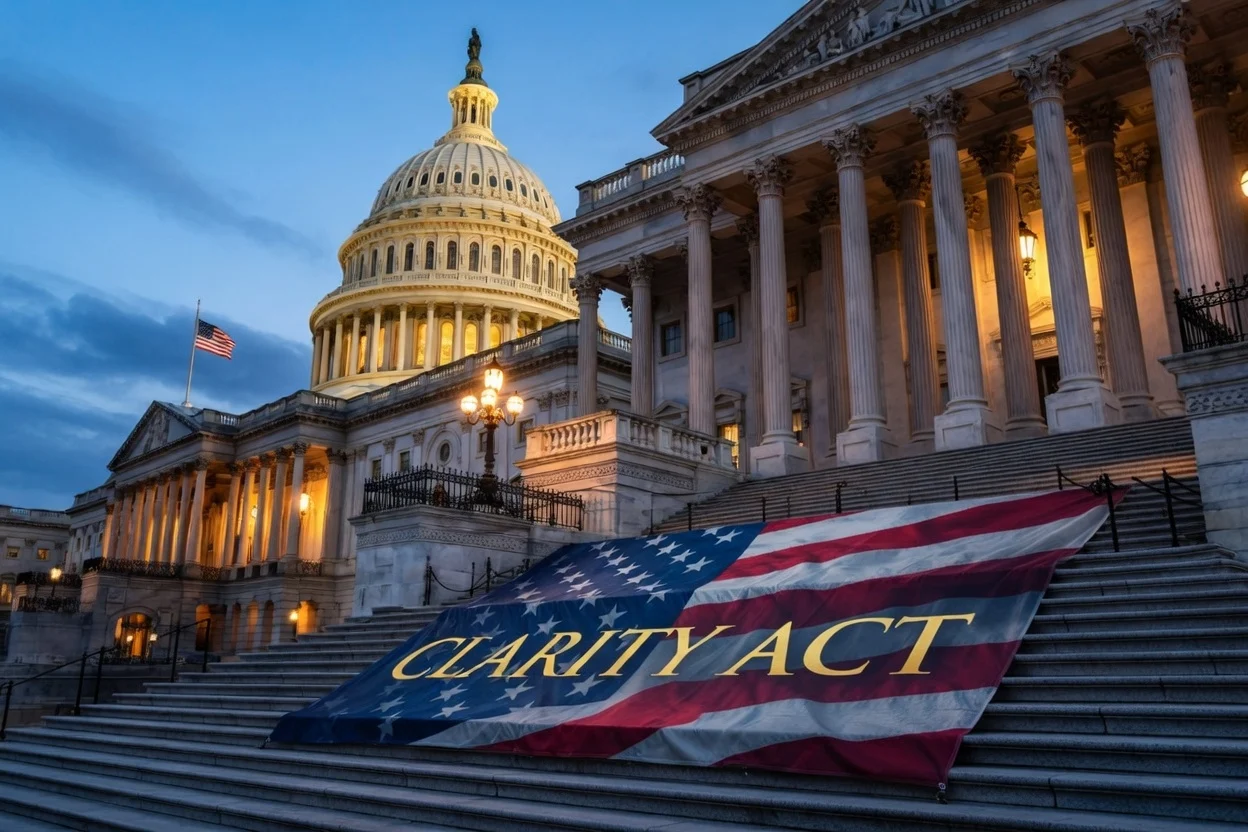
- The Securities and Exchange Commission postponed its innovation exemption for tokenized securities while Congress advances the Clarity Act.
- Securitize President Brett Redfearn revealed the exemption was originally scheduled for Aug. 14 but could launch in early October.
- The framework under consideration would enable certain tokenized securities to execute onchain transactions outside conventional broker-dealer, exchange, or registered ATS systems.
- Senate leadership has set a Sept. 15 cloture vote on the Clarity Act following a missed vote before the August congressional break.
- Redfearn anticipates traditional finance institutions may file legal challenges against the SEC exemption, which could extend the timeline by approximately two years.
The Securities and Exchange Commission postponed releasing an innovation exemption for tokenized securities while members of Congress gathered support for the Clarity Act, [[LINK_START_0]]Securitize President Brett Redfearn[[LINK_END_0]] disclosed. The regulator had targeted Aug. 14 for the exemption’s release, but legislative considerations altered that timeline.
Redfearn explained the commission wanted to avoid interfering with ongoing discussions surrounding the Clarity Act. Meanwhile, the SEC moved forward with its Regulation Crypto Assets rule on Aug. 18, keeping the innovation exemption on pause.
Congressional Action Influences Regulatory Timeline
Redfearn anticipates the SEC will publish the innovation exemption following Congressional resolution of the Clarity Act. Current projections point toward early October, though the exact date remains contingent on Senate proceedings.
Senate Majority Leader John Thune has established Sept. 15 as the date for a cloture vote. The chamber failed to address the legislation before its August recess, creating uncertainty around passage and connecting the SEC’s regulatory moves to the legislative calendar.
The exemption would establish a pathway for tokenized securities to execute trades through an alternative venue structure. Redfearn indicated these platforms could function independently of broker-dealers, registered alternative trading systems, or traditional exchanges.
He noted this architecture would facilitate onchain and decentralized trading within a fresh SEC regulatory framework. Traditional financial institutions may pursue legal action against the regulation, potentially extending implementation by roughly two years, according to Redfearn.

Securitize has developed its tokenized securities operations within existing securities regulations. Redfearn emphasized the firm employs a registered transfer agent and alternative trading system while maintaining regulatory compliance.
The platform also executes SECZ share transactions onchain under Regulation NMS requirements and submits activity data through the Consolidated Audit Trail. Redfearn confirmed Securitize maintains operational capability regardless of whether Congress approves the Clarity Act.
Securitize Advances Digital Securities Platform
Securitize launched trading operations on July 2 and currently maintains approximately $400 million in cash reserves, Redfearn reported. The company intends to deploy these resources toward expanding its tokenized securities infrastructure.
Current initiatives encompass an equities trading platform developed alongside the New York Stock Exchange. Securitize collaborates with ComputerShare, Continental, and Jump Trading as it constructs systems for tokenized securities trading and settlement operations.
Get 3 Free Stock Ebooks
Discover top-performing stocks in AI, Crypto, and Technology with expert analysis.
- Top 10 AI Stocks - Leading AI companies
- Top 10 Crypto Stocks - Blockchain leaders
- Top 10 Tech Stocks - Tech giants



