



Key Takeaways
- The Pudgy Penguins brand successfully placed Pudgy Toys across 3,100 Walmart locations and Target stores—an exceptional achievement for any crypto-originated project.
- Igloo, the parent company, secured $11 million in funding during 2024 with Founders Fund leading the investment round.
- Official documentation states the PENGU token exists solely “for fun and entertainment only” and carries “no commercial value.”
- An 88.89 billion token total supply exists, with approximately 70.72% already in circulation and cliff vesting events scheduled for future unlocks.
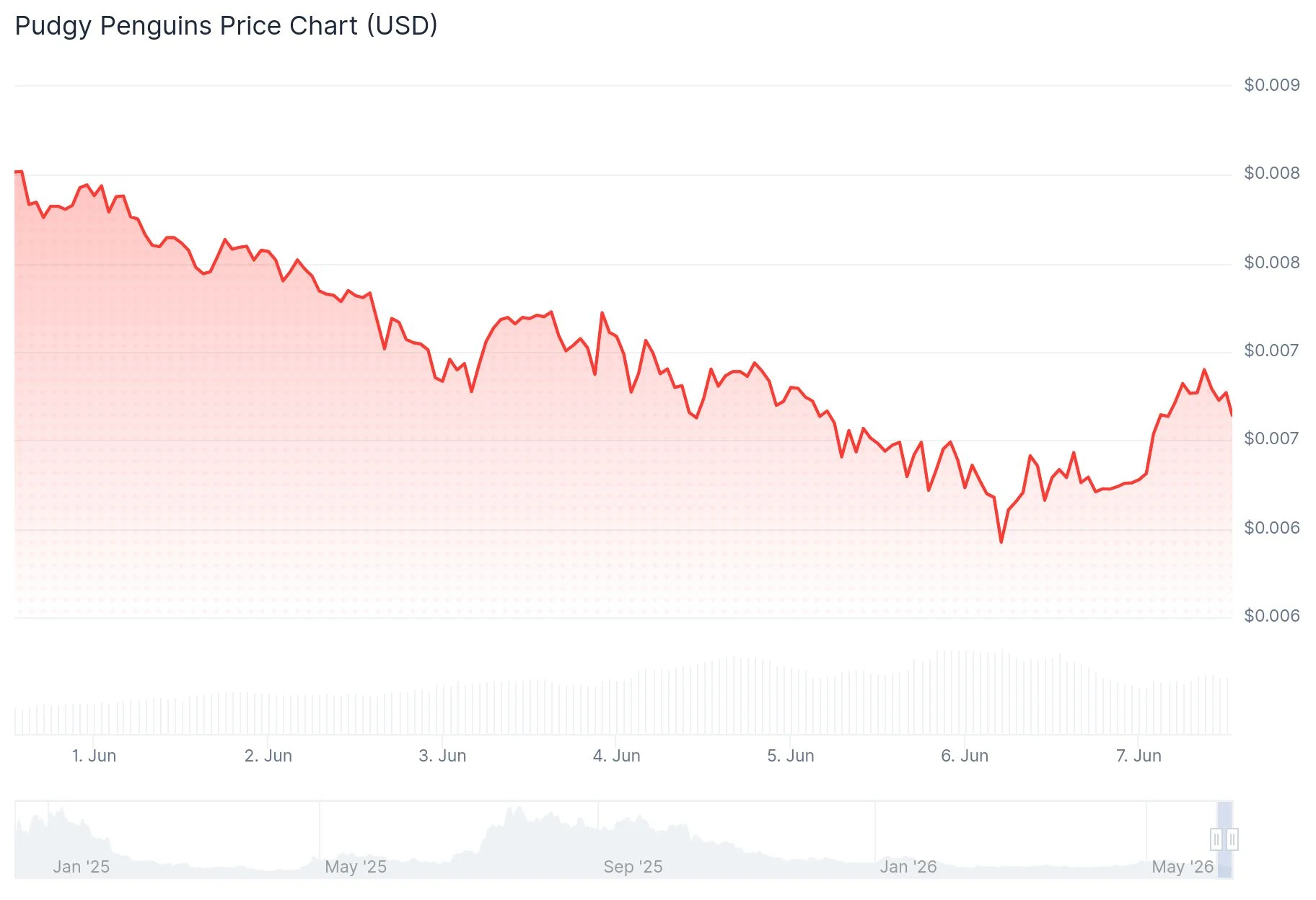
- Current market capitalization ranges from $396 million to $424 million with roughly 63 billion tokens actively circulating.
What began as a simple NFT project has transformed into a recognized consumer brand. Pudgy Penguins has achieved what few blockchain-based ventures manage: genuine mainstream visibility. The project now operates physical product lines stocked in major American retailers, commands authentic brand recognition, and maintains an engaged community across social platforms. This level of traditional market penetration remains exceptionally rare for any cryptocurrency-native initiative.
The retail accomplishments speak for themselves. Pudgy Toys secured shelf space across 3,100 Walmart stores nationwide while simultaneously entering Target’s distribution network. These achievements represent significant milestones. The overwhelming majority of blockchain projects never approach traditional retail channels, much less secure placement in two dominant retail giants. This tangible market presence provides Pudgy Penguins with legitimacy that remains elusive for most cryptocurrency ventures.
Igloo, operating as the corporate entity behind the brand, completed an $11 million funding round in 2024. Founders Fund, a venture capital firm with substantial credibility, spearheaded this investment. Such institutional support indicates that investors operating outside cryptocurrency circles recognize genuine opportunity in Igloo’s business model.
Understanding What PENGU Actually Represents
This is where clarity becomes essential. PENGU functions as the project’s cryptocurrency token, but ownership conveys no business equity. The official claim documentation explicitly characterizes the token as existing “for fun and entertainment only” while possessing “no commercial value.” This language is remarkably transparent, and anyone considering investment should interpret it literally.
PENGU token ownership grants zero economic rights to toy revenue, licensing agreements, or any income streams generated by the Pudgy Penguins brand. Additionally, the company and team collectively control 29.28% of total supply—17.80% allocated to current and future team members, with 11.48% held by the corporate entity.

While this concentration level falls within typical cryptocurrency parameters, it nonetheless represents substantial centralized holdings for a token with minimal defined functionality.
Token Supply Dynamics and Release Schedule
CoinGecko data indicates approximately 63 billion PENGU currently circulating, while Tokenomist reports the total supply at 88.89 billion tokens. This means roughly 70.72% of all tokens have entered circulation.
The release schedule incorporates cliff vesting mechanisms for certain allocations. Rather than gradual monthly distributions, these structures release significant token quantities simultaneously, creating concentrated dilution events. The complete supply distribution timeline continues unfolding.
Daily trading activity remains robust with genuine liquidity backing transactions. PENGU operates as an actively traded asset, not a dormant speculative token. Market depth allows most retail participants to execute trades without encountering significant slippage issues.
Current market capitalization occupies the $396 million to $424 million range. This positions PENGU as a mid-tier cryptocurrency asset—beyond micro-cap speculation territory but nowhere near top-tier status.
What distinguishes PENGU from typical meme tokens is the authentic brand strength supporting it. The retail partnerships exist. The institutional funding is verifiable. The cultural impact is measurable.
However, the fundamental disconnect between brand success and token utility remains the critical consideration for anyone evaluating PENGU from an investment perspective.
Get 3 Free Stock Ebooks
Discover top-performing stocks in AI, Crypto, and Technology with expert analysis.
- Top 10 AI Stocks - Leading AI companies
- Top 10 Crypto Stocks - Blockchain leaders
- Top 10 Tech Stocks - Tech giants



