


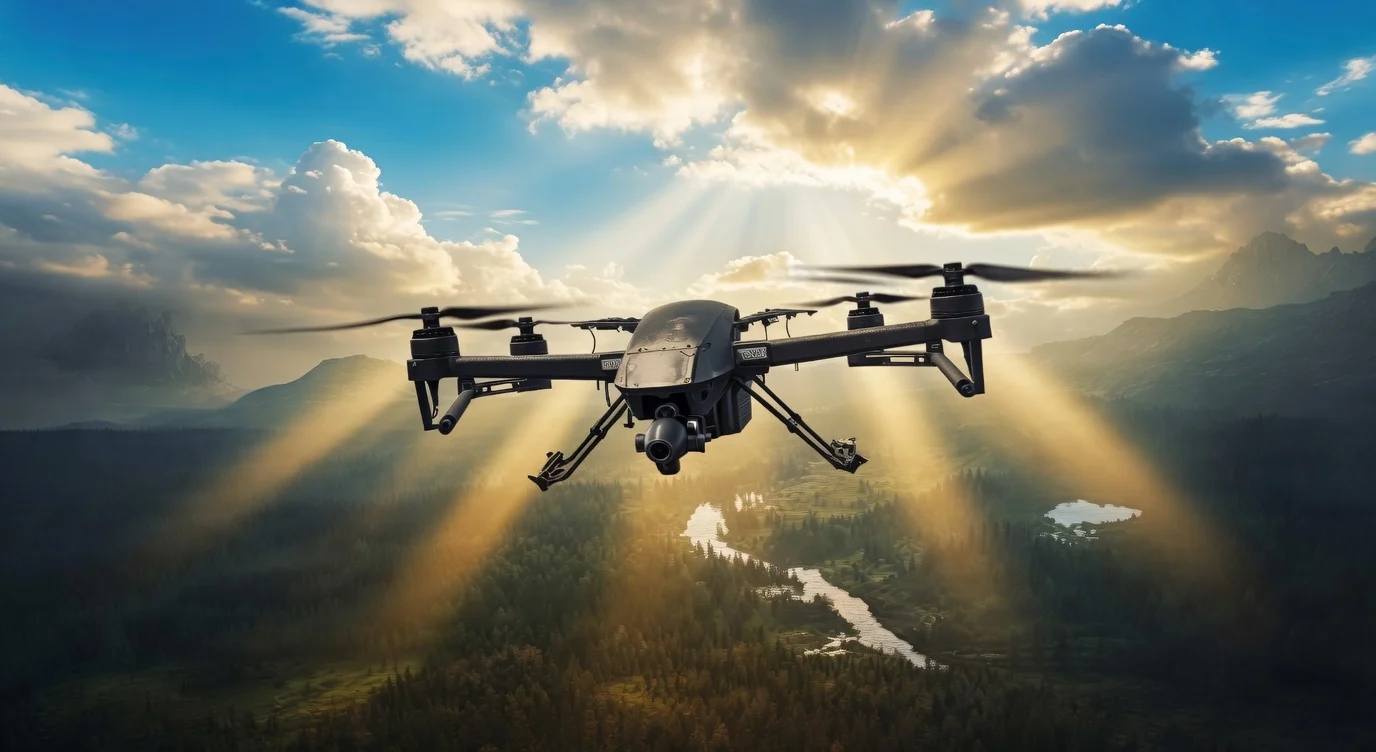
Key Takeaways
- Unmanned aerial systems are transforming military doctrine, replacing conventional roles previously filled by personnel on the ground
- AeroVironment achieved fiscal 2025 revenues of $820.6 million, marking a 14.45% annual increase fueled by Department of Defense procurement
- Palantir generated $1.63 billion in Q1 2026, with its artificial intelligence platforms becoming essential for managing drone fleet coordination
- Kratos Defense recorded $1.347 billion in 2025 sales and projects up to $1.675 billion for 2026, with its XQ-58A Valkyrie now in Marine Corps production
- Western defense sectors face critical supply chain exposure to Chinese component manufacturers, prompting new procurement restrictions effective January 1, 2027
The landscape of military engagement is undergoing a fundamental transformation, with several American defense contractors positioned at the forefront of this evolution. Combat operations in Ukraine have demonstrated how affordable unmanned systems can effectively perform missions previously assigned to specialized military personnel — a development capturing significant investor interest.
Unmanned aerial vehicles now execute surveillance, precision targeting, and offensive operations at costs dramatically lower than conventional alternatives. These platforms deliver enhanced speed, extended operational range, and reduced personnel exposure. Ukrainian manufacturers alone produced approximately 1.2 million drone units throughout 2024 to sustain defensive operations against advancing forces.
This represents more than a passing tactical adjustment. Military strategists worldwide are fundamentally redesigning operational frameworks around drone-centric capabilities, and the corporations supplying these technologies are experiencing substantial revenue expansion.
AeroVironment stands among the most direct beneficiaries of this shift. The manufacturer produces the Switchblade loitering munition system, which has seen extensive deployment across Ukrainian battlefields. The company’s portfolio also includes Puma and Raven platforms, utilized by American and partner nation forces for tactical intelligence gathering.

The defense contractor reported unprecedented revenues of $820.6 million for fiscal year 2025, representing a 14.45% increase from the previous period. The United States Department of Defense has allocated hundreds of millions through contracts for Switchblade platforms, including a $64.6 million modification awarded in 2023. The Pentagon’s Replicator Initiative — targeting deployment of thousands of autonomous platforms — is anticipated to generate additional procurement demand.
AI Platforms: Palantir’s Strategic Position in Command Systems
Scaling drone operations beyond limited deployments presents challenges extending far beyond hardware acquisition. The fundamental challenge involves data management and processing. Palantir has emerged as a critical player within this technological domain.
The company’s Gotham system manages real-time intelligence fusion and targeting coordination for American military and allied operations. Its artificial intelligence infrastructure, AIP, now supports autonomous system coordination, including drone swarm operations requiring minimal human oversight.
Palantir disclosed $1.63 billion in first quarter 2026 revenues. The corporation indicated its domestic business segment more than doubled within a twelve-month timeframe. Government contracts constitute a substantial portion of contracted backlog, demonstrating consistent demand from defense and intelligence agencies.
Kratos Defense has pursued an alternative strategic direction. Instead of premium-priced platforms, the company develops cost-effective systems engineered for expendability. Its XQ-58A Valkyrie represents a jet-powered autonomous aircraft designed to accompany manned fighters, executing high-risk assignments at fractional costs compared to traditional combat aircraft.
The United States Marine Corps has designated the Valkyrie as an official program of record — marking the first Collaborative Combat Aircraft entering Marine production. Airbus has established a partnership with Kratos for European variant development targeting the German Luftwaffe, with operational deployment projected by 2029.
Kratos reported full-year 2025 revenues of $1.347 billion, reflecting approximately 17% organic expansion. The company projects 2026 revenues between $1.595 and $1.675 billion, with CEO Eric DeMarco outlining a $2.5 to $3 billion revenue objective by 2028.
Critical Supply Chain Vulnerabilities Emerge
Despite accelerating production volumes, a fundamental structural challenge underlies the entire sector. The overwhelming majority of drone propulsion motors, electronic speed controllers, and critical components utilized in both military and commercial unmanned systems originate from Chinese manufacturing.
This dependency extends to drones assembled within United States facilities. The motors powering these domestically-assembled platforms frequently source from Chinese suppliers.
Unusual Machines is addressing this vulnerability. The company manufactures NDAA-compliant drone components domestically, eliminating Chinese-origin parts. The firm secured a $12.8 million Pentagon contract in October 2025 to deliver approximately 160,000 drone components for United States Army applications. In March 2026, the company completed a $150 million public capital raise to expand manufacturing capacity.
Full-year 2025 revenues reached $11.2 million — a modest figure, yet double the preceding year’s performance. The company targets a $30 million annualized revenue run rate by year-end 2026.
REalloys specifically targets rare earth element supply chains. The corporation is developing a completely integrated rare earth processing and permanent magnet manufacturing platform independent of Chinese sources, with operations in Saskatchewan and a metallization facility in Euclid, Ohio. By early 2027, production capacity is expected to reach approximately 525 tonnes annually of NdPr metal, a critical material for high-performance magnets used in drone propulsion systems.
New United States defense acquisition regulations taking effect January 1, 2027 will prohibit Chinese-origin rare earth materials in designated defense systems, establishing a firm compliance deadline for contractors to identify alternative suppliers.
Get 3 Free Stock Ebooks
Discover top-performing stocks in AI, Crypto, and Technology with expert analysis.
- Top 10 AI Stocks - Leading AI companies
- Top 10 Crypto Stocks - Blockchain leaders
- Top 10 Tech Stocks - Tech giants



