


Key Takeaways
- Jensen Huang received a last-minute invitation to join Trump’s China delegation after initial media reports noted his exclusion
- The presidential visit to Beijing marks Trump’s first return to China in almost ten years for talks with Xi Jinping
- Export controls have devastated Nvidia’s presence in China’s AI accelerator market
- Tech and aerospace leaders including Elon Musk, Tim Cook, and Kelly Ortberg comprise the business contingent
- US negotiator Scott Bessent conducted preliminary discussions with Chinese counterparts in South Korea before the main summit
The Nvidia chief executive was conspicuously absent from initial planning documents. When the White House released its preliminary roster of business leaders accompanying Donald Trump to China, Jensen Huang’s name was nowhere to be found, despite the inclusion of other prominent technology and corporate executives.
The situation shifted during a technical stop in Alaska. Huang was observed joining Air Force One during the refueling layover, heading toward Beijing after receiving a direct invitation from Trump. The president’s decision came after widespread media attention focused on the CEO’s notable omission from the traveling party.
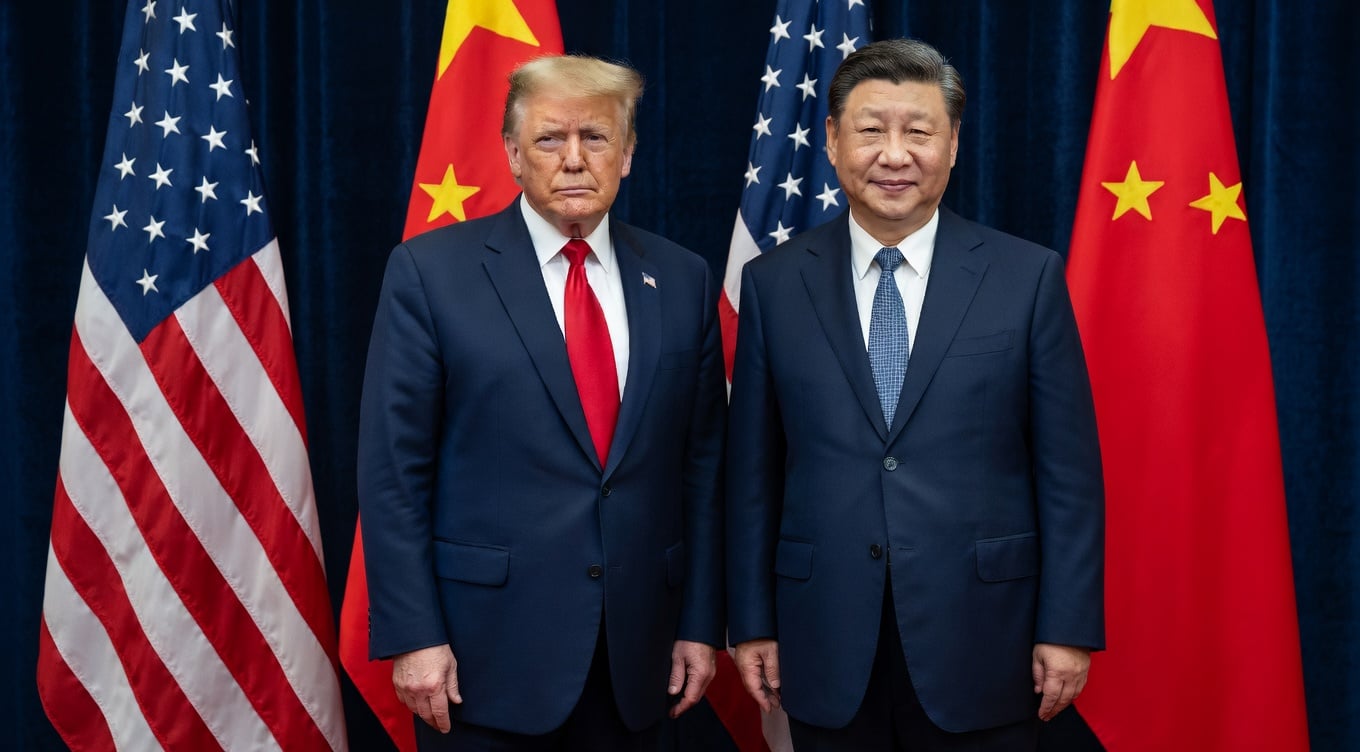
This journey represents Trump’s return to Chinese soil after nearly ten years away. The president has scheduled bilateral discussions with Xi Jinping spanning Thursday and Friday, with formal sessions at the Great Hall of the People and an official state dinner among the planned engagements.
The corporate leaders accompanying Trump include Elon Musk, Apple chief Tim Cook, and Boeing’s Kelly Ortberg. Most of these executives represent companies grappling with significant commercial challenges in the Chinese market.
Nvidia’s challenges revolve around semiconductor access. American export limitations have prevented the company from marketing its cutting-edge AI chips throughout China, including flagship products like the H200. Huang has openly acknowledged that Nvidia’s market share in China’s artificial intelligence processor segment has experienced a dramatic decline.
In recent financial filings, Nvidia characterized its situation in China’s data center sector as virtually eliminated, with domestic Chinese manufacturers capturing the market void created by regulatory restrictions.

Nvidia’s Strategic Objectives for the Summit
Huang’s attendance at these discussions focuses more on strategic positioning than generating immediate revenue. Even with potential relaxation of certain restrictions, the process of obtaining approvals and delivering semiconductors to Chinese customers involves complex regulatory procedures across multiple jurisdictions.
Recent policy modifications surrounding products such as the H200 have yielded minimal commercial results to date. Substantial reported purchase orders have not converted into short-term income due to supply chain constraints and approval delays.
Trump has publicly stated his intention to request that Xi “open up” Chinese markets to American enterprises. He declared on Truth Social that this would constitute his “very first request” during their face-to-face meetings.
Concurrent Trade Negotiations
In a parallel development, US trade representative Scott Bessent engaged in approximately three hours of negotiations with Chinese Vice Premier He Lifeng at Incheon airport in South Korea. Neither delegation provided immediate public statements regarding the substance of those conversations.
Both nations are working to preserve a trade agreement established last October, under which the United States paused triple-digit tariff rates on Chinese merchandise while China withdrew threats to limit rare earth material exports.
The United States additionally seeks to expand sales of Boeing commercial aircraft, American agricultural commodities, and energy products to China as a means of narrowing the bilateral trade imbalance. China, meanwhile, desires reduced restrictions on semiconductor manufacturing equipment and advanced chip technology.
Policy experts suggest the Trump administration faces greater pressure to achieve results from this summit than its Chinese counterpart. Xi confronts fewer immediate domestic political constraints compared to Trump, who must navigate midterm congressional elections in November.
“The Trump administration needs this meeting more than China does,” said Liu Qian, founder of Wusawa Advisory in Beijing. “It needs to show to American voters that deals are signed, money is made.”
China has also restated its strong objections to American weapons transfers to Taiwan. A $14 billion arms sale package currently awaits Trump’s final authorization.
Whether these summit talks yield substantive agreements regarding semiconductors, commercial access, or technology transfers remains uncertain. For Nvidia, even modest progress toward reopening Chinese market access would represent significant progress — though the journey to substantial revenue generation remains complicated.
Get 3 Free Stock Ebooks
Discover top-performing stocks in AI, Crypto, and Technology with expert analysis.
- Top 10 AI Stocks - Leading AI companies
- Top 10 Crypto Stocks - Blockchain leaders
- Top 10 Tech Stocks - Tech giants



