


Key Takeaways
- Nvidia’s valuation has surged to approximately $6 trillion thanks to robust demand for AI processors.
- AMD has recently achieved a $1 trillion market capitalization and is scaling production capacity through 2027.
- AMD secured a multi-year agreement to deliver tens of billions in AI server hardware to Anthropic.
- AMD plans to acquire World Labs, an AI simulation startup, for $8.2 billion to enter robotics markets.
- Nvidia projects approximately 70% year-over-year revenue expansion as artificial intelligence investments accelerate.
The artificial intelligence semiconductor sector has witnessed explosive growth, with Nvidia and AMD emerging as the dominant players. Both manufacturers produce specialized processors that enable AI workloads, though their strategic approaches differ significantly.
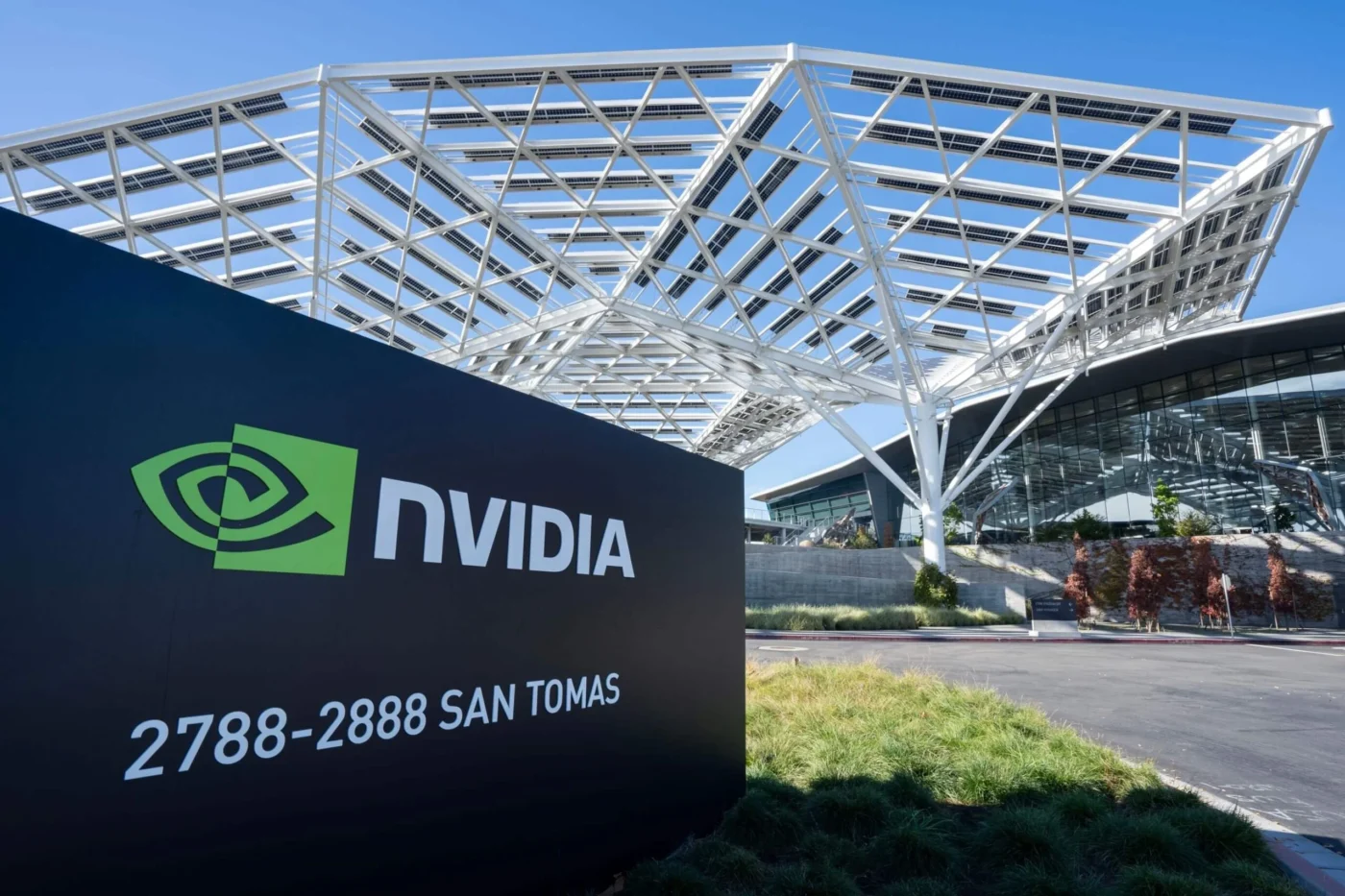
Nvidia maintains a commanding lead in market capitalization, with its valuation recently approaching the $6 trillion threshold.
AMD represents a smaller but rapidly expanding competitor. The chipmaker recently surpassed a $1 trillion enterprise value for the first time.
How Nvidia Dominates the AI Chip Market
Nvidia specializes in graphics processing units designed specifically for training and deploying large-scale AI models. The company commands the majority of market share in this segment.

A significant competitive moat comes from Nvidia’s CUDA software ecosystem. Thousands of AI engineers have built applications using this framework, creating substantial switching costs for organizations considering alternative chip suppliers.
The company has reported exceptional product demand. Management forecasts roughly 70% revenue expansion for the upcoming fiscal period.
Nvidia’s stock recently reached an all-time peak, lifting the company’s market capitalization to approximately $5.76 trillion.
However, some market observers have expressed caution regarding financing challenges. Financial institutions remain reluctant to accept GPU hardware as collateral for loans, citing concerns about rapid depreciation and technological obsolescence.
Nevertheless, Morgan Stanley analysts indicated that Nvidia and Broadcom maintain superior positioning compared to competitors when addressing power supply constraints impacting data center operations.
AMD’s Expansion Plans and Competitive Response
AMD represents Nvidia’s primary rival in the AI accelerator market. The company is aggressively scaling manufacturing output through 2027.
Advanced Micro Devices, Inc., AMD
CEO Lisa Su announced this week that AMD intends to significantly boost chip availability over the coming year. The company has engaged multiple manufacturing partners including TSMC, Foxconn, Samsung, and SK Hynix to secure additional production capacity.
AMD has successfully landed significant new business. The chipmaker reached an agreement to provide Anthropic with AI server systems valued at tens of billions of dollars, while also committing up to $5 billion in direct investment.
Beyond data center processors, AMD is diversifying its technology portfolio. The company revealed plans to acquire World Labs—founded by renowned AI researcher Fei-Fei Li—for $8.2 billion. This transaction strengthens AMD’s capabilities in robotics applications and three-dimensional simulation platforms.
AMD’s current market value represents approximately one-sixth of Nvidia’s valuation. This differential suggests substantial upside potential if AMD continues capturing market share in AI computing.
AMD continues to lag behind Nvidia in software ecosystem maturity, operating margins, and overall industry positioning. The company is attempting to narrow these gaps through strategic partnerships and acquisitions.
Investors evaluating these two chipmakers confront distinct trade-offs. Nvidia represents an established market leader with an extensive installed base. AMD offers exposure to a growth-oriented challenger still expanding its competitive footprint.
Several market analysts have suggested that investors with long-term conviction in AI infrastructure spending might benefit from maintaining positions in both securities rather than selecting a single holding.
Nvidia shares continue setting new records as of this week. AMD, meanwhile, remains focused on broadening its supply network and client relationships heading toward 2027.
Get 3 Free Stock Ebooks
Discover top-performing stocks in AI, Crypto, and Technology with expert analysis.
- Top 10 AI Stocks - Leading AI companies
- Top 10 Crypto Stocks - Blockchain leaders
- Top 10 Tech Stocks - Tech giants



